
Autism: Breaking Through Stereotypes, Building Towards Empathy
Written By: Baylie Dell
September 8th, 2025
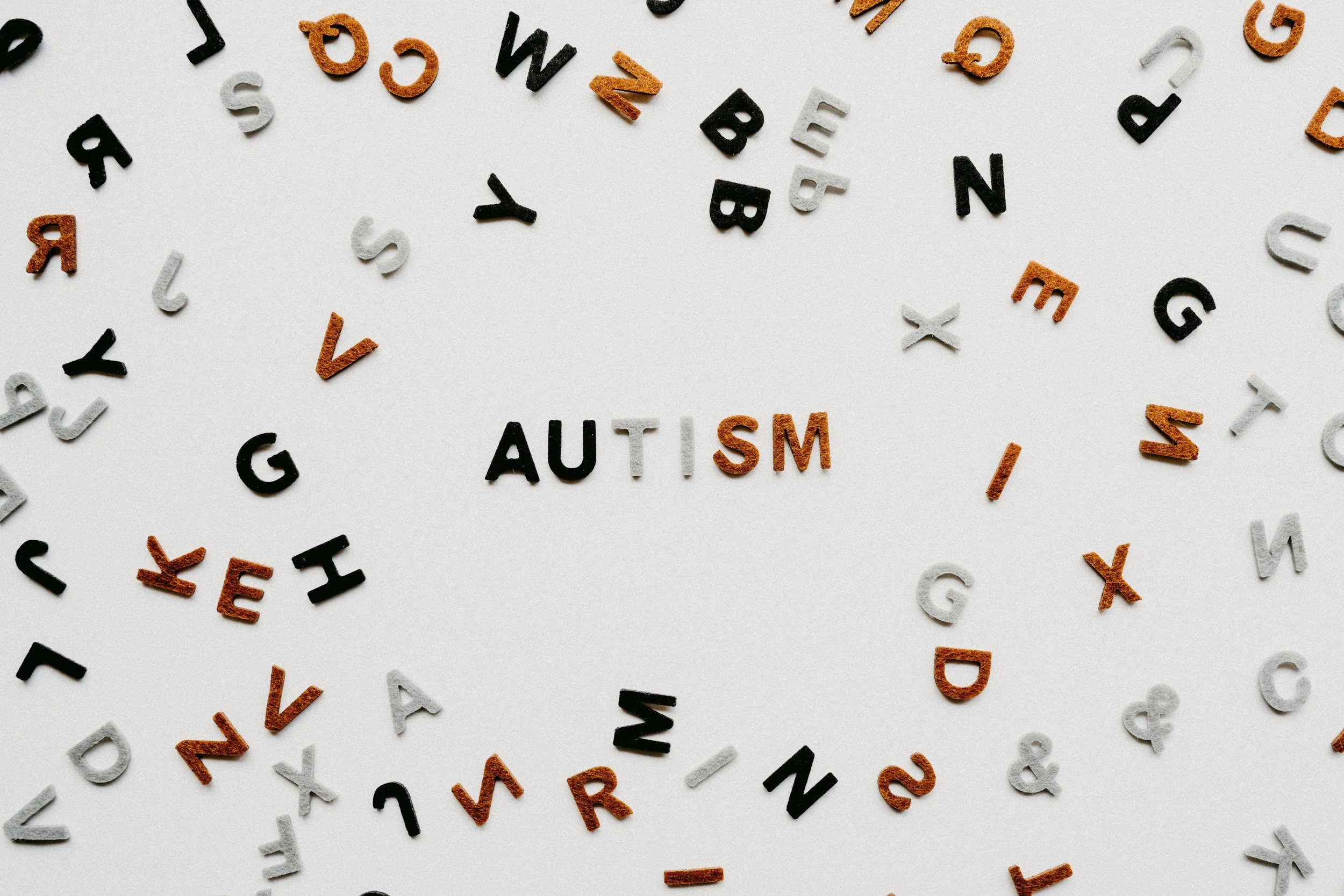
Perhaps one of the most stigmatized and misrepresented neurological disorders in the world, autism is a disorder which has come increasingly to the fore as a buzzword during recent years—being trumpeted about in the press, in politics, and in pop psychology. Everything that everyone "knows" about autism is predominantly communicated through stereotypes, ancient science, or one-sided descriptions. For some, autism conjures up images of mathematical geniuses who can do equations in their heads but struggle with relating to people. To some, it raises the reverse stereotype: someone who is isolated from the world, not able to speak or relate. Autism isn't monolithic, isn't a tragedy, and isn't an identity that erases humanity. It's a neurodevelopmental difference—ongoing, evolving, and deeply human.
Clinically, autism spectrum disorder (ASD) is characterized by the DSM-5 as variations in social communication, sensory processing, and behavior patterns or interests. But clinical descriptions fall far short of the experience. What they are unable to convey is diversity of experience. Each person is affected by autism differently. Some autistic individuals are not able to speak but communicate through technology or gesture. Others are highly verbal but struggle with unwritten social rules. Some excel in orderly routine, and others do best in creative disarray. The "spectrum" is not a linear spectrum of "mild" to "severe," but a multidimensional system recognizing a wide range of strengths and weaknesses.
And yet, autism in popular culture has long been boiled down to caricature. Rain Man, released in 1988, created the autistic savant stereotype: a character with minimal social capacity but great memory and calculating capacity. While such capacities are real, they are only a small part of how autism can affect someone’s life. More contemporary media tends to go in the other direction, portraying autism as all deficit and misery, perpetuating pity instead of empathy. Both portraits dispel the truth that most autistic people live normal lives with pleasure, frustration, jobs, friendship, creativity, and love.
The stigma surrounding autism is cultural, but also institutional. Autism was previously blamed on so-called "refrigerator parents," (originally using “mothers” instead of “parents” due to the belief that women should care for children while the men worked, and if the child had any “issues,” it was the mother’s fault. I refuse to continue the already ableist idea into sexist territories) a now-discarded mid-20th-century hypothesis that blamed parents for causing autism through emotional coldness. This callous idea was disproven long ago, but its shadow continues in the way society still blames families or Autism being a parental tragedy rather than a neurodevelopmental difference. Bias also affects diagnosis. Research shows that autistic girls and women are underdiagnosed because their symptoms typically present differently from the male stereotype. In the same vein, autistic individuals of color are disproportionately at risk of receiving a misdiagnosis for behavioral disorders or being overlooked entirely, with delayed access to services (Loomes et al., 2017; Mandell et al., 2007). These disparities reinforce disparity in health care and education, highlighting how stigma is not only a social issue but a structural one as well.
Autism is neither a disease to be cured nor a deficiency to be fixed but rather a neurological difference to be understood. Pressure for "cures" has long driven abusive practices, from coercive treatments to pseudoscientific interventions that exploit desperate families. Though some supports, such as speech therapy, occupational therapy, or assistive technology, are useful in fostering development and independence, the goal is not to cure autism but to embrace and empower autistic lives. This is the essence of the neurodiversity movement, led by autistic activists themselves. They argue that autism is a variation in human neurology, not a pathology, and that society must adapt to autistic individuals rather than forcing autistic individuals to camouflage themselves in order to fit into neurotypical expectations.
Masking—the practice of hiding autistic traits in order to "pass" as neurotypical—is worthy of consideration. The majority of autistic individuals and, in particular, women and marginalized people, have reported masking as a survival strategy in schools, workspaces, and social settings. But there is a cost to masking: greater anxiety, depression, and burnout (Hull et al., 2017). Not only is the need to be "normal" tiring, but it is also dangerous. It indicates the degree to which stigma still perpetuates conformity rather than acceptance.
Another damaging myth is that autistics are not empathic. However, research suggests that autistics may process empathy differently, often experiencing what others refer to as "hyper-empathy" of intense emotional identification that proves overwhelming. The so-called "double empathy problem" (Milton, 2012) makes social difficulty a two-way street: communication breakdown happens not simply because autistics struggle with neurotypical signals, but also because neurotypicals fail to understand autistic communication patterns. This contradicts the previous theory that the deficit lies in autistic individuals solely and instead implies joint responsibility in communication.
Autistic adults are far more likely to be excluded, unemployed, and victimized compared to their neurotypical peers. Unemployment in autistic adults remains dismayingly high, at 85% or higher, (CDC, 2020). Autistic children are bullied at ratios far exceeding their non-autistic peers. Autistic adults are discriminated against in work, housing, and medical settings. And autistic people are not vulnerable by nature; society makes them so through barriers, stereotypes, and lack of accommodations.
The path forward is clear: education, acceptance, and altering the system. Schools must look beyond token inclusion and truly assist. Workplaces must not just tolerate but welcome neurodiversity by accommodating and valuing diverse thinking styles. Healthcare practitioners must be trained to be able to notice and deconstruct biases in treatment and diagnosis. The press must replace stories of brilliance or tragedy with stories of mundane, dignified autistic lives, told in the words of autistic adults. Perhaps above all, society must listen to autistic voices. Nothing about autism can or should be defined without autistic individuals leading the way.
Autism is no curse, no deficit to be abolished, and no identity to be pitied. It is another form of being human. Autistic people are artists, engineers, writers, parents, neighbors, and friends. They are people with abilities and perspectives that enrich communities. Beyond stigma is recognizing the value in difference, stopping the definition of autism in terms of aberration, and starting to see it as a part of the rich tapestry of human minds. Authenticity and compassion, not fear and stereotype, must be the path forward.
Photo by UnsplashWritten by: Baylie Dell
About The Author: Baylie (She/Her) is an editorial intern and recent graduate with a degree in English Literature. She loves reading works that have political and social importance.
Autism, Stigmas, Therapy
Check out our social media for more resources:
Additional Reading

Sources
American Psychiatric Association. Diagnostic and Statistical Manual of Mental Disorders (DSM-5).
CDC (2020). "Autism Spectrum Disorder (ASD)." Centers for Disease Control and Prevention.
Hull, L., et al. (2017). “Camouflaging of Autistic Traits in Adults.” Journal of Autism and Developmental Disorders.
Loomes, R., Hull, L., & Mandy, W. P. L. (2017). “What is the Male-to-Female Ratio in Autism Spectrum Disorder?” Journal of the American Academy of Child & Adolescent Psychiatry.
Mandell, D. S., et al. (2007). “Racial/Ethnic Disparities in the Identification of Children With Autism Spectrum Disorders.” American Journal of Public Health.
Milton, D. (2012). “On the Ontological Status of Autism: The ‘Double Empathy Problem.’” Disability & Society.
Leave a comment