
Don’t Let Yourself Be Fooled: What You Need to Know About Propaganda
Written by: Rhilynn Horner
October 16th, 2026

Dani Adkins Via UnsplashMidterm elections are here, and with them come aggressive campaign ads popping up all over our TVs. They’re infamous for their sensationalism, rage-bait, and being overall annoying. But they’re more than that: they’re clear examples of propaganda and its impact in our lives.
What is Propaganda?
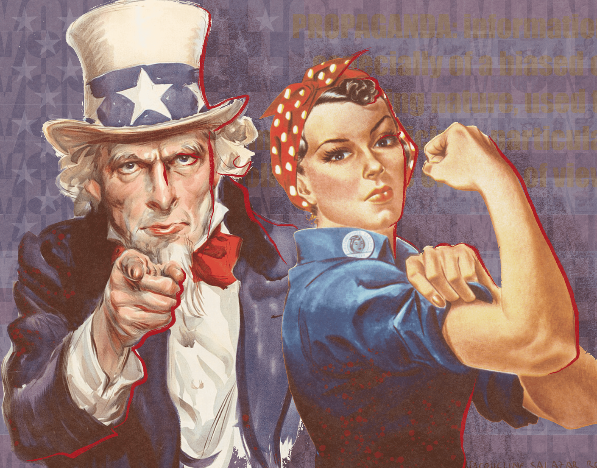
Propaganda is the deliberate spread of ideas, facts, opinions, lies, or allegations to further a cause or damage an opposing one. It’s often manipulative because it selectively shares information. For example, propaganda may use exaggerated facts or emotionally charged claims to override reason.
Because of its persuasive power, propaganda is commonly associated with politics, but it also appears elsewhere: religion, advertising, social media, and wartime efforts are common settings. Propaganda can appear in commercials, posters, online posts, videos, comics, and even physical products. Although propaganda can take many forms, the Institute of Propaganda Analysis identified seven main types in 1939.
The Seven Types of Propaganda
Name Calling: This technique belittles, scorns, or ridicules a target through offensive, emotionally charged language, such as insults or condescending nicknames. Its goal is to make you feel negatively about the target, for example, by provoking hatred or disgust.
Glittering Generalities: These are vague words or phrases used to evoke strong positive feelings while remaining intentionally open to interpretation, with no real evidence to support the claims they imply. Examples include “Freedom,” “Democracy,” “Justice,” and “Change.”
Transfer: This technique involves associating a respected symbol with a person, product, or company. One common example is a politician standing in front of a national flag or religious symbol.
Testimonial: This technique uses an endorsement from a well-known individual, such as a celebrity or field expert, to convince you that a person’s or organization’s claims are trustworthy.
Plain Folk: This technique involves a person, typically in a position of power, trying to convince you that they’re just like you, the common person. They appear humble, good-natured, and down-to-earth, even if that image doesn’t reflect reality.
Card Stacking: This technique involves presenting only positive information about a specific idea, individual, or company, while presenting only negative information about its opposition. This is the most commonly observed type of propaganda in the campaign commercials mentioned earlier.
Bandwagon Appeals: These appeals try to convince or pressure you to join the crowd. They might suggest that “you’re missing out” or that you’re making the wrong choice by not joining the crowd.
Why Should You Know About Propaganda?
Propaganda is a major reason why tyrannical or oppressive regimes can exist. Adolf Hitler and the Nazi regime employed Nazi propaganda across “art, music, theater, films, books, radio, educational materials, and the press.” The regime also used propaganda to cover up the mass murder of Jewish people. For example, Hitler allowed the International Committee of the Red Cross to observe the Theresienstadt ghetto, which the Nazis had extensively staged and altered to create the false impression that Jewish people were treated well. Propaganda is also heavily used in North Korea to idolize Kim Jong Un, strengthen national loyalty, and portray foreign nations as enemies.
Similarly, propaganda can influence elections and therefore shape history: Andrew Jackson’s appeal to the common man is considered to be one of the sole reasons he won the presidency in 1828. His presidency later oversaw the forced and deadly removal of Native Americans, known as the Trail of Tears. Evidence also suggests that propaganda influenced election outcomes in the post-Reconstruction South. Newswriters claimed that Black voters and the government they supported were “excessively corrupted,” helping the Democratic Party stay in power with little opposition. This led to the legal disenfranchisement of Black voters soon after.
Propaganda also shapes how we view the world in ways that can have widespread and harmful consequences. Propaganda not only contributed to the disenfranchisement of Black voters but also helped spread and reinforce racism through harmful caricatures, games, comics, and more. Propaganda also pushed and created new gender expectations. Gillette’s early advertisements for safety razors for women succeeded by vilifying underarm and leg hair. Before that advertisement, women were not expected to shave. Lysol also used its advertisements to shame women, promoting “the idea that women who did not use Lysol to douche were solely responsible for any marital problem that arose, like cheating or divorce.” Even children have been targets of propaganda: patriotic and pro-war comics, toys, and animations were widespread in the early to mid-20th century to encourage young boys to enlist in the military when they got older.
Propaganda Today
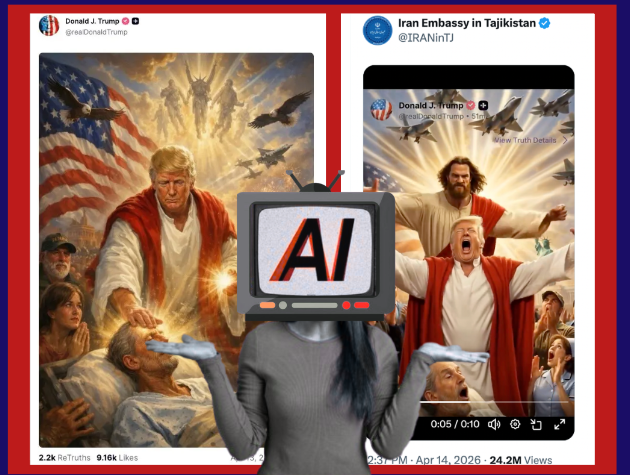
You may see propaganda in all the forms mentioned above, but new technology has created other ways for people to see and engage with potential propaganda. AI can easily falsify information and make eerily lifelike deepfakes as evidence. Algorithms can create online echo chambers by feeding on engagement. Online bots spread rage-bait in comment sections to inflate certain viewpoints and attack others. Even the everyday influencer can spread harmful propaganda and misinformation.
Propaganda has long been history’s weapon of choice for deception and control, and as midterm elections approach, it’s more important than ever to understand what you’re seeing and why you’re seeing it. So don’t let yourself be fooled: staying informed and thinking critically are your best defenses.
Written by: Rhilynn Horner
About the Author: Rhilynn (She/Her) is an editorial staff member and a graduate of UNC Chapel Hill with a degree in English & Comparative Literature. She loves to read and write on a variety of pop culture and social topics.
Types of Propaganda, Propaganda in Voting, Political Campaigns
Additional Reading

Sources:
https://www.adobe.com/express/learn/blog/ultimate-guide-propaganda
https://www.merriam-webster.com/dictionary/propaganda
https://encyclopedia.ushmm.org/content/en/article/nazi-propaganda
https://www.harvard-yenching.org/research/a-collection-of-500-north-korean-posters/
https://www.nps.gov/trte/learn/historyculture/what-happened-on-the-trail-of-tears.htm
https://ideas.repec.org/p/zbw/qucehw/202206.html
https://jimcrowmuseum.ferris.edu/antiblack/index.htm
https://americanhistory.si.edu/collections/object-groups/health-hygiene-and-beauty/hair-removal
https://commons.lib.jmu.edu/mhr/vol23/iss1/4/
https://necessarybehavior.com/ai-propaganda-is-weaponizing-social-media-and-how-we-can-respond
Check out our social media for more resources:
Leave a comment