
Eye Health: Can Near Sight Cause Blindness?
Written By: Qinghe Wang
Date: August 3rd, 2026
Photo by Adolfo Félix on Unsplash
If you’re nearsighted, should you worry about going blind? Yes, being nearsighted means you are at a higher risk of becoming blind. Although near sight doesn’t directly cause blindness, it increases the risk of another eye sickness that does.
Myopia (nearsightedness) is a common eye condition where you can see nearby objects clearly, but distant objects appear blurry. You can still read text messages clearly if your nearsightedness isn’t serious, but would struggle to read a whiteboard in the classroom, or a street sign while driving.
Myopia happens because the eyeball is slightly too long, or the front surface (cornea) is too curved, causing light to focus in front of the retina instead of directly on it.
Since myopia is caused by a physical change in the shape of the eye, it’s irreversible.
The eye’s structure is shaped by biological development and is generally stable, especially in adults. Once it grows longer, there’s no natural mechanism to shorten it again. Unlike muscles, you can’t “train” your eye to fix this shape.
Glasses and contact lenses may correct your vision by refocusing light onto the retina, but they do not cure myopia.
About 30-40% of the world’s population has myopia today. And the rates have risen sharply over the past few decades.
People commonly believe that nearsightedness is “just bad eyesight,” or “glasses fix it, so it’s fine,” thinking that it won’t lead to serious problems.
However, the truth is that myopia can indirectly lead to blindness in severe cases.
At high levels, it not only makes it difficult to see even at short distances, but also increases dependence on corrective lenses and raises the risk of serious eye diseases that may lead to vision loss.
When does it become risky?
Well, mild myopia usually carries little risk and can be easily corrected with glasses or contact lenses. However, high myopia (typically around -6.0 diopters or more) is associated with significantly greater risks.
The main reason is that in high myopia, the eyeball becomes longer than normal. It stretches the eyes’ internal structures, especially the retina at the back of the eye.
This stretching makes the retina thinner and more fragile, increasing the likelihood of serious conditions such as retinal detachment, myopic macular degeneration, and glaucoma. Over time, these complications can lead to permanent vision loss if not properly managed.
The early signs of these conditions are often small, painless, or even absent, making them easy to overlook without regular eye examinations.
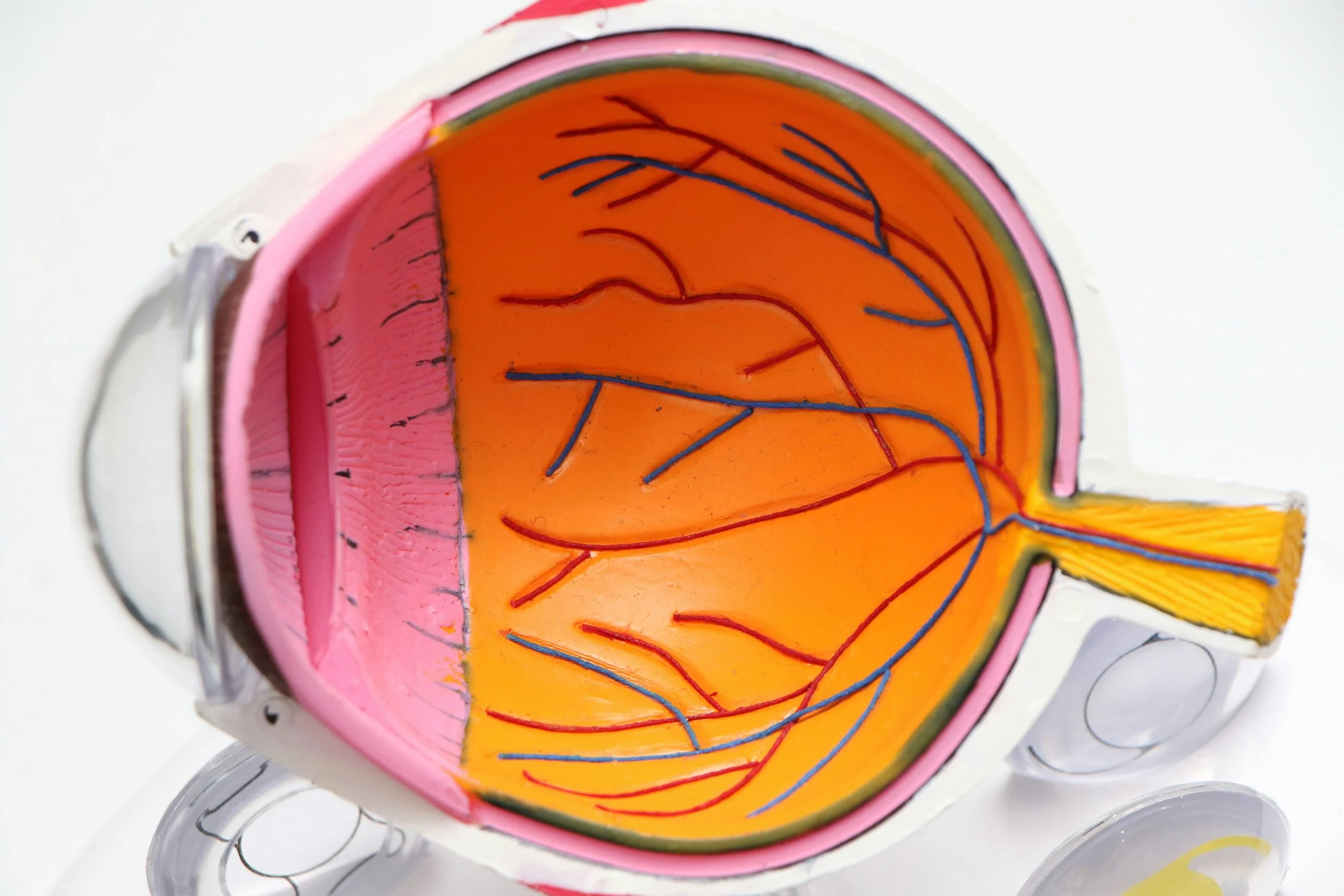
Photo by Harpreet Singh on Unsplash
Retinal detachment: The retina (the light-sensitive layer at the back of the eye) pulls away from the eye wall, which stops it from working properly.
Causes – Eye becomes too long, making retina stretch and thin, causing tears or holes, and make fluid gets underneath and lifts the retina
Early signs – Sudden increase in floaters (small dark spots or threads across the vision), or seeing brief flashes of light, like lightning streaks
Alarm signs – Seeing a slight blur or shadow moving across your vision
Late symptoms – Severe vision loss, and if untreated, permanent blindness
Myopic macular degeneration: Damage to the macula (the central part of the retina responsible for sharp vision), caused by long-term stretching in high myopia.
Causes – Elongated eye stretches the macula, leading to degeneration or abnormal blood vessel growth
Early signs – Slight blurring in the center of vision, straight lines may look slightly distorted
Alarm signs – Dark or blurry spot in the center of vision, difficulty reading or recognizing faces
Late symptoms – Permanent central vision loss, only side (peripheral) vision remains
Glaucoma: A group of eye diseases that damage the optic nerve, often linked to increased pressure inside the eye.
Causes – Poor drainage of fluid that causes pressure to build up, and high myopia increases vulnerability of the optic nerve
Early signs – Usually no noticeable symptoms at first
Alarm signs – Gradual loss of side vision, can turn into tunnel vision in advanced stages
Late symptoms – Severe vision loss and possible blindness
What you can actually do:
Get regular eye exams to detect myopia early and track changes, get glasses and contact lenses as needed, and monitor for complications like retinal issues.
Take breaks from screens (20-20-20 rule) – Every 20 minutes, look at something 20 feet away for 20 seconds. Looking out the window every 20 minutes would work, even if you are looking through glass or a window screen that blocks bugs.
Avoid dim lighting when reading or using devices, reduce glare and harsh contrast, and keep screens at comfortable brightness levels.
Spend more time outdoors. Aim for 1–2 hours daily, especially for children. Natural light helps regulate eye growth.
Although you can’t easily reverse myopia naturally once it develops, you can slow its progression and reduce risk.
So, don’t ignore it—but don’t panic either. Most people with myopia won’t go blind.
It’s a very common condition, and for the vast majority, it’s easily managed with glasses, contact lenses, or other treatments.
Many people with myopia live completely normal, healthy lives without serious complications.
With regular checkups, good habits, and a bit of awareness, you can protect your vision and live normally without major issues.
That is the key to keeping your eyes healthy for the long run.
Written by: Qinghe Wang
About the author description: Qinghe Wang is an editorial intern and a recent graduate of the University of California, Davis, where she earned a bachelor’s degree in Philosophy, with a minor in Writing.
Eye Health, Myopia, Vision Loss Prevention
Check out our social media for more resources:
Additional Reading


Leave a comment