
The Far Right and Its Impact on American Political Life
Written by: Matt DiGiandomenico
Date: December 22nd, 2025
(AP Photo/Jose Luis Magana) Source: FreeSpeechCenter
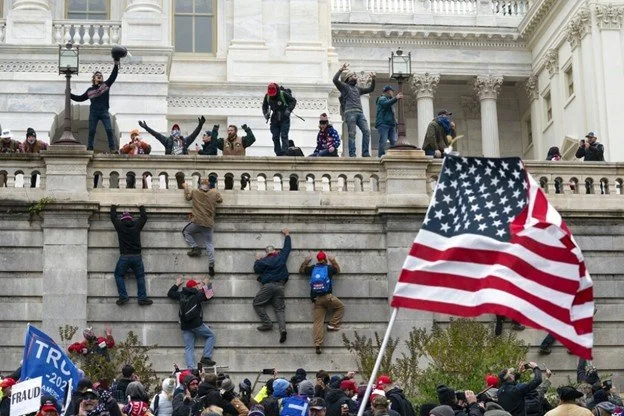
“Far-right” rioters scale a wall during the insurrection at the U.S. Capitol on Jan. 6, 2021.
Since Charlie Kirk’s assassination, there have been ongoing discussions about the “far-right,” which isn’t simply one group of extremists. The far-right is an umbrella term encompassing several different movements.
Members of far-right groups often look like a well-rehearsed theater group, whose members take varying roles acting out different performances in different cities. Many of them are tech savvy and decentralized, meaning they have no identified leader or command center. Rather, these groups consist of independent, like-minded individuals who share a common ideology and operate autonomously. Most importantly, they’re capable of altering public discourse to achieve their own ends.
This results in a political environment where their highly controversial ideas are free to circulate through the mainstream, shaping the trajectory of American democracy. Whether through memes, armed militias, or social media, they’ve carved out a steady presence in the nation’s political life.
The Groypers, the Boogaloos, and the Christian Nationalists stand out as wielding high levels of influence. All three groups have a foundation of racism, white dominance, sexism, and anti-LGBTQIA+ rhetoric. As Kamala Harris said on her book tour, “These motherfuckers are crazy!” Craziness aside, however, understanding them may help you understand what’s happening in America.
The Overton Window
Source: Wikipedia
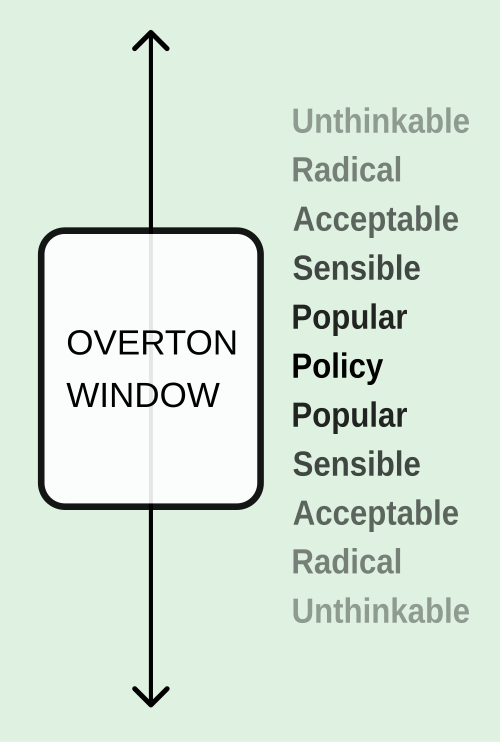
To understand their impact, it helps to consider the political science concept, the Overton Window. This concept describes the spectrum of ideas considered acceptable in public discourse at any given time. Ideas outside the window are considered radical while those inside the window are thought of as legitimate and acceptable, no matter how radical that idea actually is.
One of the goals of these far-right groups is to shift the Overton Window by normalizing extreme positions, such as overt racism, calls for violence towards the trans community, or demands for a so-called “White Christian America.” By relentlessly pushing abhorrent ideas into mainstream debates, they blur the lines between fringe activism and mainstream conservatism.
The Groypers
Source: HuffPost
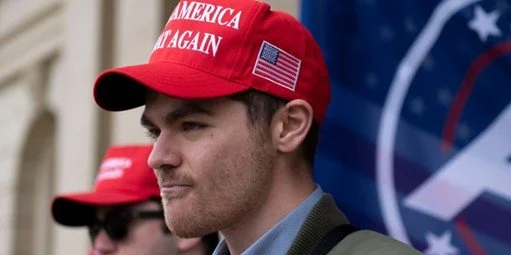
Nick Fuentes at a MAGA rally.
The Groypers are a youth-driven, mainly Gen-Z faction led by live-streamer Nick Fuentes, who has built a following by antagonizing establishment conservatives while encouraging the most extreme fringes of the right. Fuentes’ “America First” podcast and rallies have become a recruitment pipeline for disaffected, young, white male conservatives. The group’s name comes from a variant of the Pepe the Frog cartoon, highlighting its origins in online meme culture.
According to the Southern Poverty Law Center, most Groypers embrace hardline Christian nationalism, white dominance, and strict immigration restrictions. Their tactics include appearing at conservative events, asking highly confrontational questions to those who are speaking, and amplifying the footage online to position themselves as the “most sincere” voice of the right.
The Boogaloo Movement
Source: USA Today
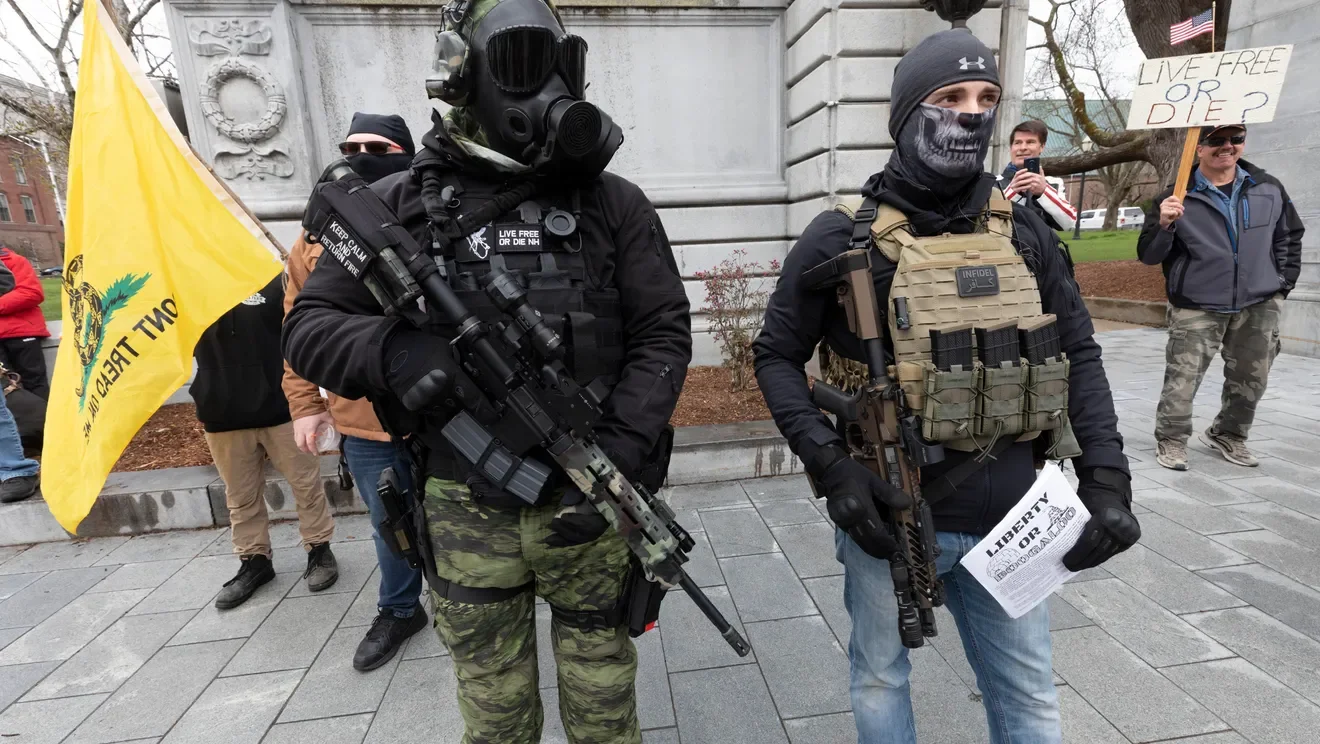
Boogaloo Bois at a rally in Concord, NH.
According to the George Washington University’s Program on Extremism, the “Boogaloos,” which in far-right circles has come to signify a “second civil war,” emerged from internet forums in the early 2010s. Its followers, often called “Boogaloo Bois,” are united less by an ideology than by a shared hostility toward government authority, often wearing tactical gear at rallies and carrying an arsenal of firearms.
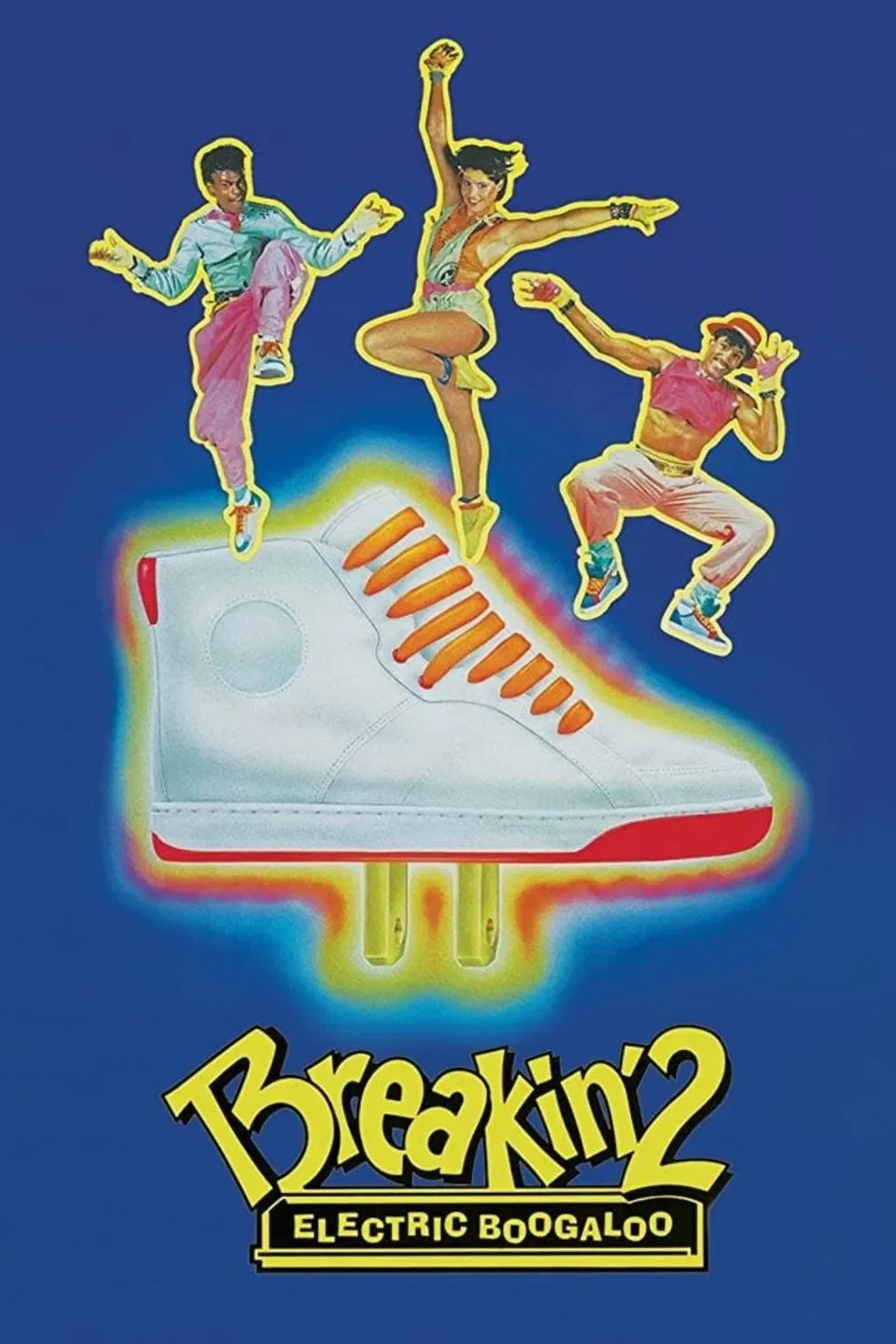
The movement’s name is a cultural borrowing, adopted as a reference to the 1984 breakdancing film “Breakin’ 2: Electric Boogaloo,” a sequel to “Breakin’.” The movie is about a group of dancers who team up to save their community rec center from being taken down by developers. While the film is an upbeat musical about dancing and neighborhood solidarity, its title was repurposed by online extremists.
Source: TheMovieDatabase
The biggest threat of the Boogaloo movement lies in its decentralization. Without formal leadership, individuals can act unilaterally, making the movement difficult to monitor. Arrests linked to Boogaloo plots have included attempts to kidnap Gretchen Whitmer, Michigan’s Governor, and various attacks on police. Their presence underscores how violent extremism has become a persistent undercurrent in American politics.
Christian Nationalists
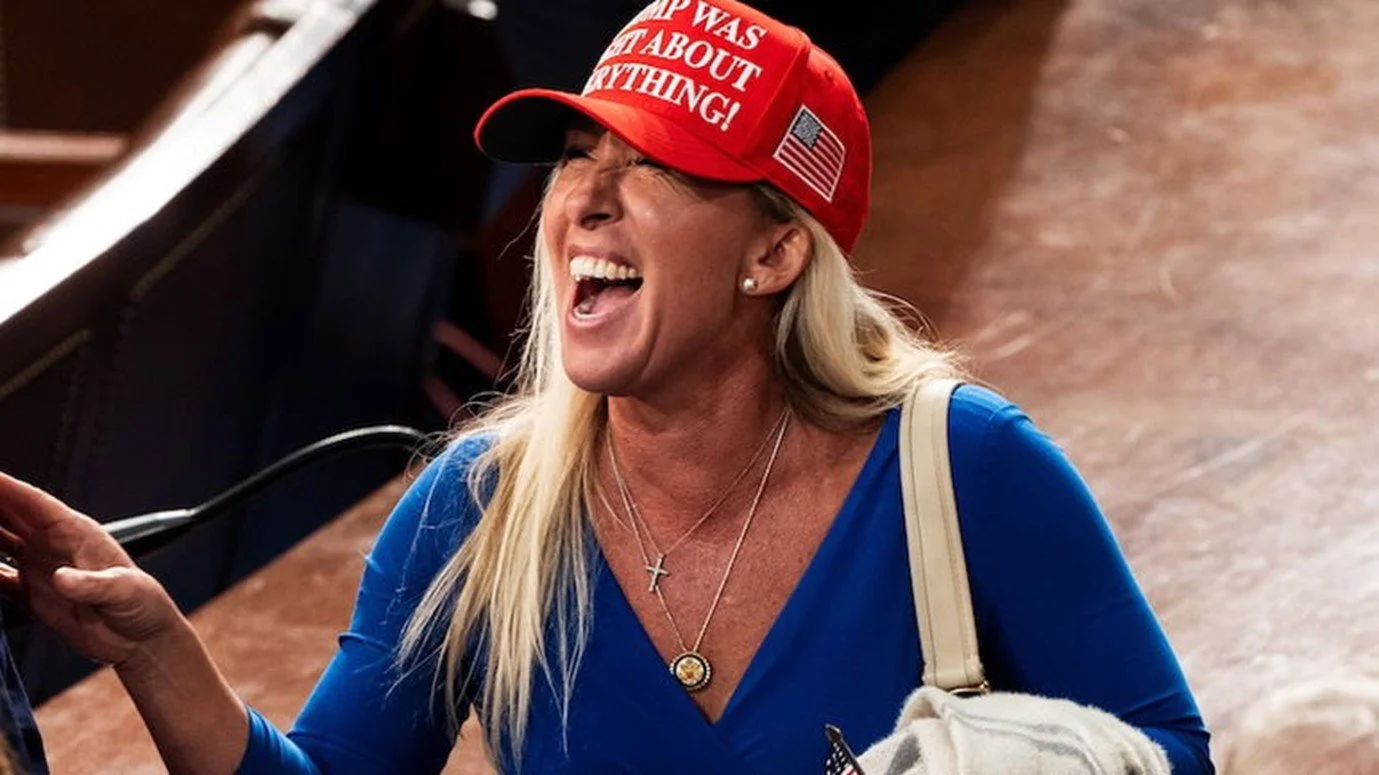
Rep. Marjorie Taylor Greene (R-GA) | © Josh Morgan-USA TODAY
Source: LGBTQ Nation
Christian nationalism’s resurgence has given the far-right renewed political potency. Their ideology asserts the U.S. was founded as a Christian nation and should be governed according to biblical principles. (Although they very often cherry-pick which principles should or shouldn’t be followed.)
According to the Pew Research Center,nearly half of Americans believe the Bible should influence U.S. laws, with a significant minority insisting that scripture should override the majority when conflicts arise.
This worldview has been formalized through political agendas like Project 2025. Analysts warn these efforts threaten democratic norms by working to concentrate executive power. The movement’s influence is visible in battles over abortion, school choice, and LGBTQIA+ protections. By sacralizing politics, Christian Nationalist rhetoric casts opponents not merely as political adversaries, but as enemies of God.
American Appeal
Understanding the appeal of far-right groups requires looking beyond ideology to the social and psychological conditions that make them attractive. There are multiple factors at play including: socio-economics, perceived dislocation of culture, and political polarization.
Socio-economic Factors
Economic insecurity and inequality often fuel far-right appeal. Research shows that voters experiencing stagnant wages or limited social mobility are more likely to support exclusionary policies. Paula Rettl’s study highlights how weak public services and corruption create openings for far-right narratives in Italy and Brazil.
Reporters at TRENDS Research explain that domestic extremism is seen as a pressing danger in the U.S. and that it coincided with the rise of far-right groups that frame themselves as “true patriots” and defenders of American identity against perceived cultural erosion.
Perceived Dislocation of Culture
Rapid cultural changes, such as demographic shifts and ever-evolving norms, can lead to feelings of alienation. As Agnieska Pasieka writes, “There remains a widespread perception of the far-right supporters either as outcasts belonging to a subculture or as dispossessed and disenfranchised citizens longing for their country’s past “greatness.”
Ethnographic research by Pasieka shows far-right movements exploit this perception of displacement by stoking fear and promoting nationalist rhetoric, making their ideology resonate with those who fear losing cultural identity.
The Southern Poverty Law Center’s 2024 Year in Hate & Extremism report documented more than 1,300 hate and antigovernment extremist groups active in the U.S., noting their influence grows strongest in communities where people feel demoralized, distrustful of institutions, and experience validation of their grievances.
Political Polarization
Polarization deepens ideological divides and fosters extremism. Georgia State University researchers connect events like January 6, 2021 to long-standing distrust in news media and elections, amplified by conspiracy theories of far-right people in positions of power. This environment allows far-right actors to position themselves as defenders against a “corrupt establishment.”
Finally, scholars emphasize the role of political violence and polarization. Johns Hopkins political scientist, Lilliana Mason, argues that rising acts of politically motivated violence are eroding democratic norms. In this kind of environment, groups that offer clarity, identity, and, most importantly, action, become very intriguing to individuals who feel left out of mainstream politics.
Convergence and Consequence
These three factions illustrate the fragmented nature of the far-right and erode trust in democratic institutions and normalizing radical alternatives.
What makes this convergence especially dangerous is the way elected officials have begun to legitimize these ideas and beliefs. Figures like Marjorie Taylor Greene, who surprisingly just resigned from Congress, have repeatedly spouted far-right nonsense in political debates and press conferences (remember her stating global warming was a good thing or introducing a bill that would take away gender-affirming care for kids?)
The far right’s influence and its capacity to reshape American politics shouldn’t be underestimated. Public awareness combined with civic engagement and ethical journalism has the power to weaken them. The reality is that extremism grows in silence and complacency, as we’ve seen with Trump and his cronies including, but certainly not limited to, Kash Patel and Pam Bondi.
The hopeful counterpoint is the collective action by “we the people” who are willing to stand up to interrupt oppression and protect our democracy. It begins with conversations in our communities, holding leaders accountable, and refusing to normalize hate under the guise of political discourse. History reminds us democracy isn’t self-sustaining. It thrives when citizens actively defend it. By amplifying truth, rejecting disinformation, and fostering empathy, we can ensure the forces of extremism do not define our future.