How The Blue Neighbourhood Trilogy Shaped My Identity
Written By: Kael Johnston
Date: June 3rd, 2026
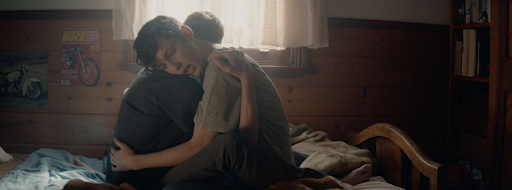
Photo credit: Adric Watson, Blue Neighbourhood Trilogy (Director’s Cut), 2016, film still.It was a summer day in 2016 when my sister Lexi and I logged onto her laptop and opened YouTube. Among the sea of vlogs and reaction videos, we found The Blue Neighbourhood Trilogy, a three-part music video series by artist Troye Sivan about two teenage boys who fall in love but are pulled apart by one of their fathers. My sister and I locked ourselves in her room and clicked play. The video ran for all its twelve and a half minutes, and after the screen turned black, my sister and I sat in the darkness; there was an odd taste in the air, and my sister asked me how I felt about the video. Sivan’s videos opened us up to a conversation about the queer community and what it actually means to be gay. I responded to my sister, saying something along the lines of “that’s weird” because that’s what I was taught to say. I played off the conversation cool, but deep down, I knew then that I connected with this story on a personal level; however, I didn’t know why at the time. I was too young to realize how the Blue Neighbourhood trilogy would be the backbone of my queer identity.
Growing up in conservative Idaho, stumbling across a piece of queer media felt like finding a four-leaf clover; nearly impossible. There was predominantly no queer culture in Idaho, or representation for LGBTQ+ persons. Even today, Idaho is one of the most homophobic states in the country, passing legislation that directly targets and invalidates the queer community. Anything that implied queerness felt like a distant cache, something that could only be found if you lived in LA or had “chill parents.” When I found Troye Sivan’s music and coming out video, the presuppositions I had surrounding queerness began to take shape and deepen. I felt a sense of confusion about these feelings that began to grow in me, and I became scared about what others in my community thought. It was an isolating experience; however, the space I found online became a lifeline and a community. It was a secret way to connect to my queerness, but one that rooted itself deeply within me. All of this buildup seemed to lead nowhere. However, as around the time high school started, I pushed those feelings aside and focused entirely on school. I kept returning to Troye’s music, connecting with it for various reasons: stories about home, partying, and trying to find himself through all the noise.
Later in my life, I reconnected with the Blue Neighbourhood Trilogy again. All the emotions I felt came to a peak, and I was in a position achingly similar to Troye’s– one rooted in heartache, with the need to confront myself and my own feelings. I was sitting on an airplane and, oddly enough, Troye’s album was the only one I’d downloaded. I played through the entire LP, and when it finished, I felt a whirlwind of emotions and acceptance towards myself and my sexuality. I found myself back in my sister's room years prior; however, the confused feeling I had morphed into a sense of acceptance and admiration for myself.
The Blue Neighbourhood Trilogy taught me about desire, heartbreak, and the intensity of queerness in the most accessible and digestible way possible. It showed me that what I felt was valid, unique, and utterly beautiful. Not only did it help me come to terms with my queerness, but it also helped me understand the importance of home and community, even when I found that community online. Without the community I found through Sivan’s music, I may never have found an outlet for accepting myself.
Resources for LGBTQ+:
Idaho Falls Pride: https://www.idahofallspride.com/resources
The Trevor Project: https://www.thetrevorproject.org/resources/
Written by: Kael Johnston
About the author: Kael Johnston is an editorial intern and a current senior at Chapman University.
Tags: Idaho, Queer Adolescence, Troye Sivan
Check out our social media for more resources:
Additional Reading
Confronting My Queerness: The Internal Feud Between My Femininity and My Soul
Why You Should Watch Bottoms
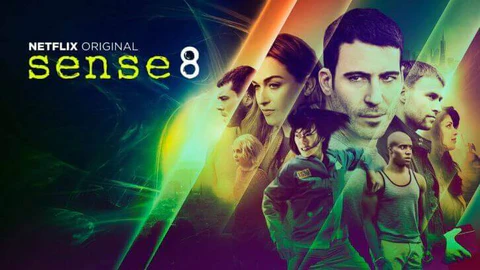
Sense8: Queer Representation in Media
Leave a comment