
How to Learn a New Hobby and Actually Feel the Joy
Date: August 14, 2025

Written By: Grace Mintun
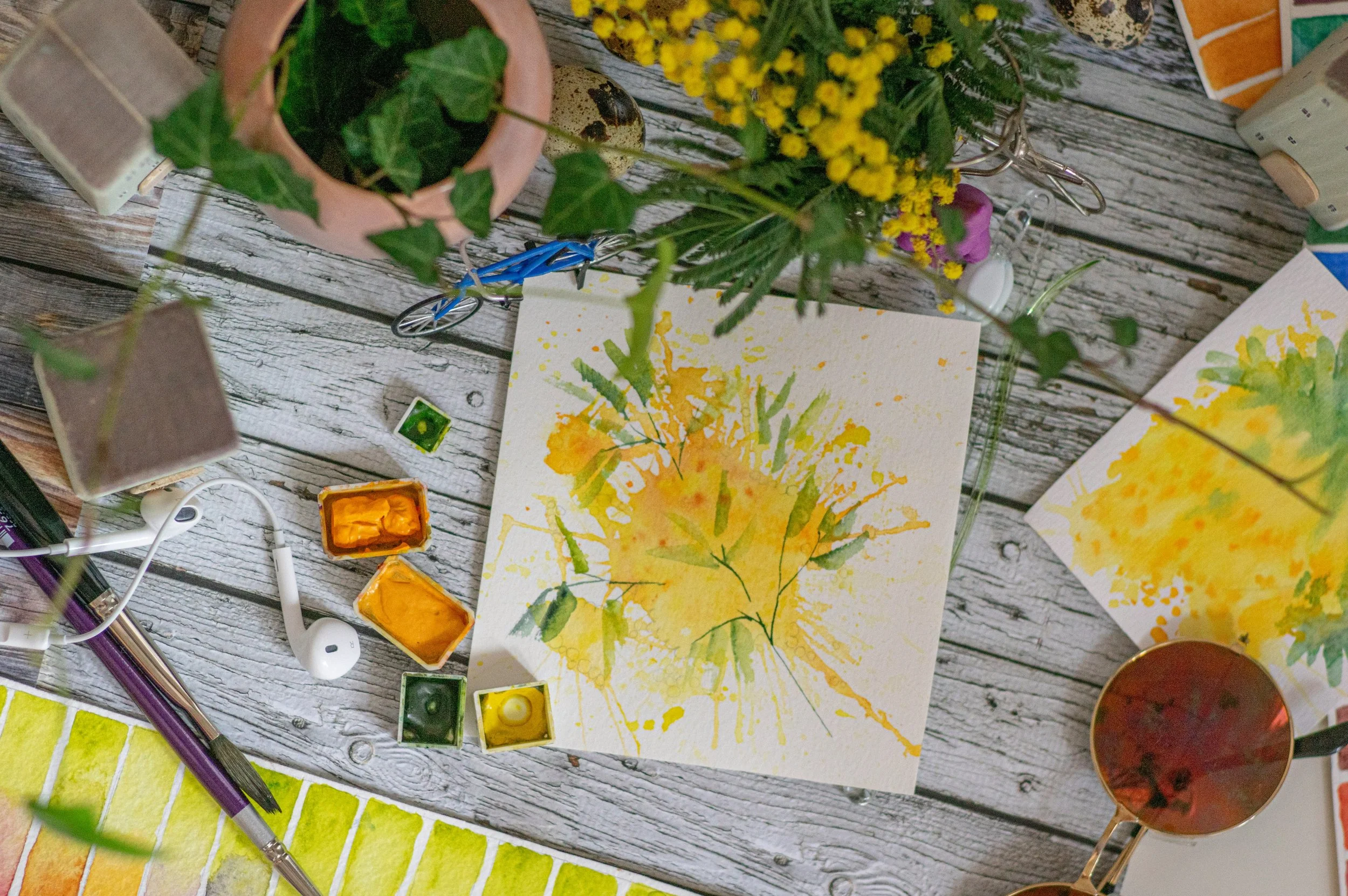
Elena Mozhvilo on UnsplashWell, if you’re anything like me, picking up a new hobby is kind of a daunting task. First you have to pick one, then buy the supplies (or dig them out of whatever shelf you’ve shoved them into when doing your yearly “declutter, organize, and clean”), watch tutorials or learn from a friend how to actually DO said hobby, practice it over and over, and then stick with it. At least those are the steps that are “supposed” to be. More than likely it looks more like this: Be recommended something on Instagram, TikTok, YouTube, Facebook– whatever apps the kids are using these days– and deep diving into it with copious Pinterest and Google searches on how to do that hobby, putting it off until payday, buying ALL the supplies you need, plus extra, from the best of the best (cause you shouldn’t skimp on your new fave hobby, you’ll love it forever, duh), having all the items shipped to you, trying it for 3 hours while watching tutorials, getting frustrated, and then giving up. Leaving those items laying there to collect dust.
I know, it’s quite a pessimistic view of looking at hobbies, and life in general, to be fair. But let’s ask why it happens. Why do our hobbies fade after such a short amount of time? Why won’t we let ourselves be beginners? Why won’t we let ourselves fail and try again? Why won’t we buy the cheapo supplies and invest later when we’re sure we’ll love it?
I think there’s a multitude of things we can blame this on, but I’m going to pick just a few to break down for you: perfectionism, comparison, and capitalism. Now, I can’t tell you how to start a new hobby and not get bored of it, or even how to let yourself be okay with actually being a learner and not immediately being an expert. But what I can do is give you the tools to self reflect on your own habits, biases, quirks and idiosyncrasies and maybe come to better understand why you do what you do with these seemingly neverending cycles–not because I’m an expert, but because I’ve been there myself.
Perfectionism:
Let yourself be a beginner. You wouldn’t demand a toddler immediately know how to paint a masterpiece as soon as they try fingerpainting, would you? They don’t even know their colors yet. So why do you expect yourself, a newbie to this hobby, to all of a sudden have all the answers, tools, tips, tricks, muscle memory, ideas, and wherewithal to be a master at said hobby?
Comparison:
Comparison is the thief of joy. Comparing yourself to masters and experts of the hobby you’re starting out at is just a recipe for disaster. They have practice under their belt. You do not yet. Plus, hobbies are supposed to be fun! Why compare the hobby you’re doing for a bit of dopamine and a way to pass the time to people who do this hobby professionally as a job or a business? It just isn’t comparable, so why bother comparing the two?
Capitalism:
Capitalism says to make everything we do a revenue source and it also makes us want to market ourselves, our persona, our very identity.. When we start to market ourselves and our interests, our hobbies become these weird things that instead of doing for fun, we do for a paycheck, which sounds great in theory, but the added stress and pressure can be overwhelming. On the flip side of that, everything that exists out there is constantly being marketed to us as the “next big thing” and people want it! They want it now! It provides a dopamine rush to buy that thing, because capitalism thrives when ads can promise that with this new thing, you can be this new version of yourself, and that shiny newness of possibility is alluring.
These three things not only get in the way of hobbies, but also joy. Hobbies are supposed to be about joy, at the heart of it. They’re supposed to be something you do to bring yourself peace, teach yourself new skills, or just something to pass the time. So don’t let perfectionism, comparison, and capitalism get in the way from enjoying hobbies to their fullest extent.
“But let’s ask why it happens. Why do our hobbies fade after such a short amount of time? Why won’t we let ourselves be beginners? Why won’t we let ourselves fail and try again?”
Ways you can do this are: start with what you have at home. Buy things on the clearance rack and only get the minimum required tools (and the lowest of the low quality, you don’t need to be investing in this hobby just yet). Maybe even try the dollar store or the thrift store for supplies! Share or do hobby swaps with your friends, neighbors, or internet groups to exchange what you need for what they need. Do not be afraid to pick up things that have been gathering dust to try that new hobby you’ve been eyeing. It’s a completely free way to delve into a new hobby that helps solve a few of those problems I mentioned before. Getting dopamine from something new doesn’t necessarily have to be a bright and shiny new thing fresh off the press, it can be something that’s just new to you. Have people hold you accountable when you go shopping so that you don’t buy that latest hobby craze if you haven’t intentionally created a plan to.
Hobbies are something that can bring joy to our lives, but when we add all these pressures onto them like becoming an expert at it, or comparing our work to others, or buying the latest things just to try to stay on top of the trends, they start to be detrimental and take away from our joy instead. So let’s focus on building a healthier relationship with hobbies this year, to really add that joy back into our lives.
Written by: Grace Mintun
About the author: A writer and Twitch streamer dedicated to promoting kindness and breaking down stigma around mental health and disabilities!
Tags: Hobbies, Capitalism, Perfectionism
Check out our social media for more resources:
Additional Reading
Leave a comment