
More Than Just Caffeine: Rethink Your Finals Fuel
Written By: Lucy Newton
Date: June 19th, 2026
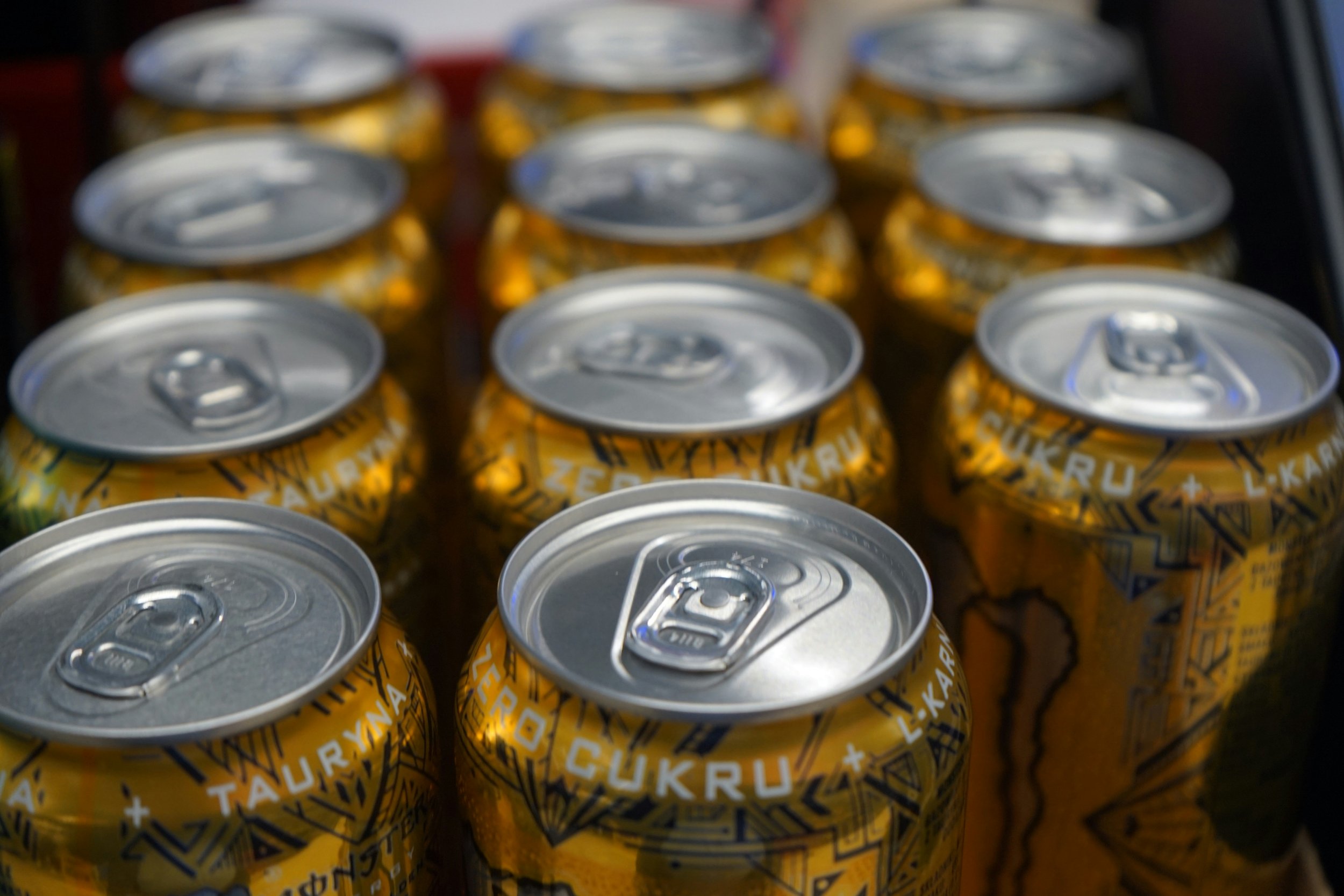
Photo by Tadeusz Zachwieja on UnsplashIn a university library today, you might hear the click of a pop-tab followed by a pressurized fizz more often than the click of a pen. As the end of the quarter loomed at my university this June, in the weeks preceding finals, I noticed the symphony of pop-tabs puncturing metal undertook an intense crescendo.
It seemed that nearly every student who entered the library was tethered to a source of caffeine (admittedly, I, too, contributed to this). Cans. Take-out cafe cups. Temperature-controlled, insulated beverage containers. The occasional ceramic mug. Anything that could hold a hot tea, an iced coffee, or one of the innumerable energy drink brands from the convenience store was commonplace.
As I went on with my finals preparation, however, I became increasingly shocked by how frequently I saw the latter: energy drinks. Despite being a frequent coffee-drinker, prior to this year, I’d never tried an energy drink. It was jarring when I walked into an 8:00 am lecture hall and observed someone crack open a can containing 3 times as much caffeine as the coffee in my hand. However, I soon found out that this steep caffeine consumption was commonplace among college students.
According to a study surveying U.S. college students, executed by Caroline R. Mahoney et al., “caffeine, in any form, was consumed by 92% of students in the past year,” with the “mean [daily caffeine] intake of 173 mg/d among caffeine users.” This caffeine dosage equates to between 1.8 and 2.8 cups of coffee, depending on the type or brew, with some forms being more concentrated. The study further cited that, while “coffee is the primary source of caffeine intake among the college students surveyed, [and] energy drinks provide less than half of total daily caffeine intake,” the quantity of total daily caffeine intake from energy drinks among college students is “more than among the general population.”
Moreover, a Harvard University paper noted the average caffeine intake for U.S. adults as “135 mg” per day. College students, then, are not only consuming more energy drinks—which could be largely due to these brands’ marketing campaigns targeting younger demographics—they’re consuming more caffeine as a whole. This begs the question: Why are young people reaching for a caffeine boost at these higher rates?
First, let’s consider the science of caffeine. In recent years, neuroscientists have been uncovering caffeine’s potential cognitive benefits. After all, caffeine is by no means an inherently negative substance. Stanford University Professor and host of the podcast “Huberman Lab,” Andrew Huberman, succinctly outlines the role of the caffeine molecule and its impacts on cognitive function; the “molecule exerts its stimulant effects primarily by blocking adenosine receptors, which normally promote relaxation and sleep.” Huberman outlines that caffeine’s presence, then, “enhances feelings of wakefulness,” and “increases the secretion of dopamine (a critical neurotransmitter for focus and motivation) and the upregulation of dopamine receptors,” both of which aid in “support[ing] focus and learning.”
To college students, these benefits are absolutely appealing. If you find yourself returning to the library in the early hours of the morning after spending a measly amount of time on your uncomfortable lofted twin bed, “feelings of wakefulness” is all you’re looking for. But these tendencies are the markers of a negative cycle which countless college students fall into: 8 a.m. lectures become the cue to crack open an energy drink, and 11 p.m. walks home from the library become the cue to start questioning whether you have any melatonin left in your dorm room.
Instead of prioritizing successful sleep or using naturally energy-boosting and sleep-inducing activities, young people are reaching for external boosts to take on their packed schedules. A key reason young people reach for these boosts is that they’re depending on external messages instead of their internal regulators—and the pressure on students only makes it worse. Whether it be social media promoting an unattainable hustle-culture, loved ones encouraging peak performance, the difficulty of balancing employment and schooling, or any other number of things, it can be profoundly difficult for students to shut their books or laptops. They feel that constantly pushing to get more done is the only right move.
Caffeine is seen as the easy, quick-fix boost—and its marketing is not on your side. As previously mentioned, one editorial outlines that energy drinks are “often targeted toward children and youth through carefully designed advertising campaigns as well as sponsorship of events.” Beyond outside pressures, external campaigns convince young people to reach for the brightly-colored, candy-flavored, caffeine-crammed can.
All of these components working in concert make it difficult for young people—especially students—to step outside this cycle of consumption and deprivation, or even recognize its negative impact on sleep, health and productivity. Despite these difficulties, I urge you to rethink the way you’re fueling your day.
If you’re constantly reaching for caffeine, it’s time to consider that the quick fix could really be a long-term wrench in your system. After all, putting off sleep to pull off caffeine-fueled all-nighters to study is not only ineffective for your learning, it's detrimental to your health.
First, it's time to discard the temptation of an all-nighter in the library. According to the American Academy of Sleep Medicine (AASM), “the best way to maximize performance on final exams is to both study and get a good night of sleep.” The AASM additionally says “sleep loss leads to learning and memory impairment, as well as decreased attention and vigilance,” and that among students, “shortened sleep time, erratic sleep/wakeup schedules, late bed and rise times, and poor sleep quality” are all “negatively associated with school performance.” In short, that all-nighter won’t help you retain more information, and it likely won’t boost your exam score; after all, the AASM says that “college students who pull ‘all-nighters’ are more likely to have a lower GPA.”
When you feel like your GPA is crucially important to you, it’s hard to step away from your studies, especially when a huge factor of your success—the hours you spend asleep—isn’t treated with the same respect as the hours you spend in the library. But I urge you to consider that what’s socially acceptable isn’t inherently reflective of what’s best for you.
Additionally, those innumerable hours in the library are not the answer to your struggle to retain information. Instead of chugging that energy drink and spending 8 more hours in the library, consider that you might not even need the fuel that this marathon of studying necessitates. Despite students being pressured to constantly pursue their education or personal growth, extended study sessions are not conducive to learning. Andrew Lawson’s piece for The Learning Zone summarizes this concept fantastically: “today, neuroscience, psychology, and educational research all prove one thing: after about 90 minutes, your brain simply can’t take in new information at the same level.” Accordingly, Lawson outlines that “90-minute, bite-size learning sessions consistently outperform marathon one-day trainings,” with this time period being proven as the “sweet spot for productive focus…[because] beyond that threshold comes decreased information retention, concentration challenges, and mental fatigue.”
These proposed ideal session lengths are backed by biological phenomena—Lawson describes that “your body naturally runs on ultradian rhythms, [which are] biological cycles of about 90-120 minutes,” and which “shape daytime alertness and learning capacity. Essentially, if you try to bridge these rhythms with the same cognitively draining task, like studying, without a break, you won’t be able to perform the task with the same success and effectiveness. Lawson says that it will cause “your internal systems [to go] into overdrive, leaving you feeling tired, dazed, and unable to focus.”
When your environment is infused with a hustle culture, you’ll easily believe that investing a few more hours of your night studying and a few more dollars for your caffeine is your best course of action. It’s time to rethink your assumptions. Instead of fueling your body in a way that goes against your biological, natural rhythms, fuel your body in a way that complements them.
This doesn’t necessarily mean doing away with caffeine entirely—as long as your use doesn’t disrupt your sleep. It means educating yourself on how to use caffeine, sleep, and other natural practices to enhance your productivity.
While you should consider individual variation when adopting tools for yourself, you can begin by implementing these few subsequent tips for fueling your body for learning and productivity without disrupting your sleep, or constantly searching for an external source of an energy boost.
First, if you wish to continue consuming caffeine, determine whether your preferred source is beneficial. The packaging of your caffeine matters. As articulated in a piece published by the International Food Information Council (IFIC), “synthetic and natural caffeine are nearly indistinguishable,” with the two being “chemically identical.” However, studies, like one by Dominic Schuttler et al., imply that coffee and energy drinks cause different physiological responses; this study outlines that “systolic blood pressure” and Periodic Repolarization Dynamics (PRD) levels both increase comparatively more dramatically with energy drink consumption than with coffee. In short, both measures indicate increased intensity of response to cardiac stressors. Given our limited understanding of how certain additives in some caffeinated beverages interact with caffeine, and the impact it has on our overall system, it may be best to consider forms of caffeine that cause a less intense physiological shock, like natural teas or coffee.
Second, consider the timing of your caffeine intake. According to the AASM, “caffeine can have a disruptive effect on your sleep…[and] can delay the timing of your body clock,” both of which can decrease your sleep quantity and quality. As such, the AASM encourages individuals to refrain from caffeine intake for more than “6 hours before bedtime,” as consumption any closer to sleep decreases quantity and quality.
Third, try implementing shorter study sessions (or, for non-students, work sessions, if this is applicable in your professional environment). While this is counterintuitive, the previously discussed research shows that this will increase your overall productivity. Not to mention, if you can complete your work in a shorter period of time, you preserve more of your day to pursue your other personal goals.
Finally, try implementing some of these medically-reviewed tips published by Healthline catered towards “naturally increas[ing] your energy levels without caffeine…: drink more water; get at least 7 hours of sleep per night; avoid daytime naps if you can; eat lots of plant-based foods, which may help provide energy without the crash of processed foods; [and] exercise daily, but not too close to bed time.”
Rethinking your habits is always a good practice. Step back, observe, and implement antidotes; fueling your body and mind successfully is critical to achieving any goal.
Written by: Lucy Newton
Tags: Student Wellness, Caffeine Culture
Check out our social media for more resources:
Additional Reading


Leave a comment