
Sex, Gore, and Spectacle in Horror Films: The Sensationalization of Violence Against Women
Written by: Rhilynn Horner
October 23rd 2025
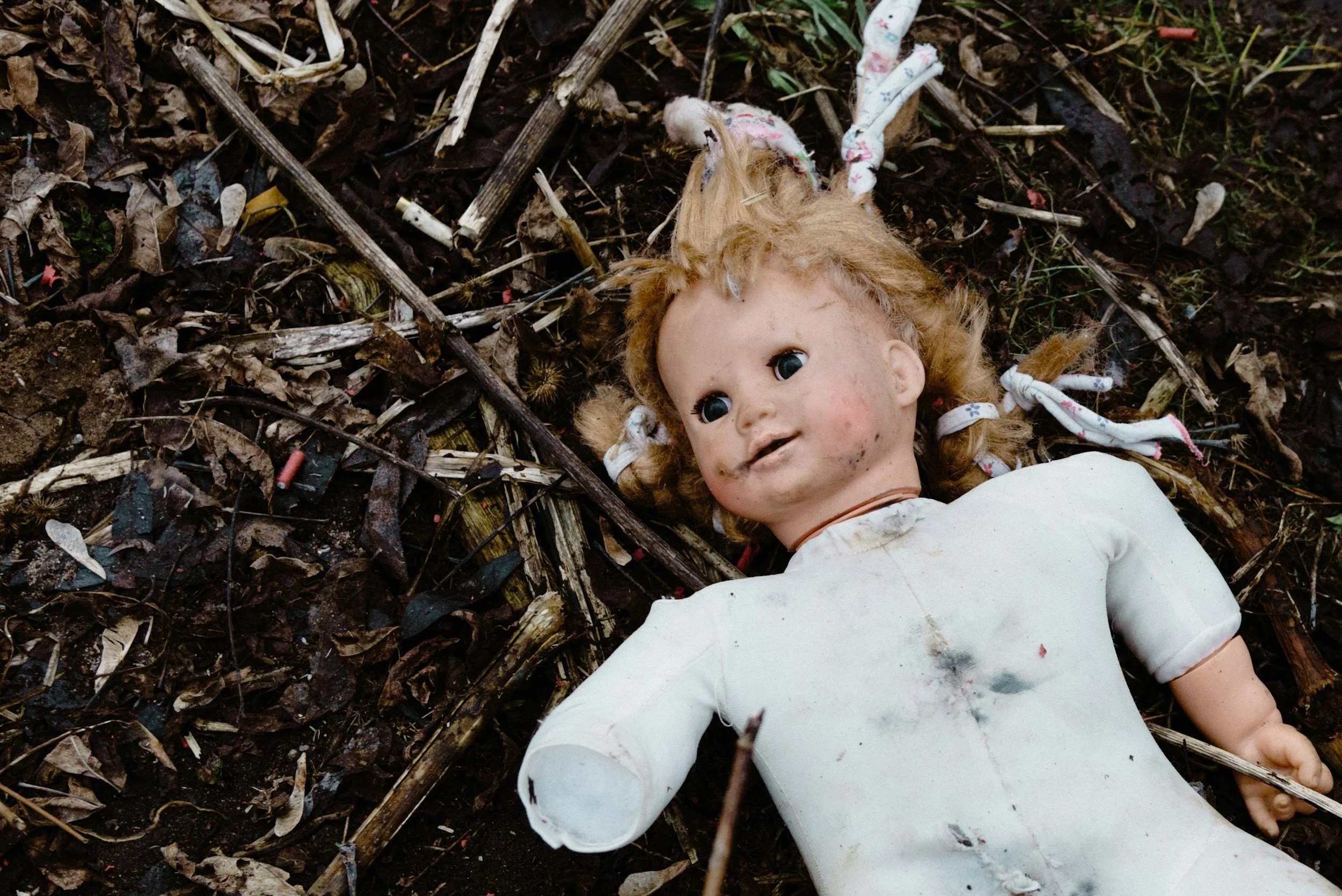
Artem Maltsev via UnsplashWith Halloween right around the corner, many of us are filling our watch lists with the spooky slashers or shocking thrillers that are a staple of the season. These films allow us to enjoy the adrenaline rush of a night full of jump scares, gore, and suspense, without actually experiencing any true danger. The fact that many of these also confront societal fears (government distrust, social and political issues, technology, climate change, war, etc.), also adds to these fear factors and establishes horror as a genre that can be deeply analyzed and reflected upon. However, exploring such topics means it’s no big surprise that the genre can have some problematic releases. The sensationalized way these films can depict female victimization, such as through brutality and sexualization, is one such common theme that crosses a fine line—one that exploits violence against women not just for added shock, but as a purposeful appeal to a particularly male audience.
The Victimization of Women and the “Final Girl” Trope
Women are often the primary targets of victimization in horror films, especially when looking at the genre’s early releases or famous slasher films, like “Psycho,” “Friday the 13th,” “The Texas Chain Saw Massacre,” or “Halloween.” Many of these characters endure violence as a result of sexual promiscuity or drug use. Such scenes, like when a female character is brutalized or killed right after having sex, imply female sexual exploration as a moral issue, with a violent death being the punishment. These women are also usually depicted as vulnerable, helpless teenagers or young adults, introducing gendered power dynamics that brutalize and even make a spectacle of female victimization.
These young women, who are the primary targets of this victimization, are objectified for the sake of the audience, with their suffering being the main allure. This is why the “Final Girl” trope is so popular in slasher films like “Friday the 13th,” in which a woman is the sole survivor and portrayed as morally superior to her peers (in earlier films especially, this is defined as being sexually pure, rule-abiding, and clean of substances), and has a key role in defeating the main antagonist. While initially the idea of this trope may seem empowering, its actual representation falls short, as the Final Girl in these films exists mainly as a spectacle stuck in a cycle of violence and brutality, and never as a survivor afterward. Also, the fact that the “sexually pure” Final Girl survives, while all her “sexually impure” friends die, connects back to the problematic idea that female sexual exploration is a moral issue. So, with how common such a trope was, or still is, we have to question the why behind it all: why is it that it’s women who are both the central victims and the brutalized survivors, and who is this plot device appealing to?
The Male Gaze and Eroticizing Violence
One answer can be found in Laura Mulvey’s theory of the “male gaze,” which explains how a male-dominated film industry, such as the horror genre, would naturally produce representations of women from a male point of view. Mulvey describes that such an industry would depict “[t]he image of a woman as (passive) raw material for the (active) gaze of a man,” with “[w]omen [being] displayed as a sexual object . . . of erotic spectacle." This is exactly the case in many of these horror films, where the over-the-top violence against women (and its gore and eroticization) becomes a kind of aesthetic, with women being sexualized and brutalized in equal measure. These scenes, depicting nudity and gore of women in vulnerable states, are often particularly prolonged in comparison to scenes of men being killed, blurring this line of horror and eroticism, and suggesting a sensationalization of female suffering for a male audience.
One extreme but great example of this is the shower scene in Alfred Hitchcock’s “Psycho,” likely one of the most famous horror movie scenes of all time. In this scene, Marion Crane, naked and vulnerable, is stabbed to death in her motel shower. Despite uptight film restrictions at the time, the scene was considered intensely brutal and obscene for its gory and erotic depiction of Marion Crane’s death, and went on to inspire many other similar scenes in later horror films. However, despite its fame, we must be aware of how it depicts that sensualized form of female victimization, involving an erotic, brutal murder directed by men, for men, where female vulnerability is a tool to establish women as that “(passive) raw material for the (active) gaze of a man.”
While we should expect the violence and gore that come with the horror genre, it’s important to be aware of the problems that arise when violence, particularly against women, gets sensationalized through sexualization or suffering. And no, enjoying the films that employ these does not make you problematic, nor does this article mean to “cancel” such films. But the horror genre can do better, especially as a tool for societal reflection, and it has been slowly improving with many newer releases (“The Babadook,” “Candyman,” and “Midsommar” are good examples). Both filmmakers and audiences need to continue to engage critically with these problematic tropes and cliches and ask questions about why these exist, who they exist for, and what they reveal about our society’s fears or beliefs. Doing so would help horror films in subverting, challenging, and properly reflecting societal norms and fears rather than reinforcing them, providing for a more immersive (and a more inclusive) experience for all.
Written by: Rhilynn Horner
About The Author: Rhilynn (She/Her) is an editorial intern and a graduate from UNC Chapel Hill with a degree in English & Comparative Literature. She loves to read and write on a variety of pop culture and social topics.
violence against women in horror films, male gaze in horror, the final girl trope, misogyny in horror
Sources:
https://pmc.ncbi.nlm.nih.gov/articles/PMC8668120/
https://iocdf.org/about-ocd/
https://www.ocduk.org/ocd/types/
https://iocdf.org/programs/ocdweek/
https://www.mayoclinic.org/diseases-conditions/obsessive-compulsive-disorder/diagnosis-treatment/drc-20354438
https://www.mind.org.uk/information-support/types-of-mental-health-problems/obsessive-compulsive-disorder-ocd/for-friends-and-family/
https://iocdf.org/about-ocd/treatment/erp/
https://iocdf.org/expert-opinions/mindfulness-and-cognitive-behavioral-therapy-for-ocd/
Additional Reading

Check out our social media for more resources:
Leave a comment