The Secret to Loving Books: A Guide for Parents and Beginners
Written By: Qinghe Wang
Date: May 29th, 2026
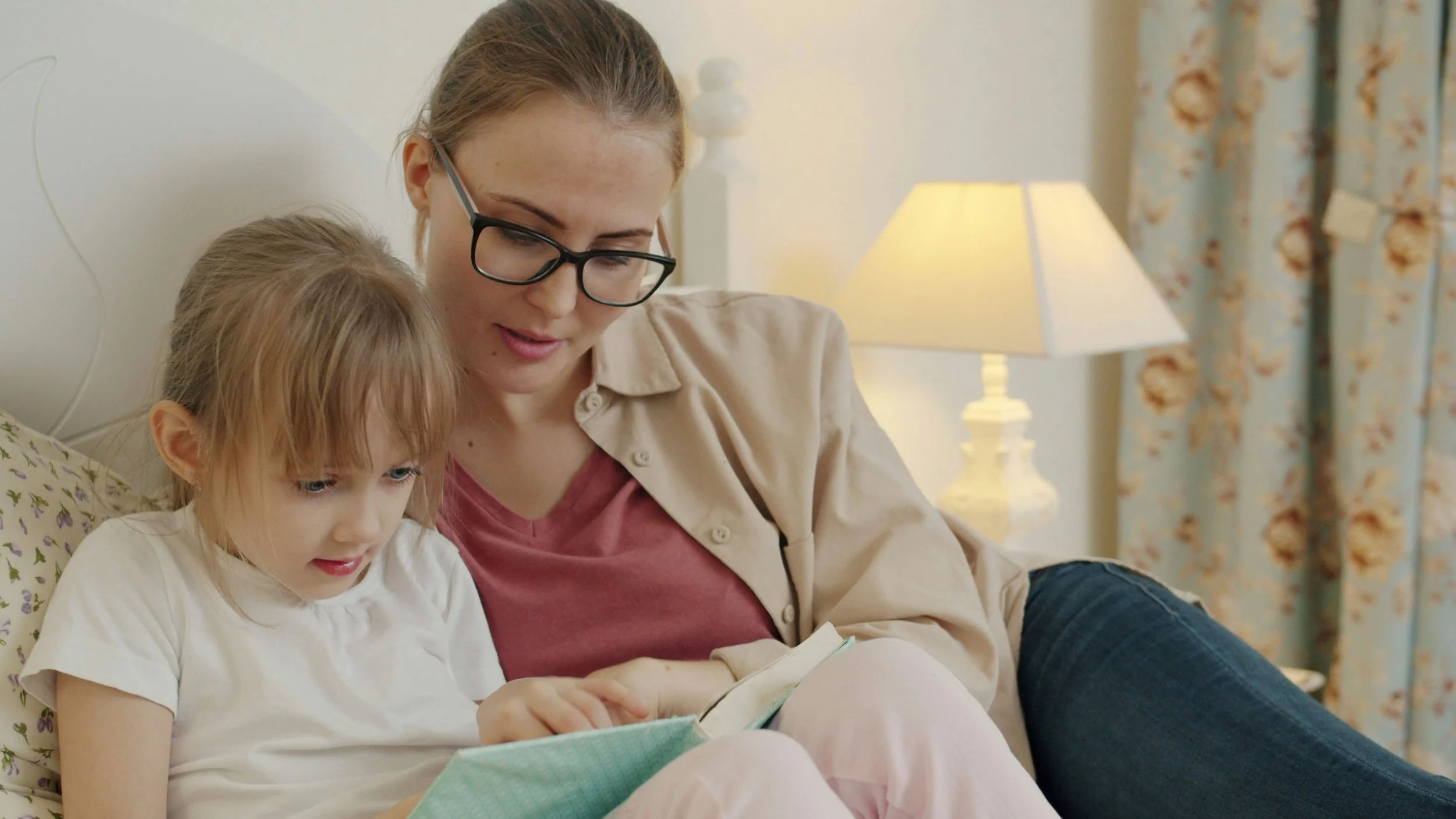
Photo by Vitaly Gariev on UnsplashA love of reading begins with interest. When a child is genuinely curious, reading stops feeling like a task and becomes something they want to do for fun. That’s why starting with a book series can be especially powerful—once they fall in love with one, they’ll be extremely likely to open another.
A great way to begin is with books that have fewer words and more visual support, such as picture books or manga. These build confidence and enjoyment first, before gradually moving into longer storybooks with richer text.
Below is a collection of series that are wonderful starting points for building a love of reading. Keep in mind: many readers older than the suggested ages still enjoy these stories—the age ranges simply reflect when children are typically able to read them independently.
Picture Books:
The Tyrannosaurus Series by Tatsuya Miyanishi (3-7 years old) – At first glance, these look like simple dinosaur picture books—but they hit much deeper than you expect. You’ll find it amazing how love and loss can be expressed in so few words and images.
Winnie-the-Pooh by A.A. Milne (5-9 years old) – Pooh’s simple way of seeing things often says more than complicated books do. It’s the kind of series that feels different when you read it as a child vs. when you read it later.
Magic School Bus by Joanna Cole (5-8 years old) – This book uses curiosity and adventure to explore science. It combines magic with science by turning everyday lessons into wild field trips inside volcanoes, the human body, and even outer space.
Franny K. Stein, Mad Scientist by Jim Benton (6-10 years old) – Franny is a mad scientist girl who solves everyday problems with wild inventions—and nothing ever goes as planned. The most delightful part of this book is its imagination, where ordinary situations turn into hilarious, science-fueled chaos that shows how creativity can be both powerful and unpredictable.
Manga:
Super Diaper Baby (6-9 years old) – This story is written by Dav Pilkey, who began creating early versions of his comics in elementary school. The story follows a baby in diapers who becomes a superhero, using his diaper as a source of unexpected “powers” while fighting crime in the most absurd, over-the-top ways imaginable.
One Piece by Eiichiro Oda (10-15 years old) – Monkey D. Luffy and his crew sail across a vast world in search of the legendary treasure “One Piece.” Along the way, the story weaves in short but deeply emotional flashbacks that give weight to each character’s dreams and struggles, while consistently emphasizing themes of freedom, friendship, and choosing your own path. Its imaginative storytelling is especially striking, as it includes power structures and human/animal species that cannot be found in any other book.
Naruto by Masashi Kishimoto (10-15 years old) – Naruto is an outcast boy who dreams of becoming the strongest ninja and earning recognition in a world that initially rejects him. The story blends high-energy ninja battles with powerful emotional arcs about dreams, rivalry, and personal growth. It also expands into larger political conflicts between villages and explores the difficult choices characters make in their attempts to achieve lasting peace.
The Promised Neverland by Kaiu Shirai (12-16 years old) – The Promised Neverland begins in a peaceful orphanage where children discover a terrifying secret: they are being raised on a farm, and the children who “leave” are actually taken to be eaten by intelligent demons. From that moment, the story becomes a tense battle of wits, where survival depends on careful planning, deception, and escape-room-style strategy. It also raises deeper questions about humanity, morality, hope, and despair.
One Punch Man by ONE (12-16 years old) – A hero so strong he defeats every enemy with a single punch, leaving him bored in a world full of increasingly bizarre threats. One of the most intense moments comes when an alien travels over millions of light-years to find the one prophesied to be his equal in strength. Yet, when he finally arrives, One Punch Man ends the fight instantly, leaving readers stunned.
Seraph of the End by Takaya Kagami (13-17 years old) – The story begins in an orphanage where Mika insists that all the children are “family,” while Yu struggles to fit in and refuses to fully accept that. However, Yu becomes the only survivor escaping the vampire's bonders and he vows to avenge his lost family. The story becomes even more emotionally intense when he discovers that Mika did not die—but was turned into a vampire himself.
Longer Fantasies:
The Magic Tree House series by Mary Pope Osborne (6-9 years old) – Jack and Annie discovered a mysterious treehouse that transports them through time and space on different missions. Every book drops you into a new world with dinosaurs, pirates, and ancient civilizations, letting the readers learn history while having fun.
Goosebumps by R.L. Stine. Horror stories (8-11 years old) – These are stories that are “just scary enough”, they are easy to finish but hard to forget.
Deltora Quest by Emily Rodda (8-12 years old) – A hero named Leaf went on a mission with his companions to recover magical gems and restore a kingdom protected by a powerful belt. It’s a classic fantasy quest full of puzzles, monsters, and hidden clues.
The Chronicles of Narnia by C.S. Lewis (8-12 years old) – When children step through a wardrobe into a magical world, they encounter talking animals, ancient prophecy, and war.
Harry Potter by J.K. Rowling (8-15 years old) – The story begins with the extraordinary event of baby Harry surviving an attack by the most feared dark wizard in the world, marking him as “the boy who lived.” As Harry grows up, he discovers he is a wizard and is invited to Hogwarts School of Witchcraft and Wizardry. The story expands far beyond school life, exploring education, politics, sports, and crime within a richly built magical society.
Spy School by Stuart Gibbs (9-12 years old) – A kid unexpectedly recruited into a secret academy where students train to become spies and get pulled into real missions.
Percy Jackson & the Olympians by Rick Riordan (9-13 years old) – Jackson discovers he is the son of a Greek god and is thrown into a hidden world of myths and monsters.
Twilight Saga by Stephenie Meyer (12-16 years old) – A human girl falls in love with a vampire so powerful that he must constantly restrain himself, aware that even a gentle embrace could unintentionally harm her. (The first book is generally appropriate for younger readers, but later books contain more mature romantic and sexual content.)
The Hunger Games by Suzanne Collins (12-16 years old) – Katniss Everdeen is forced to compete in a televised fight-to-the-death survival arena in a dystopian society. The story begins when Katniss’s younger sister is selected for the Games, and Katniss volunteers to take her place. The story combines intense survival tension with political rebellion and moral questions about power, control, and sacrifice.
Sherlock Holmes by Arthur Conan Doyle (12-16 years old) – Sherlock Holmes is a brilliant detective who solves complex mysteries using logic, observation, and deduction in Victorian London. He can often see patterns and clues others miss, solving cases that seem impossible and inviting readers to think alongside him as each mystery unfolds.
The Lord of the Rings by J.R.R. Tolkien (12-18 years old) – A small group sets out on a dangerous journey to destroy a powerful ring that corrupts anyone who comes close to it, drawing out the darkness within. As they travel across a vast and ancient world, the story explores friendship, sacrifice, and betrayal.
A Song of Ice and Fire by George R.R. Martin (16+ years old) – A political fantasy where noble families compete for power in a brutal and unpredictable world. The story is especially gripping because some characters deceive not only each other, but also the reader, constantly shifting your sense of trust and expectation. No one is truly safe, and decisions often carry hidden, long-lasting political consequences. (Explicit violence, sexual content, and mature themes.)
In the end, it all comes down to finding stories that spark genuine interest and enjoyment. If you or your child becomes especially drawn to a particular book or series, it can be a great idea to explore other works by the same author. Building a love of reading often starts with just one story that truly resonates.
Written by: Qinghe Wang
About the author description: Qinghe Wang is an editorial intern and currently a UC Davis undergraduate pursuing a degree in Philosophy with a minor in Writing.
Love for Reading, Book Series, Beginner Readers
Check out our social media for more resources:
Additional Reading



Leave a comment