
The Thing About Lithium Mining
August 15, 2025
Jacqueline Salazar Romo
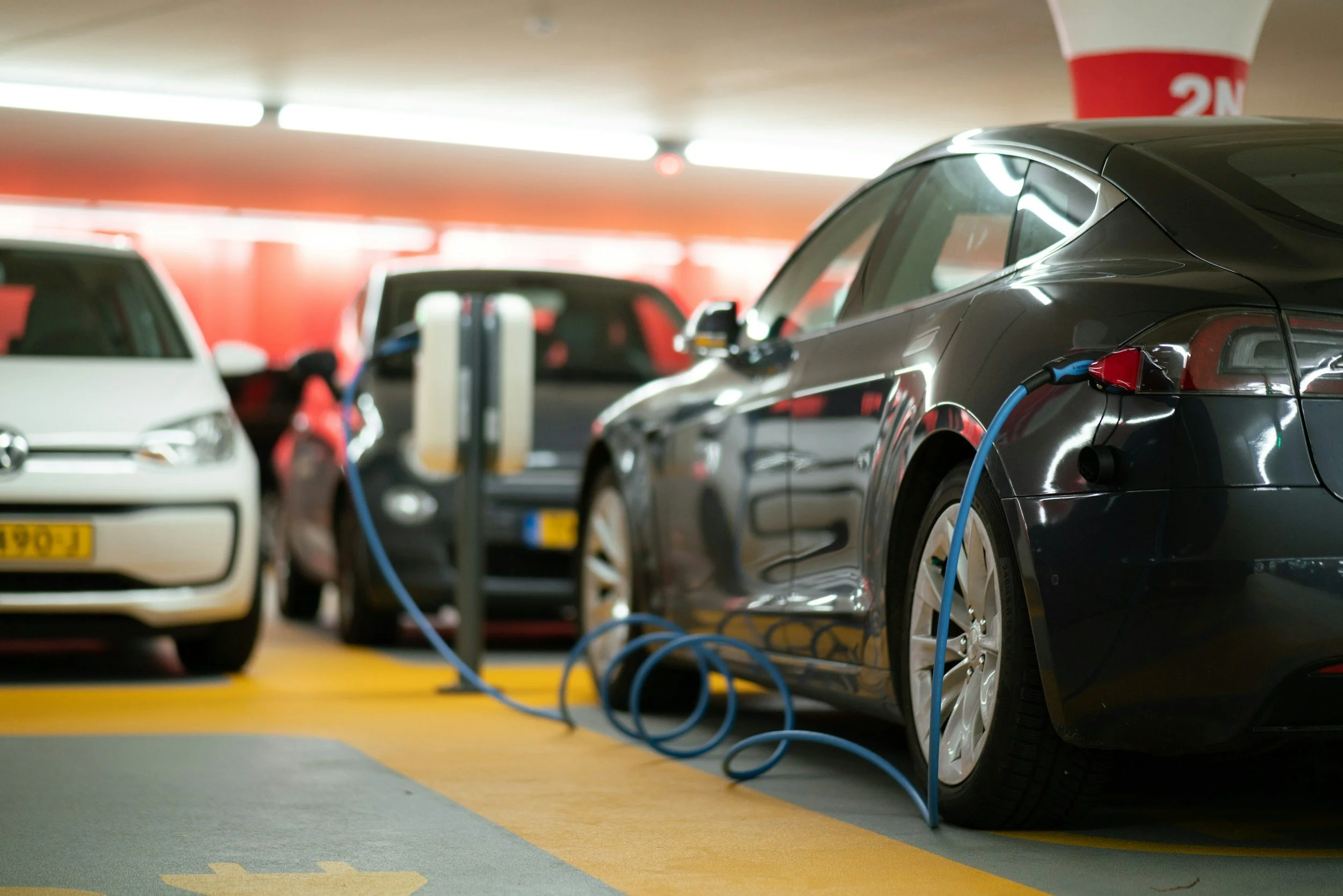
Michael Fousert, UnsplashAs society grows more environmentally conscious and we reconsider the hazardous role of fossil fuels and petroleum in our transportation and vehicular/automotive industries, one of the solutions you may naturally come to think of are electric vehicles, which have grown to be more in-demand within recent years. But the electric vehicle industry is not without its problems. One of its main issues? Lithium, the very material foundational to creating this alternative energy.
The word “lithium” (from Greek lythos, meaning “stone”) is a fitting name for an element with a rocky history, a silver-to-white solid and the lightest known metal under standard conditions, and that investors and innovators alike have a reliable and foundational cornerstone for the future, and a move away from fossil fuels and seemingly towards a more environmentally conscious approach to the ever-growing vehicular industry—hence, the present nickname of “white gold” or “white petroleum.”
When compared to other rechargeable batteries, lithium’s incorporation within batteries offers higher energy density and longevity, making for a portable and efficient power source with an overall higher performance and better charge retention. In short, lithium’s properties make it a viable source for electric conductivity and an attractive alternative to fossil fuels. However, lithium is not a naturally occurring element; the metal can mostly be found in either brine deposits —waters with high concentrations of salinity found in the likes of salt lakes— or hard rock. For the former, lithium extraction requires a lengthy evaporation process.
While the general public’s thoughts on electric vehicles are relatively positive or even hopeful, not everyone seems as optimistic or pleased with the prospects of lithium mining. Near the Nevada-Oregon line, for instance, a 2021 ruling by District Judge Miranda Du denied the requests of the Reno-Sparks Indian Colony and the Burns Paiute Tribe to reconsider the decision to allow a lithium mine to be constructed on sacred lands. The historical accounts presented as evidence by the tribes regarding Thacker Pass’s history as a massacre site, Du contested, were “too speculative” to warrant any temporary restrictions on the mining project. This ruling came weeks after the establishment and development of the Thacker Pass Lithium Mine, after the Bureau of Land Management’s final environmental impact statement for the mine’s approval, issued in December 2020. The tribes claim the Bureau’s decision violates historic preservation laws, as there was no consultation regarding the archeological survey that took place to evaluate the location as fit for mine construction. Tribal leaders and regional conservationists alike oppose the development of such a mine and accuse its proponents and funders of “greenwashing”—“We can't flush out all of the water from out of here and rip up all the grass, and the [sagebrush] and flip it around and call it green energy,” Shoshone-Paiute tribal activist Gary McKinney told NPR’s Kirk Siegler for his September 2021 piece on the tribal opposition and protesting that took place throughout that same year.
Beyond just national issues, lithium is not new to creating disputes and battles for control of this resource, cautionary tales reflecting off quickly evaporating waters and empty promises of carbon-emission neutrality.
In mid-October 2021, Chile was reportedly set to open lithium reserves containing up to 400,000 tons of the invaluable mineral, offering new contracts to prospective investors and mining companies in order to reclaim their share of the growing market and supply for its demand. This decision comes despite the pleas of Chilean scientists and indigenous leaders like Sonya Ramos who, in an interview with The Guardian, holds concerns that the supposed environmental benefits of lithium mining is greatly outweighed by the harm being inflicted upon the biodiversity and general quality of life: “If the countries that buy the lithium could understand the harm they’re doing, they will understand they are completely destroying a place far more valuable than all the lithium they could extract.” Approximately 433 billion liters of water from the Atacama salt flats has been lost to the brine evaporation process since lithium mining operations began in the area, with a projected loss of 1.5 trillion more by 2043; lithium mining in the country is but a microcosm of the drastic class and socioeconomic disparities between the select wealthy and the working-class or indigenous Chilean citizen.
In Bolivia, lithium is the center of a complex mixture of conspiracy and violence; the complicated political turmoil following the election of 2019 and the exiled former president Evo Morales, the bloodshed and civil devastation over a drastic overthrowing and an election gone wrong, opens conspiracies that have graver and much deeper implications; in a press conference with then-president Andrés Manuel López Obrador of Mexico, Bolivian leader Luis Arce stipulated there was more to Morales’ displacement than what it seemed: “It was evident to us that the economic objective of the coup was to control the lithium.”
Thus, there is also another overlooked aspect to consider, and that would be taking into account how the mines impact human geography of a given area; while the lithium mining industry may be operating based on environmental progress through the demand for lithium-ion batteries, the silvery-white metal overshadows the humanitarian and class crises provoked by these mines; ultimately, lithium is not just an element on the periodic table, but an element of much more complicated international unrest, and a component of not only car batteries, but of environmental and sociopolitical conversations being brought to the surface.
Written by: Jacqueline Salazar Romo
About the author: Jacqueline (she/they) is an editorial staff member who loves writing, whether creatively or within a non-fiction context, especially to explore current issues and personal interests.
Tags: Environmentalism, Lithium Mining, Climate Change
Check out our social media for more resources:
Additional Reading



Sources:
https://www.nytimes.com/2025/08/11/business/ford-electric-vehicles.html
https://www.cbsnews.com/news/electric-vehicles-consumer-reports-reliability-report/
https://cronkitenews.azpbs.org/howardcenter/lithium/stories/indigenous.html
Leave a comment