
Tropical House Systems
What are House Systems?
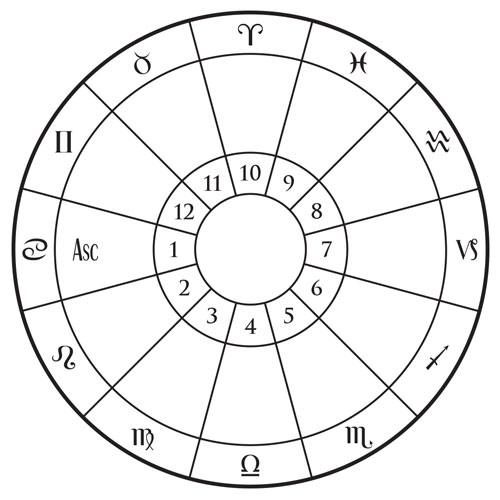
Ancient astrologers longed to prove our existence in time and space. So, they drew charts (at least 24) and divided it into 12 houses to root the foundations of human life. By signs, planets, and aspects, we get House Systems.
…” Placidus or Whole Signs”, “Is Equal Signs Inaccurate?..
Yeah, we know, a ton of confusion. And we’re here to help.
1
Placidus ( Unequal)
Placidus is a popular system in Tropical Astrology. It’s a time-based chart created in the 17th century, O degrees of Aries starts the vernal equinox.
The Ascendant (ASC) is the starting point in Placidus. Let’s say you are a Leo Ascendant in 10 degrees, you were born when Leo was in 10 degrees on the eastern horizon.
2
Equal House
Equal Signs date back to the 1st and 2nd centuries, ranking it as the oldest system.. Houses are ecliptic and split in twelve equal segments starting from 0 degrees at the ASC - A popular system today’s astrologers use.
Whole Signs
A rival of Placidus, Whole Signs uses the rising sign as the 1st house, and the rest of the signs are placed in the following houses.
There’s a clarity rulership, angularity, and traditional aspects.
Like Equal Signs, it’s presumed that Whole Signs is the oldest system used. Originated in Hellenistic Astrology and popular in Vedic Astrology. Also, an ecliptic-based system. .
3
Regiomontanus
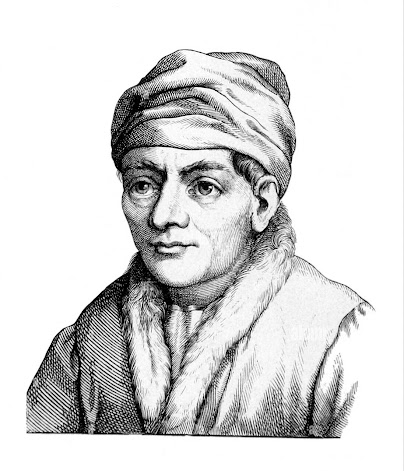
Developed by the mathematician, astronomer, and astrologer Regiomontanus (Johannes Müller, 1436-1476). He divided the celestial sphere into twelve equal segments of thirty degrees. Divisions are quad-based along circles that take in the North and South points on the horizon.
4
Campanus
Like a lemon, here’s another system split into twelve segments. The celestial space is above and below the horizon - (north and south)
A space-oriented house system named after Campanus of Novara (1220-1296)
5
Porphyry
Porphyry creates an intermediate house by slicing each of the four quadrants into three equal-sized segments.
Traced back to scholar and ancient philosopher, Porphyry (233-305)
Koch
This system emphasizes the MC-IC axis in a chart.. Starting at the Midheaven, the time turns backward until each zodiac meets at the Ascendant, forming the MC.

6
Image 1 by , Image 2 by Musuem of Fine Arts, Budapest, Image 3 by, Image 4 by Almany, Image 5 by Wikipedia, Image 6 by
Written by: Hezekiah Ortiz