
Understanding the Bystander Effect: When to Take Action
Written by: Rhilynn Horner
Date: November 4th, 2026
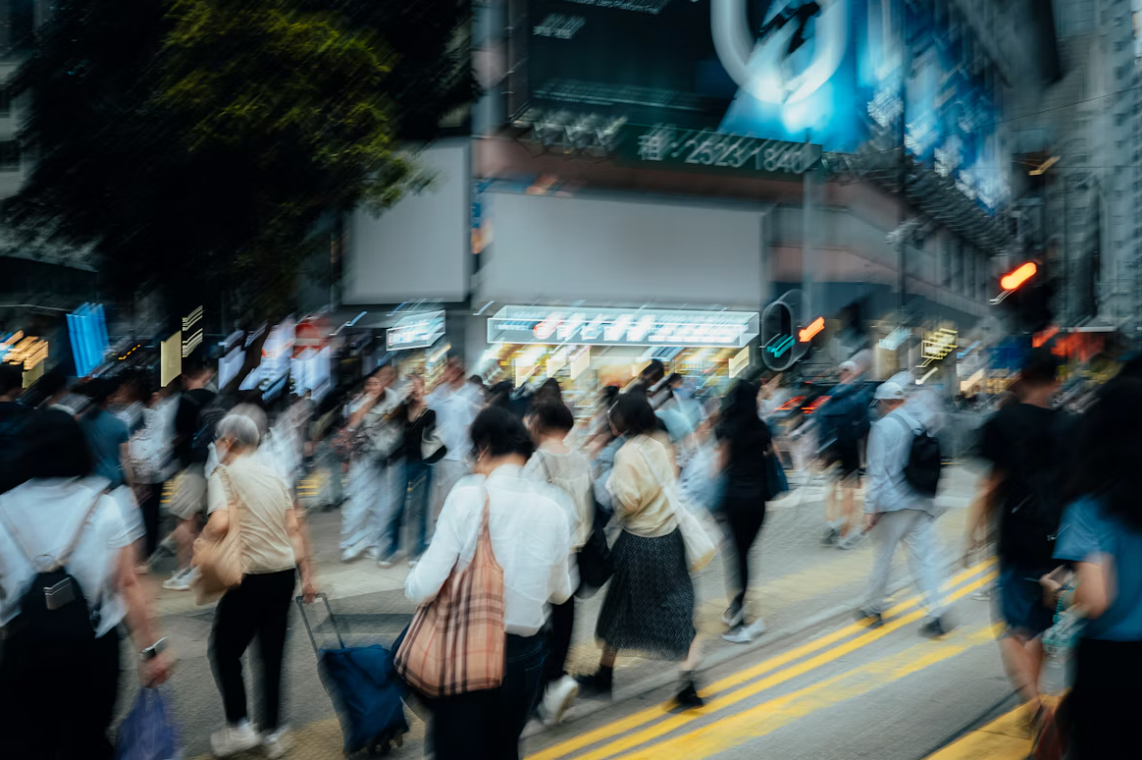
Desmond Leung Via UnsplashIn moments of crisis, immediate, decisive action is required, and many of us might claim we’d rise to the occasion. But if a crisis did occur, how would you actually respond? While it’s easy to say you’d be the hero, it’s even easier to freeze, hesitate, or panic. When a matter of seconds can determine life or death, there’s little room for hesitation. That’s why it’s important to understand why people sometimes fail to act. One such phenomenon is the bystander effect.
What Is the Bystander Effect?
The bystander effect is a social phenomenon that occurs “when the presence of others discourages an individual from intervening in an emergency” or situation where intervention is needed. These situations can range from life-threatening emergencies, like medical emergencies or major car accidents, to less immediately dangerous situations, like harassment or bullying.
The term “bystander effect” was popularized after the 1964 murder of Kitty Genovese, who was fatally stabbed in the Kew Gardens neighborhood of New York. Initially, reporters claimed that dozens of witnesses had seen the stabbing but had failed to call the police or try to intervene themselves. While later reexaminations revealed that the reported number of witnesses was heavily exaggerated, the tragedy nonetheless sparked important discourse on the bystander effect and its role in emergencies.
Following Genovese’s murder, psychologists Bibb Latané and John Darley led the charge in researching the phenomenon. Their studies found that “any person who was the sole bystander helped, but only 62% of the participants intervened when they were part of a larger group of five bystanders.” Since then, further studies and a meta-analysis have provided additional evidence for this pattern. Researchers have even observed the bystander effect in young children.
Typically, the more bystanders there are, the less likely any one of them is to intervene. However, the bystander effect is not universal; the likelihood for someone to intervene can vary depending on the situation and its perceived urgency. Likewise, the reasons behind the bystander effect can be complex and vary depending on the people involved and the situation. Regardless, Latané and Darley identified three main explanations for the phenomenon: diffusion of responsibility, evaluation apprehension, and pluralistic ignorance.
Diffusion of responsibility occurs when people assume they have less responsibility because others are present. For example, if a serious car accident occurs and several people witness it, an individual may be less likely to dial 911 under the assumption that someone else will.
Evaluation apprehension refers to the fear of being judged by others for intervening in an emergency. For example, a male individual may be less likely to perform life-saving CPR on a female individual or hesitate too long before doing so out of concern that the physical contact could be perceived as inappropriate. Alternatively, an individual might worry about misjudging an ambiguous situation, such as when someone appears to be sleeping in a car but has actually passed out.
Pluralistic ignorance is the assumption that, if no one else is taking action, there is no real emergency. For example, if someone notices smoke rising from a house, but no one else intervenes or appears alarmed, they may be less likely to intervene.
The bystander effect allows situations like these to continue or escalate, and it doesn’t stop at road rage incidents. It can also appear in situations where harm is less obvious, or the danger isn't immediate. For example, when people witness bullying, workplace harassment, or public microaggressions, they may hesitate to intervene because they assume someone else will, fear public judgment, or assume the situation doesn’t require intervention if no one else is. In fact, some studies suggest that people are more likely to intervene when an emergency is clearly recognizable. However, any potentially harmful situations, critical or otherwise, should be addressed.
How to Be an Upstander
Countering the bystander effect means being an upstander. Upstanders are people who choose to help others or improve a situation by intervening and offering support. They are crucial to helping a situation because one upstander can encourage more bystanders to also take action. However, to be an upstander, you must always prioritize your own safety by assessing a situation, recognizing potential dangers, and choosing the most appropriate way to help.
If you’re unsure how to respond to a situation, Stanford University identifies four D’s of intervention that you can consider:
Direct: Address the situation directly. For example, speak up if you witness someone being bullied and check in with the individual(s) who might need help. If you’re unsure whether someone needs help, ask them: “Are you okay? How can I help?”
Delegate: You don’t have to handle the situation alone; find some help. Depending on the situation, you can ask a friend, an authority figure, or the police for help. For example, you might ask a specific person to call 911 to prevent diffusion of responsibility, or inform your supervisor about workplace harassment.
Distract: If confronting the situation directly could put you or someone else at risk, you could “interrupt the situation or redirect [who] may be at risk” without directly confronting the individual responsible. For example, if you notice someone in an uncomfortable conversation, you can ask them to help you with something in the other room to help them leave the situation.
Delay: Intervention doesn’t always end with the immediate situation. After an incident occurs, you might need to continue checking in with the individual(s) who need help and offer support. For example, accompany an intoxicated individual until they reach a safe place.
As an upstander, you can make a positive difference in someone’s life. Even a small intervention can make a lasting impact and encourage others to do the same. Sometimes, all it takes is one person to make all the difference.
Written by: Rhilynn Horner
About the Author: Rhilynn (She/Her) is an editorial staff member and a graduate of UNC Chapel Hill with a degree in English & Comparative Literature. She loves reading and writing about a variety of pop culture and social topics.
The Bystander Effect, Being an Upstander, Diffusion of Responsibility
Additional Reading


Sources:
https://www.psychologytoday.com/us/basics/bystander-effect
https://www.apa.org/gradpsych/2012/09/tall-tales
https://pmc.ncbi.nlm.nih.gov/articles/PMC6099971/
https://psycnet.apa.org/doiLanding?doi=10.1037%2Fa0023304
https://journals.sagepub.com/doi/10.1177/0956797615569579
https://www.mcgill.ca/oss/article/critical-thinking-history/bystander-effect-started-lie
https://www.psychologytoday.com/us/basics/bystander-effect#who-coined-the-bystander-effect
https://medschool.duke.edu/news/no-matter-where-they-live-women-are-less-likely-get-bystander-cpr
Check out our social media for more resources:
Leave a comment