
What It Is to Be a Woman
Written by: Rhilynn Horner
April 17th, 2026
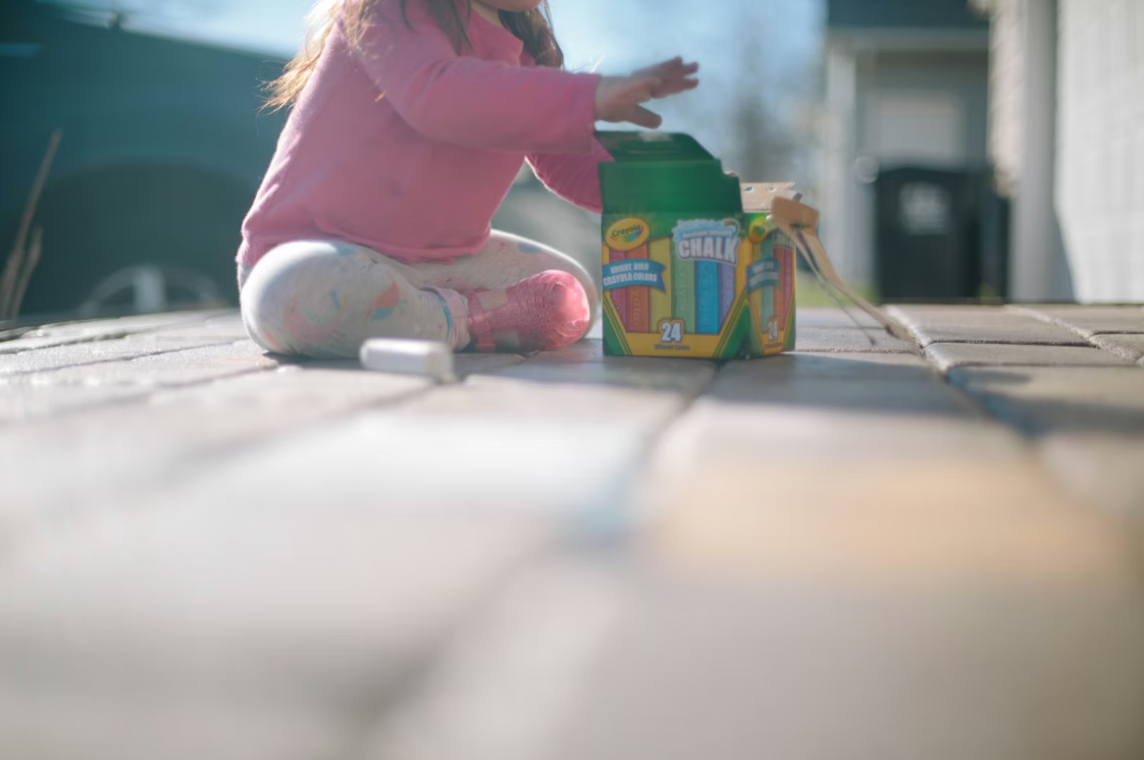
Carly Kewley via Unsplash“The sphere to which she belongs is everywhere enclosed, limited, dominated by the male universe: as high as she climbs, as far as she dares go, there will always be a ceiling over her head, walls that block her path.” Simone de Beauvoir, “The Second Sex”
I am a woman. But what is it to be a woman?
Being a girl didn’t seem to matter as much in my earliest years: I’d play, laugh, talk and fight with my peers of all genders. For me, holding hands with a boy wasn’t weird or gross—none of that meant anything until adults assigned meaning to it. Suddenly, any boy friends turned into boyfriends: “Don’t you look cute together?” The adults would ask. These insinuating questions seemed innocent at first, but they sowed corrupting seeds into our impressionable minds. Adults were telling us we were different, meant to exist in separate spheres. We were oil and water, unable to mix into each other's spaces. No longer was I a child playing with other children: I was a girl playing with boys. These seeds would soon turn into suffocating vines.
In elementary school, roots started to grow. Our society began to teach us our respective influences: boys had to be tough, confident and active, like our presidents, like NFL athletes. Girls had to be pretty, nurturing and passive, like a princess, like a mother. Girls who were the former were called tomboys, and boys who were the latter were called pussies. After all, a boy shouldn’t cry, and to cry is to be a girl.
Of course, as kids, we didn’t understand why we felt the way we did. Instead, we trusted adults to tell us the “rights” and “wrongs” of the world—a world dominated by men, not that I had fully understood that. No, all I observed was that it was always okay to act like a boy, but a boy should never act like a girl. So, boys soon became my standard: the goal to reach, the ones to outperform. I grew to hate the Barbies, the fashion, the makeup, all the things that could label me as “too much of a girl.” Boys were taught that these were revolting, vapid and shallow, so I believed them. Why wouldn’t I share similar thoughts? Liking “girly things” only made me more different, so I was proud to reject them.
Through middle and high school, these roots grew into some kind of sacrosanct principle: too deeply ingrained to be interfered with, and now systemic in how we understood each other and ourselves. We hit puberty, and our bodies began to develop. With it, the differences and the disconnect between “boy” and “girl” only grew wider. It felt like, to be accepted, to be popular, meant you had to be the most “boy” or “girl” you could be. Yet I didn’t want to accept any part of it: the leg and armpit hair I was expected to shave, the training bras my mom urged me to wear, the physical strength I suddenly lacked compared to the boys. To me, these changes were grotesque, just more evidence of my stark otherness. So with these changes came a shift in my experiences: boys grew to reject me socially for being a girl, and my rejection of anything “girly” made it hard to fit into the sphere of “girlhood” I was supposed to belong in. I never doubted that I was a girl, and yet, I felt lost and incongruous. I was an imposter from inside and out, an unbecoming anomaly at odds with my world.
As I grew into my young adult years, I realized my understanding of being a “girl” was plagued by an internalized misogyny—an infestation that grew from a patriarchal society that called men “strong” and anything to do with a woman “weak.” Realizing this, I allowed myself to enjoy what I used to refuse: makeup, skirts, the pleasures of feeling pretty… But I still felt like a fake. I couldn’t fit into the sphere of “woman” as defined by men, even though it was the only one seemingly allowed for me. Instead, I wanted to exist as a woman without the scrutiny of the male gaze: understood only by my actions and experiences, rather than what I am in terms of a man.
And so I am a woman, and yet I am not. I desire to reestablish my identity in a sphere of my own making—not in the limiting, binary construction by a patriarchy that dictates how we should be. Instead, I want my values, my dream for autonomy, my reclaimed love of a cute skirt, and simply all the aspects of just me, to be what ultimately stands out, whether womanly or not. And I know I am not alone in this feeling: not necessarily at odds with our gender, but with the sphere we’ve been forced into. So, for all of us, I wish for a better world where we don’t have to fight just to exist, where we can reclaim the freedom taken from us since birth, and where we can one day define who we are and who we want to be for ourselves.
Written by: Rhilynn Horner
About The Author: Rhilynn (She/Her) is an editorial staff member and a graduate from UNC Chapel Hill with a degree in English & Comparative Literature. She loves to read and write on a variety of pop culture and social topics.
Gender Identity, Internalized Misogyny, Female Autonomy
Additional Reading
Check out our social media for more resources:
Leave a comment