5 Banned Books That Deserve a Spot on Your Reading List
July 25th, 2025
Written by: Rhilynn Horner
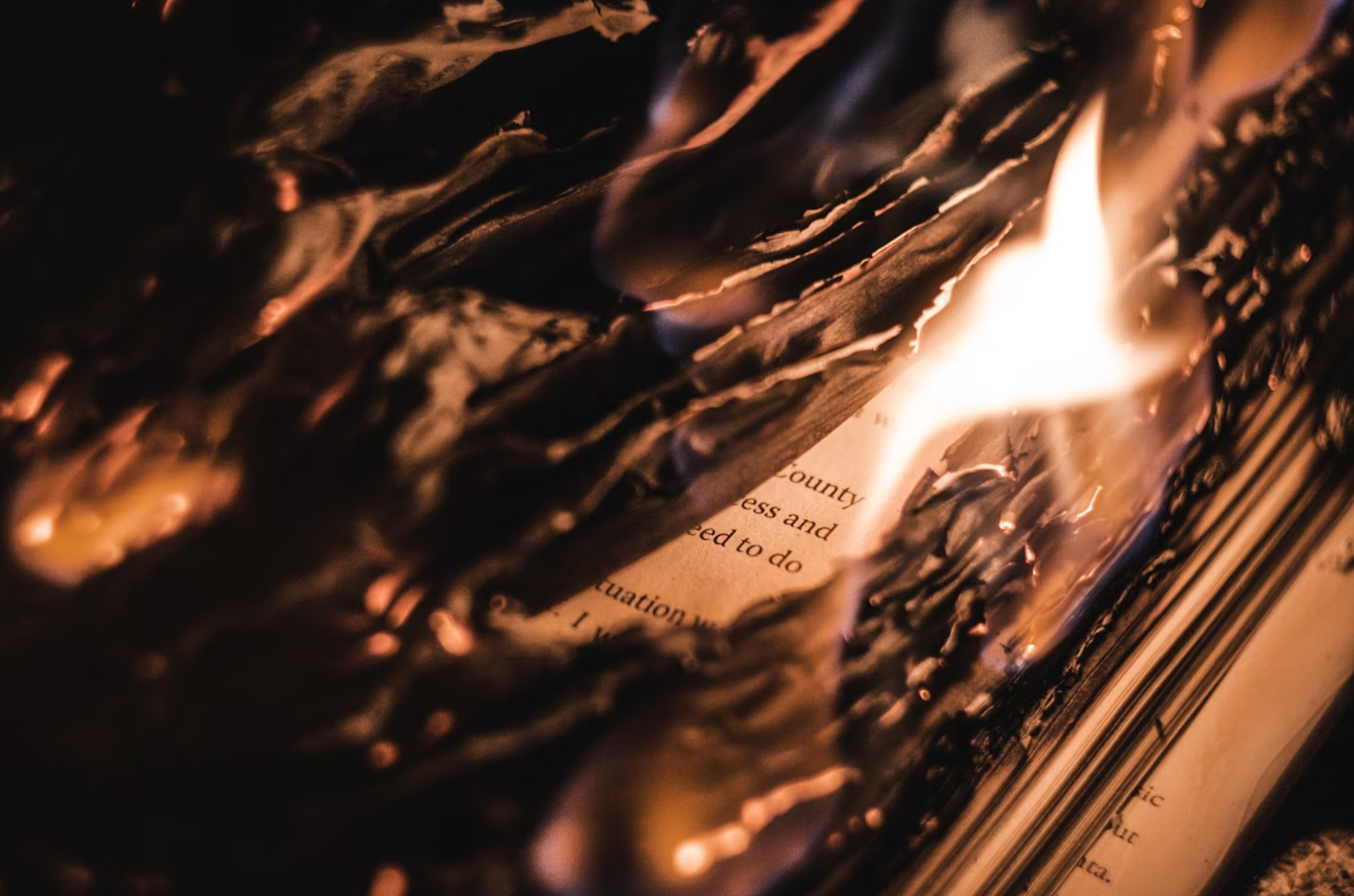
Brendan Stephens via Unsplash“But the peculiar evil of silencing the expression of an opinion is, that it is robbing the human race; posterity as well as the existing generation; those who dissent from the opinion, still more than those who hold it. If the opinion is right, they are deprived of the opportunity of exchanging error for truth: if wrong, they lose, what is almost as great a benefit, the clearer perception and livelier impression of truth, produced by its collision with error.” – John Stuart Mill
Every year, thousands of books are challenged or banned, with even more going unreported. These are thousands of attempts to eradicate the freedom of written speech, often with a guise of good intention or a strong moral imperative to protect others, especially children, from difficult or uncomfortable content. However, these challenges are often the result of deep-seated hatred, fear, or intolerance towards certain beliefs, identities, or ideas, and restrict the free will and access of others to information. Such restrictions are detrimental, not only by completely removing the choice of others, but also by limiting the potential to understand and interact with diverse perspectives, ideas, and experiences. We must engage with these works to further our understanding of the viewpoints often oppressed today, and to grow our knowledge on why certain books come under fire and why exactly censorship is so harmful. To help you with that endeavor, I’ll be providing you with a few notable challenged or banned books spanning various topics and reasons for censorship, as well as why they deserve a place on your reading list!
1) John Milton’s Areopagitica (1644)
Beginning with a more historical work is John Milton’s Areopagitica, a written speech to the Parliament in England in support of the freedom of the press. While not banned in the way books are banned nowadays, Areopagitica was published illegally in direct defiance of the Licensing Order (pre-publication written censorship), and was not republished until almost 100 years later.
Now, I know what you’re thinking: why should you read such an old, text-heavy, and challenging piece of writing? Well, despite its age, this work is remains highly influential and is often cited in opposition to modern book banning. Some notable ideas include Milton’s arguments that censorship stifles the pursuit of truth, undermines societal moral developments by encouraging vanity, and overall prevents individuals from making informed choices by understanding both “good” and “evil.” So, if you wish to strengthen your views against book banning or to understand its harms, then give Areopagitica a chance!
Other related works to consider:
John Stuart Mill, On Liberty (1859)
2) Vladimir Nabokov’s Lolita (1955)
Perhaps one of the more risqué novels on this list is Vladimir Nabokov’s Lolita, contested for its depictions of pedophilia and related fears: appealing to pedophiles as a “how-to,” giving pedophiles terminology like “lolita,” or encouraging pedophilic behaviors, to name a few. While not a title officially banned federally in the United States, Lolita was banned by several local jurisdictions, as well as in other countries, under claims of obscenity during its publication. However, the work is often defended as a cautionary tale, as well as a scientific and notable literary classic.
While undeniably an uncomfortable read, Lolita opens a unique discussion in the context of contemporary book banning, especially given that censorship is often defended as protecting children. As we can all agree that pedophilia is abhorrent, a question is raised: why are so many of today’s challenged books centered on racial or queer identity, while Lolita remains largely unmentioned? Its continued presence suggests that many book challenges today are not truly about safeguarding children, in which case Lolita would be a prime target by book-banning groups, but are instead driven by a hatred and discrimination seeking to silence minority groups and their experiences. Additionally, I recommend Lolita as a tool to reflect on your own views about the impact of literature, as it offers valuable perspectives on different ways in which books can be perceived as harmful or not — there is truly no other read like it!
Other related works to consider:
John Fowles, The Collector (1963)
3) Margaret Atwood’s The Handmaid’s Tale (1985)
A dystopian story with feminist themes, The Handmaid’s Tale describes the intense dehumanization of women in the male-dominated, totalitarian Republic of Gilead (formerly the U.S.). Due to its themes and depictions of “human sexuality” and a “discussion of feminism and extremism,” many critics of the novel claim the book is “material that may discomfort students,” and thus should be censored from schools. Other challenges also claim the work is “anti-Christian” due to the antagonists of the work being described as fundamentalist Christians. However, these challenges are refuted by Atwood, stating that in no way is her work antireligion, but instead should act as a cautionary tale of “the use of religion as a front for tyranny... a different thing altogether.”
While the horrific experiences the women of Gilead are subject to are indeed “discomforting,” the novel, regardless, provides a great opportunity for students to discuss and make connections about our world today, especially in today’s climate concerning women’s rights (and the attempts to strip them away). The conversations novels like The Handmaid’s Tale elicit take us a step closer to deconstructing the systemic issues plaguing the U.S. for millennia. Any attempts to censor these works, especially those that highlight governmental or religious corruption, deny the ordeals or experiences many have or are going through, and revoke the invaluable ability of these works to spark change.
Other related works to consider:
Suzanne Collins, The Hunger Games (2008)
Art Spiegelman, Maus (1986)
Ray Bradbury, Fahrenheit 451 (1953)
George Orwell, 1984 (1949)
4) Toni Morrison’s Beloved (1987)
Toni Morrison’s Beloved is a novel set in the aftermath of the American Civil War, confronting the generational horrors and lasting trauma following slavery with unflinching honesty. Many challenges against the novel cite the presence of physical and sexual violence, citing the work as “moral sewage.” One North Virginian parent even demanded the novel be removed from an Advanced Placement English class after it gave her white son nightmares, even though students were allowed to opt out of reading any novels with disturbing themes.
However, those who support banning Beloved often overlook a crucial understanding: a novel explaining the horrific themes of slavery should feel equally horrific to read. Like with The Handmaid’s Tale, attempting to censor or sugarcoat each narrative surrounding such ideas will dilute or remove their truth and undermine their educational value. Instead, Beloved should be read to feel such discomfort and embrace its emotional weight, to truly understand these historical experiences that those in power would likely desire us to forget.
Other related works to consider:
Toni Morrison, The Bluest Eye (1970)
Harriet Beecher Stowe, Uncle Tom’s Cabin (1852)
5) Maia Kobabe’s Gender Queer: A Memoir (2019)
Understood as the most banned and challenged comic in 2023, Maia Kobabe’s Gender Queer: A Memoir has been a highly controversial work, often on the chopping block for censorship, especially in schools. This coming-of-age comic follows Kobabe through eir exploration of eir identity as non-binary and asexual, and has been challenged due to containing LGBTQIA+ content and “sexually explicit” images deemed not suited for younger audiences. In fact, many of these challenges have cited the comic as “pedophilic pornography,” or “evil [and] wicked,” despite many of these challenges coming from parents who only “read some snippets” of the work.
Opposite to what these censors claim, Kobabe’s memoir is often attacked not for the sake of truly protecting children from pornographic material, but instead from hateful homophobic rhetoric and the fear of the comic “converting” children. After being asked about these controversial scenes, such as depictions of oral sex and masturbation, Kobabe responded with this: “The topic of gender touches on identity and touches on sexuality . . . And it’s hard to fully explain, I think, how a gender identity can impact every facet of life as an adult without touching at least a little bit on sexuality. And so I wanted to not shy away from that.” These scenes depict a realistic experience of growing up through a lens of sexuality, which many prefer to deny exists. However, for a comic whose goal is to portray an honest, vulnerable journey to offer visibility and relatability for those who often do not see such representation, it is clear that such scenes are not meant to be pornographic material in any manner, but educational.
Other related works to consider:
George M. Johnson, All Boys Aren't Blue (2020)
Alison Bechdel, Fun Home: A Family Tragicomic (2006)
John Green, Looking for Alaska (2005)
Justin Richardson and Peter Parnell, And Tango Makes Three (2005)
Stephen Chbosky, The Perks of Being a Wallflower (1999)
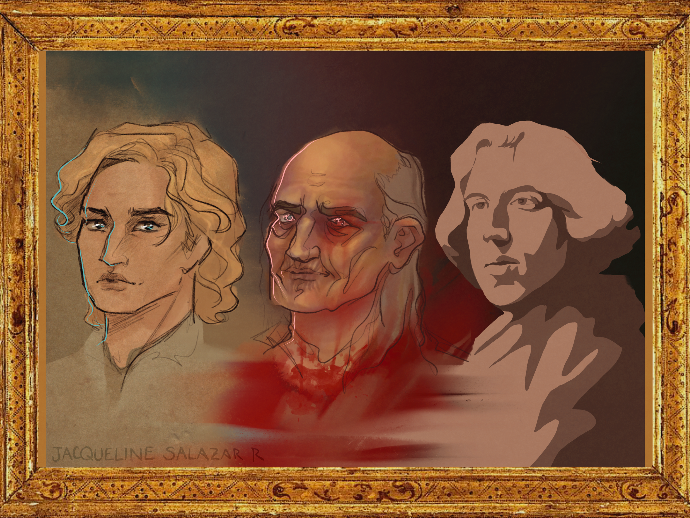
Oscar Wilde, The Picture of Dorian Gray (1890)
There is a near-infinite list of challenged or banned books waiting for you to read, ones of which may contain difficult content, but also contain very valuable content to understanding our world and its injustices. While I prioritized including titles of unique topics often criticized for this list (law and government, religion, sexual obscenity, gender and sexuality, race, etc.), it is important to note that a vast majority of contemporary book challenges focus on works that highlight minority experiences. This is not a coincidence, as censorship has always been a systemic tool to maintain unequal and domineering power structures. As such, I urge you to stay updated on the growing list of books challenged today, as they represent the hateful, oppressive rhetoric we must continue to fight, one book at a time.
Written by: Rhilynn Horner
About The Author: Rhilynn (She/Her) is an editorial intern and a graduate from UNC Chapel Hill with a degree in English & Comparative Literature. She loves to read and write on a variety of pop culture and social topics.
Censorship, Literature, Banned Books
Sources:
https://www.ala.org/bbooks/book-ban-data
https://www.ala.org/bbooks/aboutbannedbooks
https://www.gutenberg.org/files/608/608-h/608-h.htm
https://theconversation.com/lolita-why-this-vivid-illicit-portrait-of-a-pervert-matters-at-a-time-of-endless-commodification-of-young-girls-189688
https://www.chargerpress.com/home/banned-book-of-the-month-the-handmaids-tale
https://www.pluggedin.com/tv-reviews/handmaids-tale/
https://bannedbooks.library.cmu.edu/beloved-by-toni-morrison/
https://dcist.com/story/13/02/07/fairfax-county-parent-tries-to-ban/
https://www.dclibrary.org/news/top-ten-most-challenged-books-2023
https://www.marshall.edu/library/bannedbooks/gender-queer/
https://wpde.com/news/nation-world/author-of-controversial-gender-queer-stands-behind-graphic-scenes-that-have-led-to-parental-outrage-maia-kobabe
https://www.merriam-webster.com/dictionary/Lolita
https://www.gutenberg.org/files/174/174-h/174-h.htm
Additional Reading
Check out our social media for more resources:
Leave a comment