
Data Centers are Coming and Community Will Pay the Price
Written By: Zoe Waters
Date: April 22nd, 2026

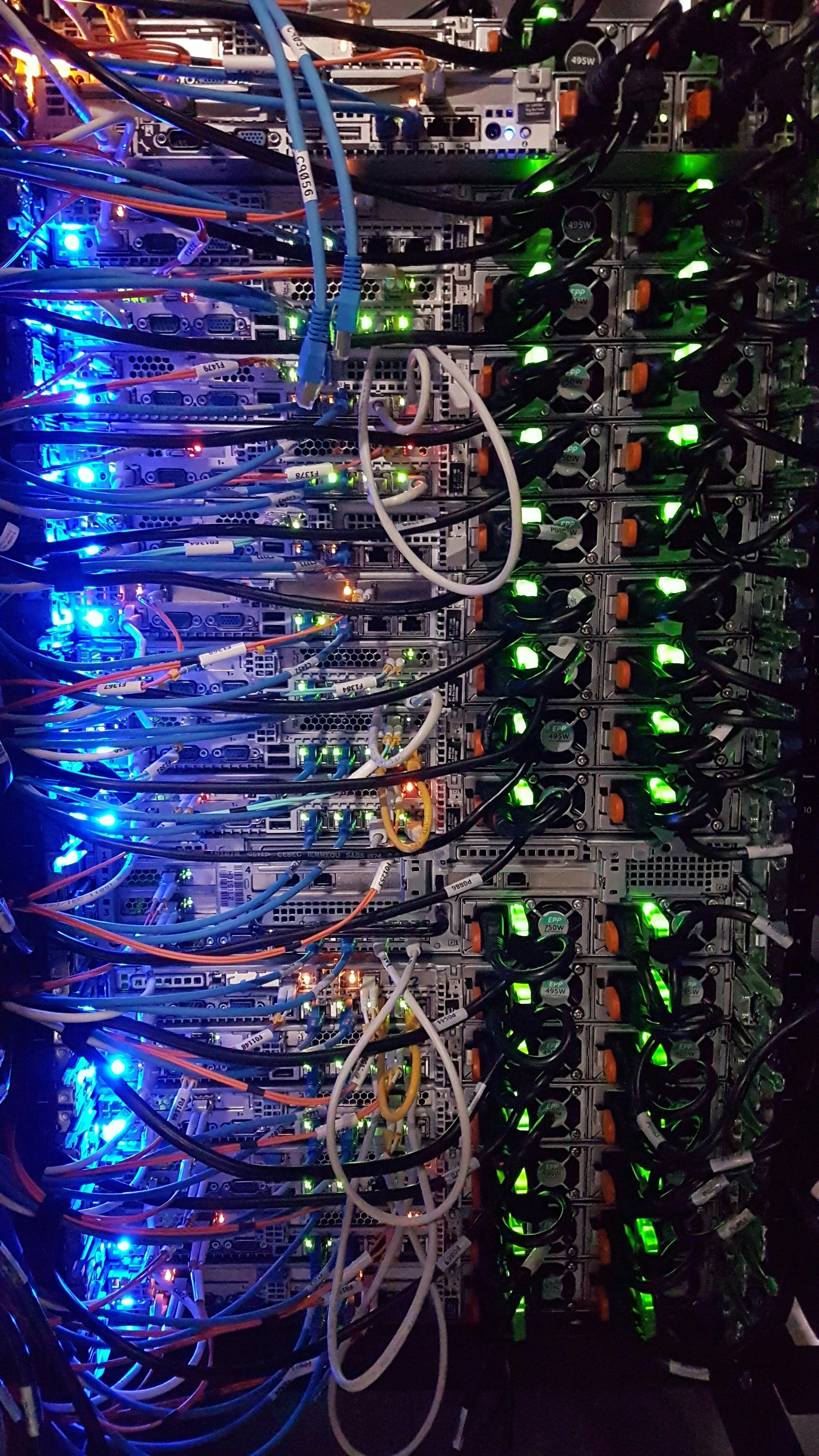
Photo by Massimo Botturi on UnsplashEvery day, we scroll, stream, search, and chat with AI without a second thought. iCloud stores our memories. Netflix queues up the next episode. Spotify recommends our new favorite artists. Maps track our routes. Behind it all, tucked into rural farmland, suburban neighborhoods, and predominantly Black communities, are massive warehouses full of servers, humming and drinking up water at an unfathomable scale. Data centers. And they are devastating the communities they land in.
The explosion of AI has triggered an unprecedented building boom. Tech companies are planting data facilities across the United States at a pace communities can’t keep up with, backed by billing in capital and political deals struck behind closed doors. Data centers are large warehouses full of servers that power parts of the internet, and increasingly, artificial intelligence. What they leave behind is not just infrastructure, it’s noise, pollutants, contaminated water, sky-high energy bills, and communities that never consented to any of it.
Let’s be clear: this is not some neutral technological evolution. The data center boom is driven by the same forces that have always decided whose neighborhoods get sacrificed and whose are spared. Civil rights leader Dr. Benjamin D. Chavis Jr. defines environmental racism as the deliverable targeting of predominantly BIPOC and low-income communities for polluting industries and the placement of toxic waste. Data centers are the newest chapter in that same story.
In Memphis, Tennessee, Elon Musk’s AI company xAI built a massive data center in Boxtown, a predominantly Black neighborhood with a median income of about $36,000. The facility powers Musk’s “Grok” chatbox and is fueled by 35 methane gas turbines that have operated without proper permits and are not equipped with the pollution controls typically required by federal regulations. These turbines emit pollutants like nitrogen oxides and formaldehyde into a community already drowning in industrial toxins. Boxtown’s zip code is home to over 17 industrial facilities that emit enough toxic pollution to be listed in the EPA’s Toxics Release Inventory.
At a Memphis City Council hearing, Boxtown resident Alexis Humphreys showed up holding her asthma inhaler and said what needed to be said: “ I can’t breathe at home, it smells like gas outside. How come I can’t breathe at home and y’all get to breathe at home?” Say that out loud and sit with it for a moment. A woman cannot breathe in her own home because a billionaire decided her neighborhood was an acceptable sacrifice for his chatbot.
KeShaun Pearson, executive director of Memphis Community Against Pollution, has been fighting this fight for years. In Memphis, families live 10 to 13 years less than their counterparts just miles away. Youth there have higher average rates of respiratory illness because of asthma. Pearson put it plainly: “These AI billionaires and data center investors have decided that there are some communities that ought to be sacrificed on the altar of their progress.” Nothing about that is progress.
Even if you don’t live next to one of these facilities, data centers are still coming for your wallet. The strain they place on the physical environment has sparked fierce opposition in many communities across the country, and it has become a voting issue for many people ahead of the midterm elections. People are pissed, and rightfully so.
Christabel Randolph of the Center for AI and Digital Policy explains that tech companies coming to build in communities’ backyards will increase all their utility bills, something ordinary working people are already struggling to afford. In Louisiana, residents near Meta’s massive data center have complained that their water is now brown and smells like disinfectant, leaving many in town to drink only bottled water. That’s not a minor inconvenience; it’s a public health disaster.
The resource drain doesn’t stop at water. Data centers use enormous amounts of water to cool their servers, water that is often evaporated into the air rather than returned to the local watersheds, straining already limited water supplies. Hyperscale data centers, the most popular type being built today, are very resource-intensive, consuming water and taking up millions of square feet of space. A single hyperscale campus can burn through the energy equivalent of powering tens of thousands of homes. Meanwhile, the communities they’re built on often see very little return.
What’s happening with data centers is not new. It’s what has always happened: powerful industries identify the communities with the least political power, the fewest resources, and they build there. They broker deals behind closed doors with local officials who may or may not understand what they’re agreeing to. By the time a community finds out about a data center, developers have been working on it for years, moving with an urgency and speed that steamrolls communities and elected officials. In Memphis, community members had to pass a resolution just to have a first-ever public hearing about an air pollution permit. People had to fight for the right to simply be heard about what was being done to their air.
The good news is that people are not rolling over. Communities across the county are organizing and they are winning. In a small town outside of Madison, Wisconsin, residents with No Data Center in DeForest successfully halted a proposed facility pushed by a private equity-owned company. In Tucson, the No Desert Data Center Coalition drove Amazon to pull out of a massive development called Project Blue. In Missouri, four city council members in Festus lost their seats over their support of a $6 billion data center. In Independence, two more council members were voted out after supporting a tax break for a large facility. People are making their voices known at the ballot box, and politicians are finally starting to feel it.
Organizers say the keys are moving fast, building coalitions, and refusing to be intimate. Activate your community as quickly as possible and work to inform as many people as possible. File open record requests. Show up to public meetings. Hold your own events when the official ones are just propaganda. Make it impossible for elected officials to ignore you.
The data center industry wants you to believe that this is inevitable, that this is the future, that resistance is futile. Don’t believe it. The future belongs to the people who fight for it, not the billionaires who believe some lives are expendable in the name of their profits. We will use our voices, and we will enact change.
Written by: Zoe Waters
About the author: Zoe Waters is a social justice and public health practitioner with over eight years of experience advancing equity through coalition-building, policy, and community-centered strategies that address health disparities and drive systems-level change.
Tags: Environmental Racism, Data Centers, Environmental Justice
Check out our social media for more resources:
Additional Reading



Leave a comment