
Dissociative Identity Disorder: An Interview
Written By: Jacqueline Salazar Romo and Grace Mintun
Date: May 27th, 2026
Mark Farías via UnsplashJacks: In your own words, how would you define/describe DID?
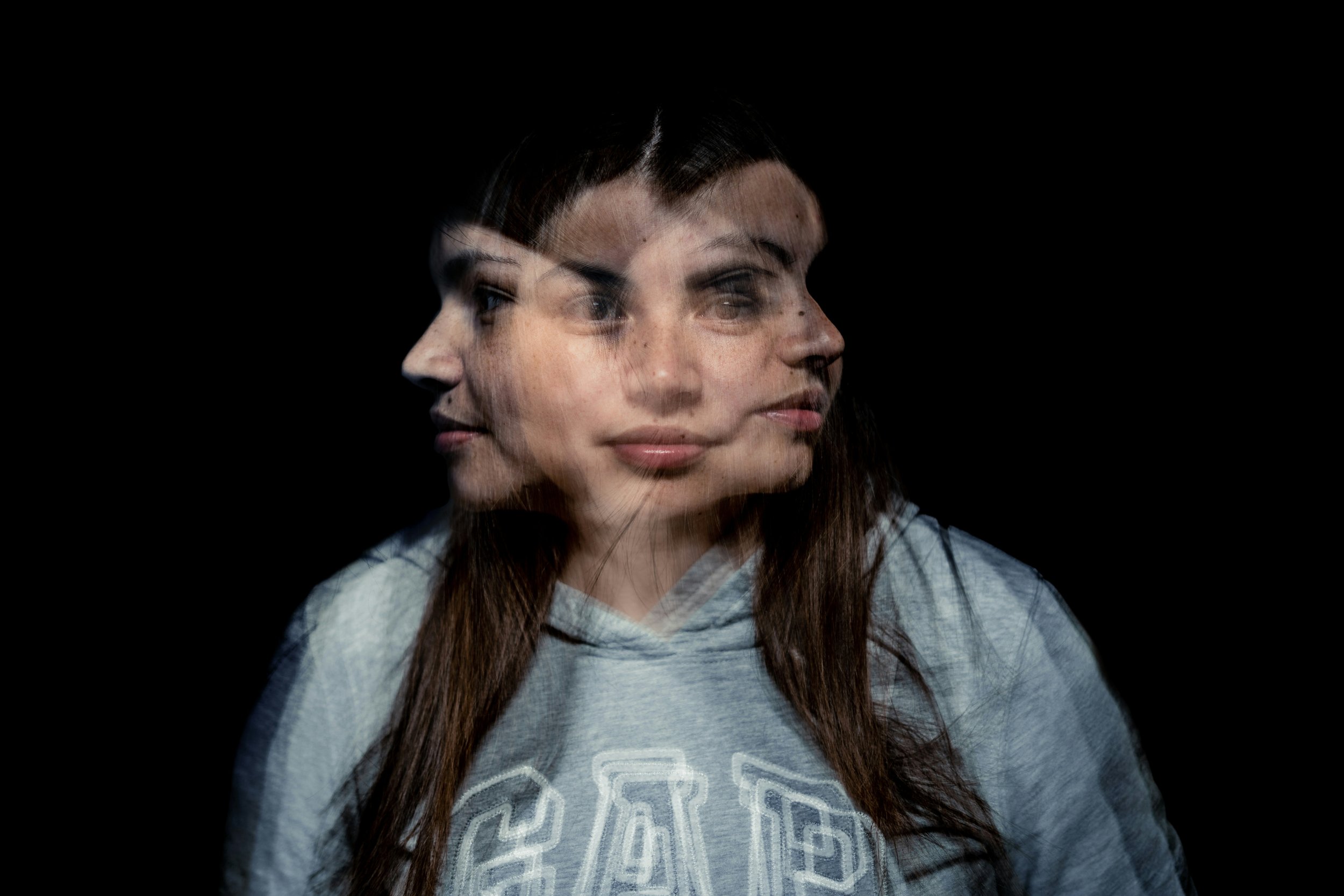
Grace: DID, formerly known as multiple personality disorder, is a complex mental health condition caused by prolonged childhood trauma. It arises as the brain’s natural reaction to separate traumatic memories from awareness by putting up amnesic barriers so the person with DID can function.
Jacks: What is an alter? What is a system? How do you differentiate between alters? (Different names, appearances, likes/dislikes, etc.)
Grace: A person with DID has at least two or more distinct identities, called “alters” or alternate identities. An alter is a dissociated self-state with their own age, name, gender, sexuality, appearance, opinions, memories, skills, personalities, mannerisms, likes, dislikes, and even psychological disorders and physiological reactions. What one alter may hate, another may love. For example, I hate peaches (I think they taste like soap) but one of my alters loves them. The word “system” refers to the collection of alters that make up somebody with DID.
Dissociative Identity Disorder (DID) is a complex and misunderstood mental health condition. Surrounded by stereotypes, people with DID are often ignored, misrepresented, and even demonized due to aggravating and outdated beliefs. There is so much we have yet to understand, and surrounding stigmas make it much harder to learn about what it’s truly like living with DID.
For this installment in our Mental Health series, we had a conversation with NB Editor-in-Chief and Creative Director Grace Mintun, someone who is diagnosed with DID.
Jacks: How many alters do you have? How did they come to be?
Grace: The number of alters can always change depending on the system and your stress tolerance. We currently have about 90. This number can grow as we experience stressful situations or trauma. Also, alters can be in dormancy (hidden from the brain for a long time) and can resurface at any given time they feel needed.
Jacks: What is your level of awareness about your alters/which is present at a given time?
Grace: So, let’s say your body is a car. You (the person at the helm of the body, “fronting”) are in the driver’s seat, and you have control of the car (the body), choosing where it goes, what it says, etc. Now, sometimes you have a person in the passenger seat. They can mess with the radio, roll down windows, talk to you and the people in the backseat, or even - if they feel chaotic enough - try to grab the steering wheel (move a limb or two) to take full control of the vehicle. That’s what co-consciousness (being co-con) is like (a state in which two or more alters are present in or using the body at once or are aware of the outside world simultaneously; alters may have varying degrees of control when co-conscious and may be aware of each other and each other’s thoughts to varying degrees). Then you have the people in the backseat. These people are still co-con and can see out of the car, but they only have passive influence. Lastly, sometimes you’re in the trunk. This is when there is complete amnesia between alters, like the “normal” switches you see depicted in media.
I am aware that there are people in my head; I can see them in my inner world, a place that feels as real as sitting at my desk typing this. It’s an internal world in which alters reside and can interact when not present in or using the body. It can range from a single room to an entire world. I can see everyone, what they look like, how they act, how they sound and I have to pay attention to both my inner world and outer world simultaneously. I can tell who is fronting about 90% of the time.
Jacks: How is DID different from other dissociative disorders?
Grace: Dissociative disorders are characterized by one main common symptom: dissociation! Dissociation isn’t a rare thing - you do it all the time. I bet you’ve even done it today. Zoning out or daydreaming are forms of dissociation. It becomes a problem, however, when it’s too frequent, not under your control, or involves amnesia. DID forms from early childhood trauma; you have to be able to dissociate to a large degree easily. This is what causes the amnesia: thinking that this trauma was happening to someone else as a coping mechanism. Dissociation is a mental process where a person disconnects from or forgets their thoughts, feelings, memories, or sense of identity. It consists of persistent or recurrent feelings of being detached (dissociated) from one’s body or mental processes.
More symptoms that characterize the disorder:
Depersonalization is a state in which one's thoughts and feelings seem unreal or not to belong to oneself, or in which one loses all sense of identity, as if having an out-of-body experience. Usually, this comes with a feeling of being an outside observer of one’s life.
Derealization is a feeling that one's surroundings are not real, feeling like you’re living in a dream, feeling disconnected from yourself and the world around you, and being detached from one's surroundings.
Dissociative amnesia - memory loss that's more severe than usual forgetfulness, and cannot be explained by a medical condition. You can't recall information about yourself, events or people in your life, especially from a time when you felt shock, distress or pain. It may last minutes, hours, or rarely, months or years.
Two or more distinct identities or personality states are present.
The cause of DID is a psychological response to interpersonal and environmental stresses such as recurring, overpowering, and often life-threatening disturbances or traumas at a sensitive developmental stage of childhood (usually before age 9), persistent neglect or emotional abuse, even when there's been no overt physical or sexual abuse.
Jacks: How did you learn you had DID? (Did you exhibit symptoms or suspect you had it prior to a diagnosis/screening?)
Grace: I was missing large chunks from my memory. I didn't realize it was a problem until I filled out a psych form that listed that as a problem. Also, friends told me that I would act wildly differently and completely change my opinions day to day. I would forget things super easily and even say things that I would have no recollection of later. One time, I saw this horror movie about DID before being diagnosed, and came out of the theatre vividly thinking, “That’s not what DID is like!” after doing absolutely no research whatsoever. Turns out it was one of my alters saying it! DID is a covert disorder; sometimes the alters themselves don’t know you have DID until later on in life. I was diagnosed at 19, but one of my alters knew I had it years before. She just didn’t tell me.
On a slightly darker note, I knew things had happened to me as a kid that weren’t great, but I just couldn’t remember them, no matter how hard I tried. People said they were repressed memories, but I knew it was more than that. And it was.
The final tipping point was when I “lost my memory” one weekend in college. I didn’t remember who my partner was, but I remembered other things that were years old. I thought I was dating someone else, living somewhere else - I thought it was years earlier. My partner, knowing I hadn’t had any head trauma and knowing about DID, put together the pieces. We ended up going to the ER, and I was rapid-switching every few seconds to every few minutes into someone else. The doctors didn’t know what to do with me, so I was admitted. It was terrifying coming to when they were shoving needles in my arms. I remember that much. The nurses started asking me my name, what year it was, how old I was, and a few other questions, and each time, I gave different answers. After the head CT came back clear, my partner knew it was DID. I was diagnosed with DID by a doctor and then later that month by another psychiatrist as well.
Jacks: How does DID affect your everyday life?
Grace: Now, I don’t even notice a difference, but everyone in my system has to learn the daily routines I do. Every chore, every task has to be learned by multiple people, and things have to be told to me multiple times. I even used to keep video diaries of myself talking to the camera, going over my day. I would take notes, write journal entries, make schedules, tell different friends different sections of my life story so I knew who to go to for a specific topic about my personal life—it was complex. Basically, I relied on tools and others to be my memory bank and on muscle memory to do the rest. Multiple alters front throughout the day and do different things, and we have so many different hobbies, it’s insane.
Jacks: How does DID affect your sense of identity/personhood?
Grace: If anything, it made it stronger. I know for a fact my pronouns are my pronouns because I can feel what it’s like to use different pronouns in my body or to feel like a boy in a girl’s body. So I am very sure of myself in my gender and personhood because of that. I like a wide variety of things, but that doesn’t mean I’m any less me. I don’t have to fit in a box. There would be too many boxes to count!
Jacks: What do mainstream media/cases of DID get right/wrong? Any media that you feel faithfully represent aspects of DID (or inversely, any that don't)?
Grace: When I first got diagnosed, I watched a lot of YouTubers and TikTokers with DID, and honestly, there’s no right way to portray it. I enjoyed seeing them as themselves because, at the end of the day, we are just living our lives, just with DID.
DID shapes our life, but it is not our whole life. Each system is different, and each alter is different inside of those systems. We love answering questions about it, but always remember that DID is not all they are. DID is not all I am, either. I want to end the stigma around the disorder, but I can’t begin if I don’t stress that we can live a pretty much normal life, just with a few extra people sharing the same brain.
For everything the media gets correct, there will be 100 different systems that prove them wrong since every system is unique. For my system in particular, any horror media portraying DID has it wrong. If anything, the horror movie should be about the trauma we had to endure to develop this disorder (looking at you, SPLIT). Anyone I recommend about DID (Multiplicity & Me, DIssociaDID, Entropy System, Pixielocks, and even some live streamers!) has their own share of drama surrounding their perspectives, or reasons why the community does/doesn’t resonate with them. So take my suggestions with a grain of salt.
Jacks: Are there any beliefs/stereotypes/assumptions about DID that you would like to refute, challenge, or validate?
Grace: We are not a horror trope. The real horror is the trauma we experienced, not what we could do to others. While DID systems can be bad just like any other human, we are not inherently bad because of our disorder.
We are not faking it. Trying to see if someone is “faking it” is insensitive, and fake-claiming is just hurtful. If you don’t agree, just move on. If they are faking it, that’s between them and a therapist, but it’s not on you to call out a likely anxious system just because you think that it couldn’t be real.
Jacks: Do you have any opinions on the rise of self-diagnosed people with DID online? (Do you think they’re pretending to have it for content, do you think they’re genuine, etc.)
Grace: On average, it takes 7 years to get a DID diagnosis, so I think self-diagnosis is valid if you are trying to follow it up with a psych diagnosis. I was psych-diagnosed (TWICE), and I knew before they did. I think it’s not up to us to decide if someone is fake-claiming or not. Half the internet is just doing weird shit for clout: how is this any different? The only difference here is that if you wrongly accuse someone of lying when they are being genuine, you’re hurting them more. I think people should be open about having the disorder, and I also think people on the internet just need more empathy anyway.
Jacks: What would you tell someone who thinks they may have DID? (Or conversely, someone who recently got confirmation of having DID?) And do you find any positives in your life that you attribute to DID? Inversely, are there any DID-specific struggles or challenges that you wish were better known?
Grace: It is exhausting to stay fronting. To stay present and not dissociate? So rough. My friends are more supportive and accepting of me than I ever thought. You’re never alone, ever. There are more of us than you think. DID is just as common as having red hair, which is 1-3% of the population. That’s 15,000,000 people at least (and this number only accounts for those who have been diagnosed). Even in your darkest times, you always have someone who has your back. Do research, tell people, and find your community. DID support groups are many, and there are even rooms for chatting on DID Discords and Bumble for friends. Do not be ashamed of who you are, and others won’t be either.
Jacks: How can someone support a person with DID?
Grace: Do your own research. Say the same stories over and over when new people come out. Believe them, believe them, believe them. Support them. Be a memory holder of your times together and for any info they share with you.
Written by: Jacqueline Salazar Romo and Grace Mintun
About the author description: Jacqueline (she/they) is an editorial staff member at NB who often explores the intersections of identity, belonging, and culture in relation to current events. Whenever she isn't writing, she enjoys art, fandom, and thinking too long about the past. Grace (she/her) is NB’s Editor-in-Chief and Creative Director.
Tags: Mental Wellness, Dissociative Identity Disorder, Stigmas
Check out our social media for more resources:
Additional Reading

Leave a comment