
Food as a Language: How Food Speaks to Us
Written by: Rhilynn Horner
August 22nd, 2025

Oscar Se balade via UnsplashWe all have a favorite food—one that instantly transports us to a better time, a better place, perhaps reminding us of the comfort of a big, warm hug. Maybe it’s a dish that holds a dear memory of yours, or is a cherished, passed-down family recipe, or a comfort meal made for you whenever you feel unwell. Whatever it is, food has a way of holding onto each and every one of us; something we can have good or bad relationships with, use to say “I love you,” or share to bring families together. It’s not just something we use to feed our bodies, but also our minds, our cultures, and our communities.
At a recent panel, “Food and Identity in the South,” writers and researchers tackled these very ideas, sharing their stories of how food establishes multigenerational connections and impacts migration and identity. Let’s build on their thoughts and explore further how food transcends just what’s on your plate, and instead speaks to memory, culture, and establishes a sense of personal and communal belonging.
Food as Memory, Culture, and Family
Food is full of memories, connecting us to ancestors from past eras, to distant family members from other nations, or to new friends we meet along the way. We use it to communicate with each other without the use of words, becoming a new, unique avenue of shared language. And, just like language, food has become a huge part of self-expression, making it a necessity for sustaining cultural and communal identity, as well. Panelists of “Food and Identity in the South” give some personal examples of how this is the case:
Marcie Ferris introduced a wooden recipe box that grounded her family’s cultural identity through the many unknowns of migration to unfamiliar places.
Ree Ree Wei shared how Thai food reminds her of rare moments spent in Thailand with her whole family.
Kate Medley recounted memories of cracking nuts with an extended, intergenerational family from overseas, all in one place–also a rare reunion.
Monique Truong explained how “Ăn chưa?” (“Have you eaten yet?”) was the way her Vietnamese family said, “I love you.”
For me, I cherish dear memories of my Finnish Mummu, who shares her heritage with me through food: breads, cheeses, cookies, you name it–she has always communicated her culture in this way. And I know I’m not alone, as many of us hold close memories of food, ones that shoot us back to a sense of home, comfort, or belonging within culture and community.
Food as Representation and Belonging
Now that we understand how food is a cultural language necessary to establishing cultural identity, it makes sense that food can also reinforce a sense of communal belonging, as well. Because of this, we need to consider the necessity for greater cultural food access in the United States, a country built by immigrants and composed of many outside cultures, yet still lacking proportional diversity, specialization, and proper representation in areas like food, especially concerning small, individually owned businesses.
At the same time, we have seen the remarkable growth of international grocery stores/sections, with many mom-and-pop shops expanding into larger chains. This growth is largely thanks to independently-managed and immigrant-based grocers who mainstreamed the market and made such ingredients more accessible in the first place.
While such progress and success should be celebrated, we must continue to bring cultural communities to the forefront of this growth, since food’s meaning as a cultural language comes from the people who create it. Corporatization of these cultural groceries and grocery stores can feel impersonal and lack that “feeling of home” they can otherwise elicit.
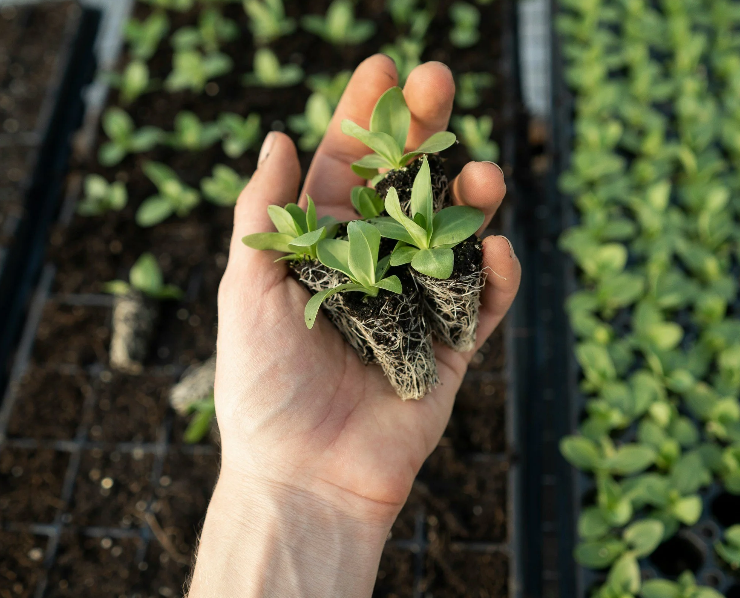
Ree Ree Wei describes one potential solution to increasing both cultural representation and reducing impersonalization in her holistic project at Transplanting Traditions. Her work involves collaborating with Burmese immigrants to hone their agricultural skills while providing them with business and marketing support to sell their products in the United States. Not only does this help establish specialized cultural food markets, but it also helps the communities that create them resettle both professionally and culturally in a new country, bringing the stories and memories of “home” with them.
Fortunately, there are many culturally-based grocery stores that are dedicated to prioritizing their community, despite their growth. Anuja Ranade, chief operating officer at Dallas-based chain India Bazaar, describes her compromise of offering tweaks to welcome non-South Asians or second-generation South Asian customers into her store, but will always focus on making South Asians have “the feeling of being at home,” such as having employees who speak various South Asian dialects or wishing people a happy Diwali. Such choices ensure that grocery shopping, especially for these larger chains, is not just turned into a sterile, impersonal experience, but instead into a place where culture is preserved, celebrated, and shared through the language of food, creating a space where diverse communities feel embraced.
Food as a Language
Food is a language. We use it to communicate across generations, carrying the stories, memories, and traumas of our ancestors. We use it to show love or care, and to enrich our identity and sense of belonging. It offers so much more than nutrition for our bodies, but feeds and nurtures our cultures, our communities, and our connections. With every bite we take, whether of another’s heritage or your own, we are enjoying something worth celebrating, sharing, and honoring.
Written by: Rhilynn Horner
About The Author: Rhilynn (She/Her) is an editorial intern and a graduate from UNC Chapel Hill with a degree in English & Comparative Literature. She loves to read and write on a variety of pop culture and social topics.
Food as Language, Multigenerational Memory, Cultural Expression
Sources:
Ferris, Medley, Truong, Wei, panelists. “Food and Identity in the South (and the Hunger of the Spirit).” Frank B. Hanes Writer-in-Residence Panel, 2023, Chapel Hill, NC.
https://vietcetera.com/en/how-vietnamese-say-i-love-you-without-saying-it
https://www.pewresearch.org/short-reads/2024/04/22/a-look-at-small-businesses-in-the-us/
https://www.nytimes.com/2024/06/11/dining/asian-grocery-stores-america.html
https://www.transplantingtraditions.org/
Additional Reading
Check out our social media for more resources:
Leave a comment