
How to Start a Community Garden, a Community Kitchen, and a Community Fridge

Written By: Grace Mintun
Date: May 20, 2025
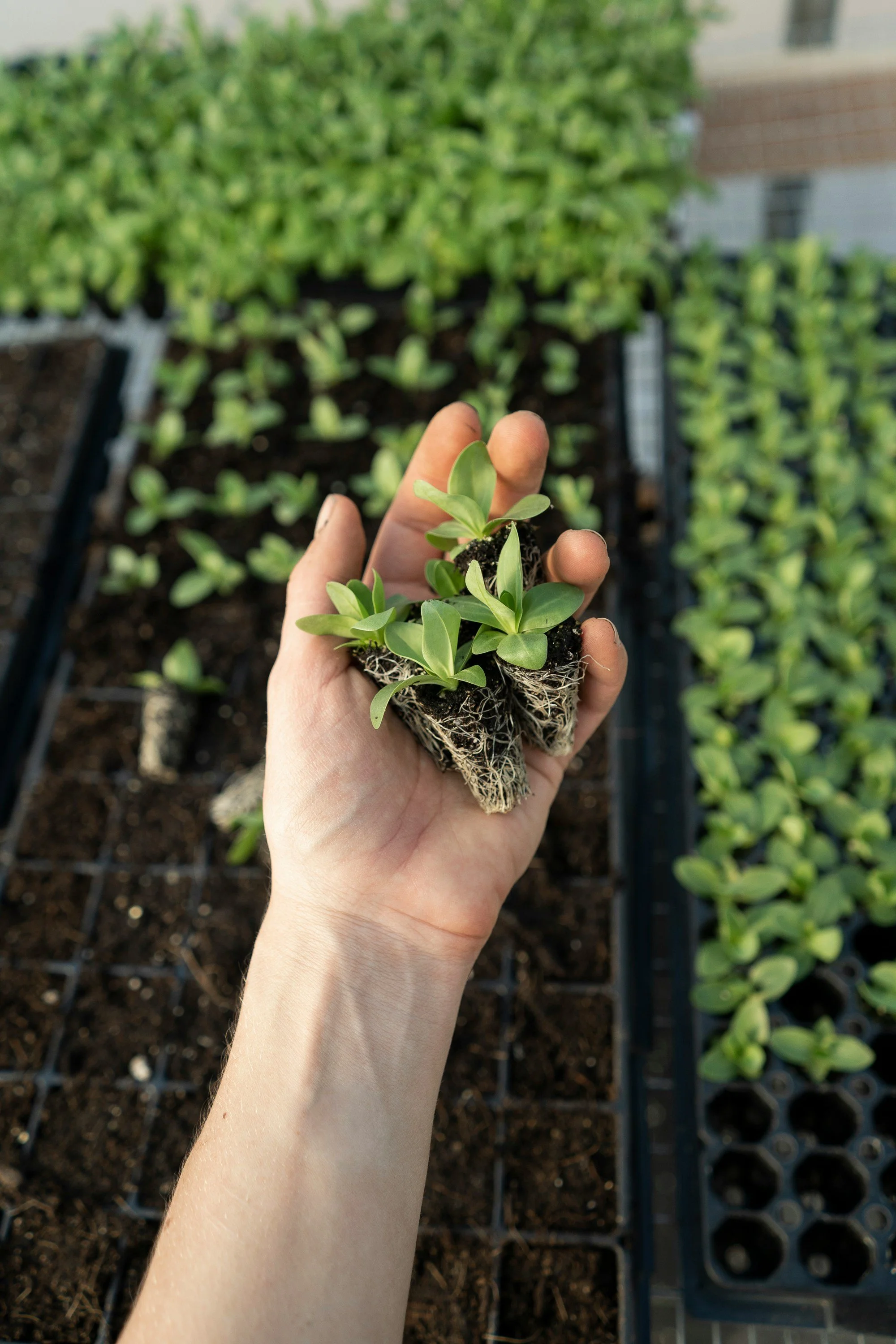
Zoe Richardson via UnsplashCommunity is the backbone of society. It takes a village to not only raise children, but also to help a community thrive. One of the reasons that communities sometimes suffer is food scarcity and insecurity. Now, with food pantries and soup kitchens putting limits on how much food you can take, placing caps based on income, it’s harder than ever before to have food security when struggling. One of the ways that people have made to circumvent these limits at these town and state level facilities is by making their own community-based options: a community garden, a community kitchen, and a community fridge/pantry. Each does a different job and provides a unique service to the community.
Community gardens are a shared space where a group of people collectively work to plant, grow, and maintain a garden where they grow flowers, food, or other plants. They can be created anywhere there is available land suitable for gardening that is for sale or owned by someone who wants to be a part of the project. Community kitchens are when a group of people meet on a regular basis to meal plan, meal prep, cook, and share meals with others and the community. They can be done anywhere that has a kitchen—from schools to churches to workplaces. Community fridges or pantries are publicly accessible refrigerators, where individuals can give and receive food for free. There is normally a “give what you can, take what you need” mentality, which helps to address food insecurity directly by fostering mutual aid.
No matter which you want to start to help support your area, it all begins with the same questions and things to consider.
Is there a need?
Is the community interested in fulfilling that need?
Where will it go?
And what permits do you need to make this happen?
Now, past that, things diverge a bit depending on what project you want to pursue and what needs you need to meet in the community.
David Clode via Unsplash“Food insecurity is rampant everywhere, and whether you are someone looking to start your own to help your community, or you’re looking for a place to find something to eat, there is no shame here. Food is necessary for life. Community helps each other, whether down the street or across the nation. Food is universal.”
Some steps for community kitchens include:
Find people willing to volunteer to cook for others in exchange for free or for a meal, with basic rules for cleanliness and safety. Anyone can be a cook if they are given room for trial and error. Maybe think about teaching cooking skills to those willing to learn. Always have a head chef or host that is in charge of things and good at multitasking.
Accessibility, sustainability, and efficient layout are important when planning how to serve the food. Is it takeout to grab and go, is there a sit down dining area, or is it a mixture of both? What are things being served in? What sort of food? What kind of dietary restrictions and dietary needs do you plan on serving and meeting? How many courses? Or just one meal, no sides or dessert? What supplies do you need—ingredients, cooking utensils, food accoutrements, etc.? How much time will you be open? Is it one meal a week, one meal a month, one meal a night? All of these things are things to think about and ponder.
Getting this kitchen out of the planning phase and into the real-world requires assessing needs, securing funding, and gathering community support. Sometimes this will be from a group of friends and sometimes from an organization, beneficiary, grants, donations, or crowdfunding.
Now that you have this plan in place, get the word out. Post about it on message boards, on actual bulletin boards around the town, social media, and word of mouth is always a great option.
Some steps for community gardens past those, include:
Decide what kind of garden you want to cultivate: vegetable, flower, trees, a combination?
A garden is a long term project. How long will these plants take to grow before they start giving returns on your investment?
Organize a meeting of interested people and choose a well-organized garden coordinator, and form committees to accomplish the tasks for setting up this garden. These people may become part of a gardening organization later on that will help with meetings, managing, and any other things that may arise. You can start with your neighbors, but branch out as well! Visit other community gardens to pick their brains on the dos and don’ts. Create policies and rules.
Some community gardens can provide most of their provisions through fees charged to the membership; but for many, a garden sponsor is essential. Churches, schools, citizens groups, private businesses, local parks and recreation departments are all potential supporters.
Select a site with good sunlight, water, drainage, good spots for raised beds, accessibility, security, and visibility. Maybe test the soil at this stage.
Once you pick the site, clean it and start developing it with a plan in mind!
Maintain your garden. It seems like the easiest step, but honestly, it’s the hardest. Create a schedule of people to go out and regularly weed, water, plant, etc.
Congrats! You now have a community garden! Go enjoy the *fruits* of your labor!
Here is an index of community gardens around the world if you want to just join a garden and not necessarily start one. As always, Google is your friend, but this is a good place to begin your search.
Some steps for community fridges/pantries include:
First, supplies. A functioning fridge is the best place to start here, or shelves to build a fully functioning pantry if you’re leaning that route. Then comes access to a reliable power source. A refrigerator thermometer. Perhaps building a shelter to keep it protected from wind, snow, and hooligans. Make sure it’s sealed off completely from the elements no matter what.
Come up with a list of food safety protocols, like what food and drinks are allowed as donations and how much labeling of home cooked meals is required. Do you allow previously opened containers to help downsize food waste in your community? Do you take any non-food related items like personal hygiene products, toilet paper, hand sanitizer, diapers, hygiene products, individually wrapped eating utensils, and the like? Utilize first in, first out (FiFo) with the newest food going in the back, oldest at the front.
Find a group of people that are willing to take a few hours out of their day every week to check up on the fridge itself. Make a rotating schedule and stick to it. Many hands make light work. Then of course, scheduling and following through with regular checks of the fridge to make sure everything is up to standards, and cleaning the fridge are a must. Maybe record the info through an anonymous Google form to foster responsibility.
Get up to date on the legal stuff here and here.
Find a place to plug it in, get permission to use the power source (in writing) and voila! You are good to go! Spread word about the pantry, and donate food into it whenever you can. Don’t be afraid to hold a fundraiser. Maybe talk to local farmers about donating excess produce. Talking to grocery store bakeries for baked goods from the end of the day that didn’t sell, or excess foods from restaurants, could be another avenue for securing and collecting food. Post signage clearly and be loud and proud about the fact you have a place where people can feed themselves and meet their needs!
If you don’t have the resources to make your own, here is where to find a freedge (free community fridge), or a free little pantry.
Food insecurity is rampant everywhere, and whether you are someone looking to start your own to help your community, or you’re looking for a place to find something to eat, there is no shame here. Food is necessary for life. Community helps each other, whether down the street or across the nation. Food is universal. I hope this guide can help you find some, grow some, and eat some.
Written by: Grace Mintun
About the author: A writer and Twitch streamer dedicated to promoting kindness and breaking down stigma around mental health and disabilities!
Tags: Community, Food, Garden
Check out our social media for more resources:
Additional Reading


Sources
https://dallas-tx.tamu.edu/files/2016/08/STARTING-A-COMMUNITY-GARDEN.pdf
https://www.reddit.com/r/vegetablegardening/comments/10q5lz1/how_do_i_start_a_community_garden/
https://ccaps.umn.edu/story/7-effective-steps-start-community-garden
https://seewhatgrows.org/start-community-garden-neighborhood/#:~:text=Prepare%20the%20Site%20for%20Planting,all%20part%20of%20the%20fun!
https://www.aces.edu/blog/topics/business-community-urban/a-guide-to-starting-a-community-garden/
https://www.birkesbuilders.com/blog/all/what-is-a-community-kitchen-explained
https://www.trimarkusa.com/news-room/trimark-blog/2016/october-2016/everything-you-need-to-know-to-start-a-community-c?feed=Blog
https://assets.srhd.org/assets/media/documents/CommunityKitchen-2012-RS1.pdf
https://www.reddit.com/r/Cooking/comments/1hndcyv/how_to_host_a_community_kitchen/
https://www.idealist.org/en/recipes-for-action/how-to-start-a-community-pantry-or-fridge
https://fridgefinder.app/pamphlet/get-involved/start-a-fridge
https://mashable.com/article/how-to-get-involved-community-fridge
https://www.reddit.com/r/Anticonsumption/comments/155pk2w/i_started_a_community_fridge_to_help_eliminate/
https://www.shareable.net/how-to-create-a-little-free-community-pantry-or-fridge/
https://www.changex.org/us/communityfridge/guide
https://static1.squarespace.com/static/622a199c718e915edd963755/t/6283c79221cca66a675e1d0c/1652803475320/EGDM+Tool+Kit+2.0+Final.pdf
https://www.reddit.com/r/Anarchism/comments/sfwidr/community_pantry/
https://msfoodnet.org/wp-content/uploads/2016/06/Oraganize-and-Operate-a-Food-Pantry.pdf
Leave a comment