
Hostile Architecture: The Invisible Aggressor
Written By: Salman Al Rowais
Date: December 8th, 2025
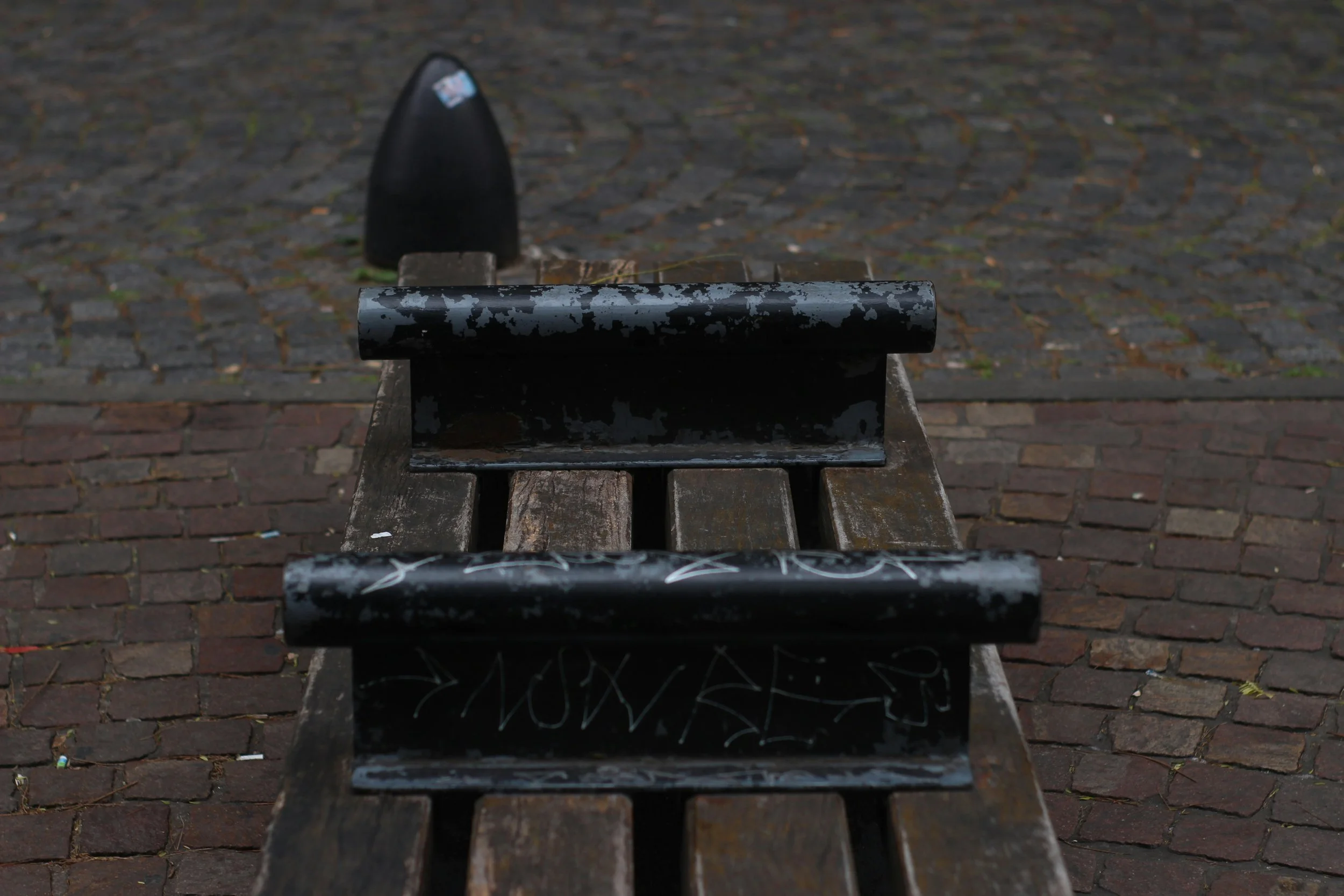
Photo by Otacilio Maia on UnsplashYou could be passing by hostile architecture everyday without ever realizing. Hostile architecture targets some of the most vulnerable among us: unhoused individuals. Instead of making architecture inclusive, its design strategies are cold-hearted and benefit no one. For example, the city of Portland, Oregon, has spent an astronomical $500,000 constructing anti-homeless benches. Instead of aiding a marginalized group by putting this money toward housing programs, food pantries or similar initiatives, the city's leaders actively chose to harm them.
Hostile architecture is primarily found in urban, densely populated areas with a large unhoused population. Examples include spikes placed in areas that unhoused individuals frequent. Another example is benches that are either sectioned off or made in such a way that they become extremely uncomfortable to sit or sleep on. There are many more examples, but the bottom line is that, “Advocates of hostile architecture help defend the measures used to exclude rough sleepers from accessing public spaces.” They mainly want to sweep the issue of homelessness under the rug and not address the root causes such as lack of affordable housing.
This leaves unhoused individuals without safe places to rest. Shelters are often at capacity or have strict rules preventing many unhoused individuals from accessing their resources, leaving them no choice but to find shelter further away. If they do choose to sleep on sectioned benches or on spikes, they risk being arrested just for trying to live.
To paint an even clearer picture of just how harmful hostile architecture is: it doesn't just target unhoused individuals, it primarily affects the chronically homeless. These are people that have been unhoused for at least 12 consecutive months or 4 separate occasions in a 3 year span. “According to the 2024 PIT Count, 61 percent of people experiencing chronic homelessness were unsheltered.” This data is gathered every year through a point in time count, one night a year volunteers and staff conduct surveys and gather data on unhoused individuals. This gives us a “snapshot” into what homelessness looked like in most communities around the US during that year. The point in time count shows us that the chronically homeless are in an extremely vulnerable position, many are unable to find shelter for the night. With hostile architecture present, it leaves fewer options for areas that can provide them with shelter. This can lead the chronically homeless into a downward spiral, since they are tired from sleeping in bad areas along with having to walk farther during the day due to their options being limited, leaving them exhausted. This creates barriers, preventing them from seeking assistance, especially if social services are farther away.
There are many instances of hostile architecture that you wouldn't notice at first glance and are just as harmful or even more harmful than the ones that are more well known. I have placed two examples of lesser known instances of hostile architecture below:
Using loud music in parks to deter unhoused individuals from being there.
Fencing off grates that provide heat to unhoused individuals during the winter.
Not only does hostile architecture affect unhoused individuals, it also makes things like parks less accessible for people with disabilities, making them feel less welcomed and limiting their access to public places. I believe that a step in the right direction is for people to start recognizing and being more aware of hostile architecture around them and to speak up when they see it. Communities can start making strides towards removing hostile architecture and redirecting funding towards real aid and support for those in need.
Written by: Salman Al Rowais
About the author: Salman is an intern in the editorial department and a graduate with a BA in Sociology. He enjoys gaming, reading and all things fashion.
Tags: Hostile Architecture, Homeless Crisis, Urban Inequality
Check out our social media for more resources:
Additional Reading


Sources
https://nationalhomeless.org/design-against-humanity/
https://www.streetroots.org/news/2021/12/08/hostile-architecture
https://endhomelessness.org/state-of-homelessness/
https://www.melbournezero.org.au/hostile_architecture_is_bad_for_our_city_s_health
https://www.streetroots.org/news/2021/12/08/hostile-architecture
https://www.urbanrealm.com/features/834/Hostile_Architecture%3A_Gray_Zone.html
https://www.ebaumsworld.com/articles/the-wiggles-ask-australian-city-to-stop-using-their-music-to-get-rid-of-homeless-people/87470523/
https://www.arch2o.com/10-inhumane-hostile-architecture-examples/
Leave a comment