
How to Make Your Lawn More Sustainable, More Beautiful, and Less Work
Written by: Rhilynn Horner
June 8th, 2026
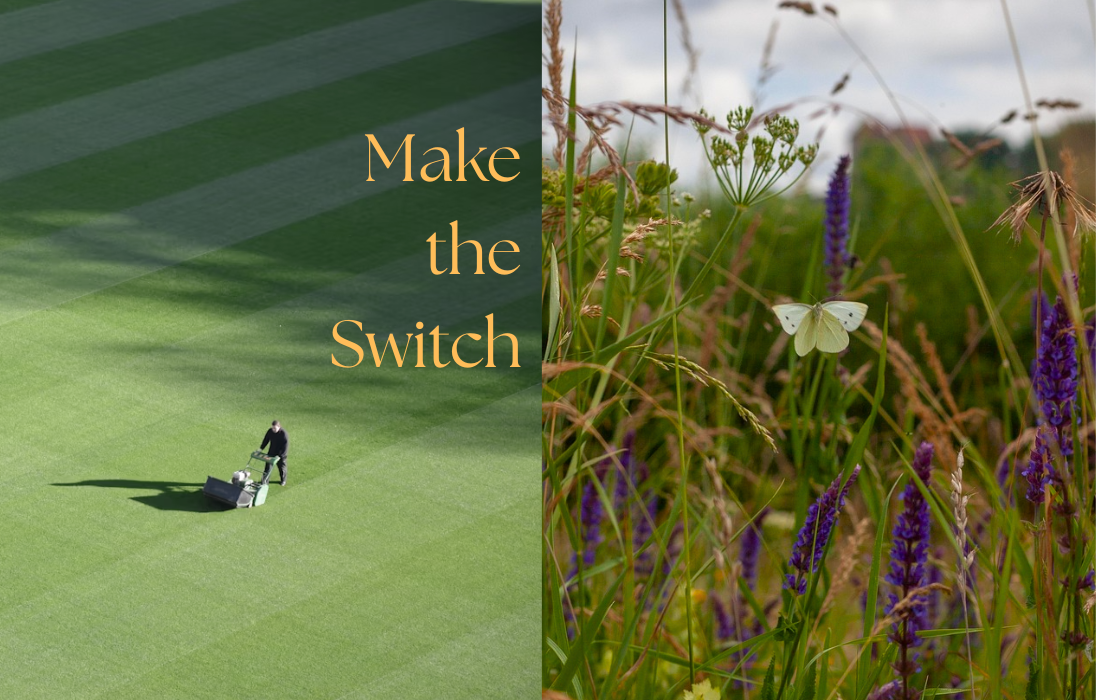
Rémi Müller (left) via Unsplash and Filmbetrachter (right) via PixabayMany American homeowners believe turfgrass is the only option for their lawns, valuing its lush, uniform aesthetic and despising the draining, constant maintenance it requires. In fact, across the country, properly maintaining turfgrass lawns requires “3 trillion gallons of water a year, 200 million gallons of [mowing] gas, and 70 million pounds of pesticides,” let alone a lot of time. But since turfgrass is such an American standard—covering over 31 times the size of Delaware!—homeowners have never considered the better options available, with some hidden in plain sight.
The Problem with Turfgrass Lawns
Turfgrass provides little to no environmental value and often provides more harm than good. It fails to provide habitats for native invertebrates and animals, increases toxic rainwater runoff into valuable water sources, poisons birds and fish with pesticides, and requires constant mowing that pollutes the air. And, let’s be honest, turfgrass can be just plain boring.
Ditching turfgrass lawns doesn’t mean ditching the benefits turfgrass is known for, nor does it have to mean ditching turfgrass completely. Instead, many lawn alternatives can fully replace turfgrass or work alongside it, providing the same benefits and more, with less overall maintenance.
Eco-Friendly Grass Lawn Alternatives
Yes, there are lawn alternatives that you don’t need to mow or water weekly to keep healthy. Requiring minimal landscaping, supporting soil microbiomes, providing habitats for wildlife, and needing little to no maintenance, there’s an alternative out there that’ll suit your needs. So whether you want to mimic the lush uniformity of traditional turfgrass, bring a garden to life with native wildflowers, or grow a combination of both, here are several healthy lawn alternatives to consider:
1) Clover
Traits – Affordable, low-growing, green for longer
Maintenance – Easy to grow, requires little water, fertilization, and little to no mowing
Resilience – Suited for varied weather, shade, holds up against urine burns caused by pets, and can handle foot traffic, drought-tolerant
Sustainability – Attracts wildlife and pollinators, but can be mowed to reduce bee activity, and can be added alongside pre-existing turfgrass to revitalize nitrogen into the soil, and is non-toxic to pets (but ingestion should be avoided)
Soil – Thrives in all soil types and 6.0-7.0 pH levels
2) Moss
Traits – Carpet-like, lush green year-round, spongy texture
Maintenance – Requires no mowing, no fertilizing, and little to no water (requires constant moisture but retains it well)
Resilience – Requires shade, handles foot traffic
Sustainability – Provides a habitat for invertebrates, excellent erosion control
Soil – Adaptable to any nutritional, moist soil and 6.0 or lower pH levels
3) Blue Star Creeper
Traits – Low-growing, quick-spreader, tiny blue flowers, useful as an addition to other groundcovers
Maintenance – Requires little to no mowing, and little water except in hot, dry climates.
Resilience – Suited for varied shade and weather, can handle foot traffic, can be affected by intense heat or cold, drought-tolerant
Sustainability – Provides a habitat for pollinators, deters herbivores, and is generally non-toxic to pets (but ingestion should be avoided)
Soil – Thrives in moist, well-draining soil and 5.5-7.0 pH levels
4) Creeping Thyme
Traits – Low-growing, tiny lavender and pink flowers, aromatic, more costly, useful as an addition to other groundcovers
Maintenance – Requires no mowing, no fertilizer, little to no water
Resilience – Thrives in full sun and is tolerant in partial shade, tolerant to extreme weather, can handle extreme foot traffic, drought-tolerant
Sustainability – Attracts pollinators, deters herbivores and mosquitoes, is non-toxic to pets, and provides culinary value
Soil – Thrives in dry or moist soil (vulnerable to root rot if too wet) and 6.5-7.5 pH levels
5) Corsican Mint
Traits – Low-growing, tiny white and light purple flowers, evergreen, aromatic, useful as an addition to other groundcovers
Maintenance – Invasive with moderate spreading (requires monitoring), medium watering, little to no mowing
Resilience – Thrives in sun or shade, can handle foot traffic, requires moisture, but is susceptible to root rot
Sustainability – Attracts pollinators, repels rodents, provides culinary value, but is toxic to pets in large amounts
Soil – Thrives in well-draining, moist soil and 5.6 - 7.0 pH levels
6) Native Plant Lawns and Wildflower Meadows
Traits – Encompasses a wide variety of low-growing and tall plants and is diverse, colorful, aromatic, with vast landscaping and gardening opportunities
Maintenance – Can vary depending on plants, but can require regular to no maintenance after initial landscaping and cultivation (may require moderate to extensive planning for initial landscaping)
Resilience – Adapted to local weather and climate, the majority of low-growing plants can handle foot traffic
Sustainability – Native and environmentally friendly, attracts pollinators and invertebrates, provides habitats, but, depending on plants, can be potentially toxic for pets
Soil – Varies, but likely adapted to local soil conditions and pH levels
All of the above options are great alternatives to consider, as traditional turfgrass is high-maintenance, pollutive, resource-intensive, provides no value to local wildlife, and lacks the character that alternatives provide. You’ve probably heard the saying “the grass is greener on the other side,” and that’s true here. Even partly integrating one of the above alternatives can make a big difference. So, give it a try; you’ll find the transition to be easier than you think.
Written by: Rhilynn Horner
About The Author: Rhilynn (She/Her) is an editorial staff member and a graduate from UNC Chapel Hill with a degree in English & Comparative Literature. She loves to read and write on a variety of pop culture and social topics.
Lawn Care, Grass Maintenance, Turfgrass Alternatives, Sustainability
Additional Reading
Sources:
https://www.nrdc.org/stories/more-sustainable-and-beautiful-alternatives-grass-lawn
https://www.almanac.com/grass-alternatives-lawn-replacements
https://eartheasy.com/blogs/yard-garden/how-to-establish-a-clover-lawn
https://www.thespruce.com/create-low-maintenance-moss-lawn-2152704
https://www.planetnatural.com/thyme-lawn/
https://www.thespruce.com/corsican-mint-profile-5122496
https://www.rewildingmag.com/replace-lawn-with-native-plants/
Check out our social media for more resources:
Leave a comment