
Juneteenth in an Era of Black History Erasure
Written by: Jacqueline Salazar Romo
June 19, 2025
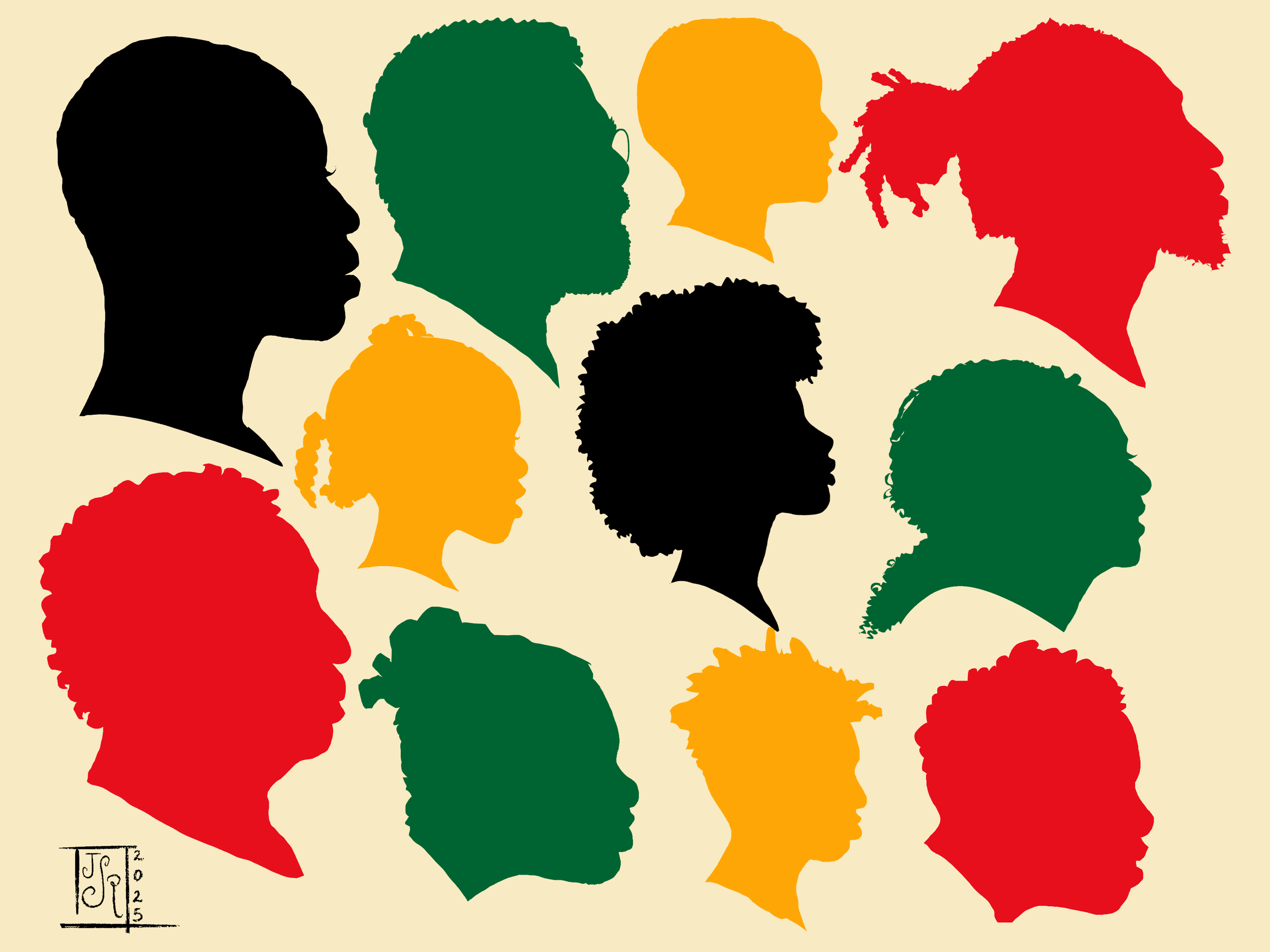
Today marks a hundred and sixty years since June 19th, 1865.
While President Lincoln’s Emancipation Proclamation took effect on the eve of January 1st, 1863, the declaration didn’t officially end slavery throughout the United States, and states that were under Confederate control did not implement or heed the proclamation’s decree until that fateful day in 1865, June 19th, when Union troops reached Galveston Bay, Texas and announced the executive decree freeing enslaved people in the state. Since then, Juneteenth (also known as Freedom Day) has been celebrated by Black communities, but mass interest in highlighting Juneteenth came in 2020 during the height of the Black Lives Matter movement, as the murders of George Floyd, Breonna Taylor, and other Black Americans inspired nationwide protests against racial violence and police brutality. But where the latest federally recognized holiday should be celebrated and acknowledged as an important thread in the tapestry of our shared American history, the current presidential administration is promising to do anything but.
Most recently, Trump reportedly relocated a bust of Martin Luther King, Jr. out of the Oval Office, and is also set on erasing Black service members as part of his anti-DEI efforts. He made a Truth Social post today saying that there’s “too many working holidays” (this is coming from the guy who ran on making Juneteenth a federal holiday in 2020 to appeal to the Black voter, by the way).
But it doesn’t stop there. Back in March, Trump singled out the National Museum of African American History and Culture, claiming that “Museums in our Nation’s capital should be places where individuals go to learn — not to be subjected to ideological indoctrination or divisive narratives that distort our shared history.”
Just the name of his executive order on the matter, Restoring Truth and Sanity to American History, says it all. Within the statement, Trump claims that “Americans have witnessed a concerted and widespread effort to rewrite our Nation’s history, replacing objective facts with a distorted narrative driven by ideology rather than truth.” Additionally, the executive order calls for the reinstatement of “public monuments, memorials, statues, markers, or similar properties” that may have been “removed or changed to perpetuate a false reconstruction of American history, inappropriately minimize the value of certain historical events or figures, or include any other improper partisan ideology” – given that many of the monuments that were removed were testaments to Confederate-era America, it’s telling that artifacts like these are being prioritized and revered as “heritage” to be proud of by the Trump Administration.
All of this to say, this push for the depiction of the Confederacy to be positive is unfortunately not a new phenomenon at all. The Southern Poverty Law Center’s Whose Heritage? report documents how former Confederates “began an organized propaganda campaign to remake the memory of the Civil War.” The myth of the Lost Cause was elevated through “[n]ovels, films, folk songs, textbooks, school curricula, social clubs, and… public memorials.” Novels like Gone with the Wind popularized the Black Mammy trope, making it seem like enslaved people were happy to be property and did not want freedom, while movies like The Birth of a Nation sparked violence and hatred against Black citizens while practically founding the American film industry. Their mission was to gaslight Americans into minimizing and even forgetting the cruelty and horrors of enslavement and racism, because “[if] hundreds of thousands of Americans had not fought and died for an end to the barbarism of chattel slavery, then there was little momentum for white Northerners to struggle against Jim Crow and sacrifice for civil rights.” Worst of all, Lost Cause proponents reportedly sponsored and erected over 2,300 memorials — statues, roadways, parks, and more — to Confederate leaders, helping to create a glorified fictionalization of the Confederacy as “great, tragic, honorable and triumphant even in defeat.” This very movement can even claim influence over the revisionism and erasure of Black history in the textbooks and educational materials of today, and why so few students learn about events like Juneteenth, and are taught a curriculum that disguises the ugly truths of American history.
It’s no wonder, then, that anyone who challenges this perception of historical events is seen as “unpatriotic” or politically motivated, and why Trump is targeting the Smithsonian, for instance. Among the museums’ exhibits, however, there’s one that was of particular interest to the Trump Administration. “The Shape of Power: Stories of Race and American Sculpture” is presented by the Smithsonian American Art Museum; its assertion that “[s]ocieties including the United States have used race to establish and maintain systems of power, privilege, and disenfranchisement” is included as defamatory in Trump’s executive order. But he goes even further than that, adding that the exhibit “promotes the view that race is not a biological reality but a social construct.” While Trump may claim to bring back “truth” and “sanity” to American history, it’s egregious of him to perpetuate eugenicist beliefs and uphold bioessentialist talking points as fact. The belief that certain characteristics or behaviors are linked inherently to someone’s biological or genetic history is incredibly harmful, and helps to spread stereotypes and normalize discrimination and racial disparities. These misguided attributions have historically led to genocide through eugenics, causing forced sterilizations, casualties, and deaths across the United States and even internationally — after all, Hitler drew inspiration and justification for the Holocaust from the American playbook.
You may dismiss these issues as being part of the past, but you’d be gravely mistaken to think these problems don’t exist today, and it’s especially devastating to see history repeat itself. Take how James Marion Sims is credited as “the father of modern gynecology” — all while ignoring the cruel and inhumane experimentation he put Black women through for research. Henrietta Lacks’ cells have contributed to lifesaving medical research for plenty of illnesses, but her name is largely disregarded today. But it’s not merely enough to acknowledge this horrifying legacy. I’ll borrow some words from our very own London Allen, who writes, “Some people love to say that historically, the medical system in the United States has been racist. Yes, the medical system is rooted in racism, but this is not only historical but also current and systemic.” We still see the ramifications of this inhumanity today, as Adriana Smith’s body was placed on life support after her passing and despite her family’s wishes to deliver a premature fetus thanks to the strict abortion ban in the state of Georgia. While these are just a few cases out of thousands in one field out of many, it’s a damning example of the consequences of racism, as well as of the push to erase and discredit both Black exploitation and contributions to American success stories.
In a nation where the call for reparations to descendants of African American enslaved peoples is seen as extreme and radical, there is already enough denialism about the impact and power that Black Americans have had in making the United States what it is today. Learning about the history of America — a fuller history that isn’t whitewashed to display only the triumphs of the United States, but that acknowledges and challenges the nation’s failures and its atrocities — is not equivalent to propagating “corrosive ideology.” It’s exactly why it’s so crucial now more than ever to amplify Black voices and experiences.
(Digital illustration by author)
Written by: Jacqueline Salazar Romo
About The Author: Jacqueline (she/they) is an editorial intern who loves writing, whether creatively or within a non-fiction context, especially to explore current issues and personal interests.
Juneteenth, Black History Erasure, Anti-Black Racism, Trump Administration
Sources:
Allen, London. "Black Women and the U.S. Healthcare Experience." Necessary Behavior, 13 Sept. 2024, necessarybehavior.com/black-women-and-the-us-healthcare-experience.
Amesbury, Richard. "What is Replacing DEI? Racism." The Chronicle of Higher Education, 5 June 2025, www.chronicle.com/article/what-is-replacing-dei-racism.
"Biological Essentialism — Definition and Explanation." The OR Briefings, oxford-review.com/the-oxford-review-dei-diversity-equity-and-inclusion-dictionary/biological-essentialism-definition-and-explanation/.
Blow, Charles M. "From Celebrating Juneteenth to the Erasure of Black History: Charles M. Blow on America Today." CBS News | Breaking News, Top Stories & Today's Latest Headlines, 8 June 2025, www.cbsnews.com/news/from-celebrating-juneteenth-to-the-erasure-of-black-history-charles-m-blow-on-america-today/.
Broadwaybabyto. "Adriana Smith, Misogyny and the Cruelty of Forced Birth." The Disabled Ginger | Broadwaybabyto | Substack, 21 May 2025, www.disabledginger.com/p/adriana-smith-misogyny-and-the-cruelty.
Burnett, John. "Four Enduring Myths About Juneteenth Are Not Based on Facts." NPR, 20 June 2022, www.npr.org/2022/06/20/1105945119/four-enduring-myths-about-juneteenth-are-not-based-on-facts.
DeBerry, Jarvis. "Donald Trump’s Anti-DEI Madness Erases Black Service Members, Living and Dead." MSNBC.com, 24 Mar. 2025, www.msnbc.com/opinion/msnbc-opinion/trump-dei-black-marines-military-rcna197570.
"The Emancipation Proclamation and Juneteenth." National Archives Museum, visit.archives.gov/whats-on/explore-exhibits/emancipation-proclamation-and-juneteenth.
"Eugenics and Scientific Racism." Genome.gov, 18 May 2022, www.genome.gov/about-genomics/fact-sheets/Eugenics-and-Scientific-Racism.
Farber, Steven A. "U.S. Scientists' Role in the Eugenics Movement (1907–1939): A Contemporary Biologist's Perspective - PMC." PMC Home, 5 Dec. 2008, pmc.ncbi.nlm.nih.gov/articles/PMC2757926/.
Pitofsky, Marina and Francesca Chambers. “Donald Trump knocks ‘non-working federal holidays’ as nation celebrates Juneteenth.” USA Today, 19 June 2025, https://www.usatoday.com/story/news/politics/2025/06/19/donald-trump-white-house-juneteenth/84279498007/.
"The Historical Legacy of Juneteenth." National Museum of African American History and Culture, nmaahc.si.edu/explore/stories/historical-legacy-juneteenth.
"Juneteenth History and Facts." www.goldenwestcollege.edu/rising/juneteenth/index.html.
Madapoosi, Maha. "The Real Difference Between the Trump Riots and the Black Lives Matter Protests." Necessary Behavior, 17 June 2022, necessarybehavior.com/the-real-difference-between-the-trump-riots-and-the-black-lives-matter-protests?rq=the%20real%20difference.
"The Mammy Caricature." Jim Crow Museum of Racist Imagery, jimcrowmuseum.ferris.edu/mammies/homepage.htm.
Melia, Samantha. "Racism in Medicine: A Legacy of Non-Autonomy." Necessary Behavior, 13 July 2024, necessarybehavior.com/racism-in-medicine-a-legacy-of-non-autonomy.
O'Kane, Caitlin. "Did You Learn About Juneteenth in School? Many American History Lessons Fall Short on Black History." CBS News | Breaking News, Top Stories & Today's Latest Headlines, 19 June 2020, www.cbsnews.com/news/juneteenth-schools-education-black-history/.
Patterson, Troy. "The Celebration of Juneteenth in Ralph Ellison’s “Juneteenth”." The New Yorker, 21 June 2020, www.newyorker.com/culture/culture-desk/the-celebration-of-juneteenth-in-ralph-ellisons-juneteenth.
A People’s Journey, A Nation’s Story | National Museum of African American History and Culture, nmaahc.si.edu/.
Reed, Rachel. "Organized Labor’s Complicated History with Civil Rights." Harvard Law School, 12 Feb. 2025, hls.harvard.edu/today/organized-labors-complicated-history-with-civil-rights/.
"Reparations." NAACP, 13 June 2022, naacp.org/resources/reparations.
"Restoring Truth and Sanity to American History." The White House, 28 Mar. 2025, www.whitehouse.gov/presidential-actions/2025/03/restoring-truth-and-sanity-to-american-history/.
Superville, Darlene. "On Juneteenth, Trump complains about ‘too many’ holidays." AP News, 19 June 2025, apnews.com/article/trump-smithsonian-executive-order-improper-ideology-558ebfab722f603e94e02a1a4b06ed4d.
Superville, Darlene. "Trump executive order on Smithsonian targets funding for programs with ‘improper ideology’." AP News, 27 Mar. 2025, apnews.com/article/trump-smithsonian-executive-order-improper-ideology-558ebfab722f603e94e02a1a4b06ed4d.
Taylor, Derrick. "The History of Juneteenth." The New York Times - Breaking News, US News, World News and Videos, 12 June 2024, www.nytimes.com/article/juneteenth-day-celebration.html.
Trask, Jeff. "The Case for Reparations: Champaign County." Public I Contact | This Site is a Means for People to Contact the Public I Newspaper, 1 Apr. 2024, publici.ucimc.org/2024/04/the-case-for-reparations-champaign-county/.
Watson, Kathryn, and Melissa Quinn. "Biden Signs Bill Making Juneteenth a Federal Holiday." CBS News | Breaking News, Top Stories & Today's Latest Headlines, 18 June 2021, www.cbsnews.com/news/biden-juneteenth-holiday-bill-sign/.
"What is Juneteenth? – Juneteenth World Wide Celebration." Juneteenth World Wide Celebration, www.juneteenth.com/history/.
"Whose Heritage?" Southern Poverty Law Center, 11 Feb. 2025, www.splcenter.org/resources/guides/whose-heritage/.
Wolf, J.D. "Trump Removes MLK Bust from Oval Office." Meidasnews.com, 16 June 2025, meidasnews.com/news/trump-removes-mlk-bust-from-oval-office.
Additional Reading

Check out our social media for more resources:
Leave a comment