
Public Health Roundup: Viruses, Outbreaks, and World Mask Day
Written by: Jacqueline Salazar Romo
May 22nd, 2026

Ehsan Ahmadnejad (@ehsan_) via UnsplashViral outbreaks and diseases are going largely underreported and unacknowledged—especially under the current administration, which is set on rolling back healthcare measures and limiting funds for medical science and research. As of now, there are several viral illnesses to look into and/or out for. Among them are the cruise ship hantavirus cases, the troubling Ebola outbreak in Central Africa, and the COVID-19 pandemic being in its sixth year. Here is a brief overview of what’s going on:
Hantavirus:
Hantavirus (from the Hantaviridae taxonomy) are a group of viruses typically, though not exclusively, acquired through exposure to rodents, meaning that someone becomes infected when they come in contact with contaminated fecal matter and fluids from carrier animals like rats.
Earlier in April, the zoonotic disease was identified on the Dutch cruise ship MV Hondius, which departed from Argentina and has plans to visit islands in the South Atlantic.
As of May 18th, there are nine confirmed active cases, as well as two deaths caused by this particular outbreak. The first infected passenger died on board on April 11th, leading to disembarkation for several sick individuals after his index case.
On May 19th, Colorado reported its first hantavirus death since 2024 after a man succumbed to the disease from local exposure; health officials have denied any correlation between this fatality and the infamous cruise contagion. The strain of hantavirus that caused this outbreak is reportedly the Andes virus, which is the only known species to spread via human-to-human transmission.
Ebola:
The World Health Organization Organization (WHO) declared an Ebola outbreak in the Democratic Republic of Congo and Central Africa a public health emergency. This is nearly unheard of—a declaration of a public health emergency of international concern (PHEIC) is typically announced after the approval of the WHO committee; in this case, the WHO Director-General declared it without having convened the committee prior. This breach of protocol speaks of how urgent this declaration is
WHO Director-General Dr. Tedros Adhanon Ghebreyesus has pointed to concerning factors that could amplify the potential for “[a much larger outbreak] than what is currently being reported” and even global contagion—cases have been reported in urban areas, and volatile population displacement spurred by conflict in the province of Ituri has only increased the risk of further spread. Additionally, the outbreak location suffers from significant cross-border traffic, with some neighboring cities being much less equipped to handle this disease.
While there are treatments available for the Zaire strain (one of the most prevalent types of Ebola, out of six known variations), the current outbreak is propagating the Bundibugyo strain. This is especially concerning given that this is “a species of Ebola virus for which there are no vaccines or therapeutics,” as per the WHO chief. The average fatality rate for Ebola is 50%.
COVID-19:
The latest COVID-19 mutation currently reported, labeled the “Cicada” variant, was first identified in February 2026. While a higher risk has not been determined, transmission rates may be equal to or greater than previous variants, and can infect individuals regardless of perceived “immunity” (more on that below).
One of the most concerning aspects of COVID-19 that is disregarded is its power to dysregulate and impact the immune system—A March 2023 study published in the journal Immunity found that “SARS-CoV-2 infection damages the CD8+ T cell response [one of the cells crucial for immunologic responses to infections], an effect akin to… long-term damage to the immune system after infection with viruses such as hepatitis C or HIV.” Moreover, COVID-19 also affects mitochondrial efficiency (among other things), which impacts organ function across the entire body—just from these findings, it is easy to conclude that the impact of infections on long-term health is devastating, similar to developing chronic illness or immunocompromisation.
Two trials from the University of Oxford have determined that the COVID-19 oral antiviral drug Paxlovid may not reduce hospital admissions or severe outcomes, but does help infected people recover faster. Funded by the National Institute for Health and Care Research (NIHR), the studies collectively enrolled over 29,000 participants aged 50 or older, with over 98% of them being vaccinated. Regardless, Paxlovid has generally been a beneficial form of easing symptoms.
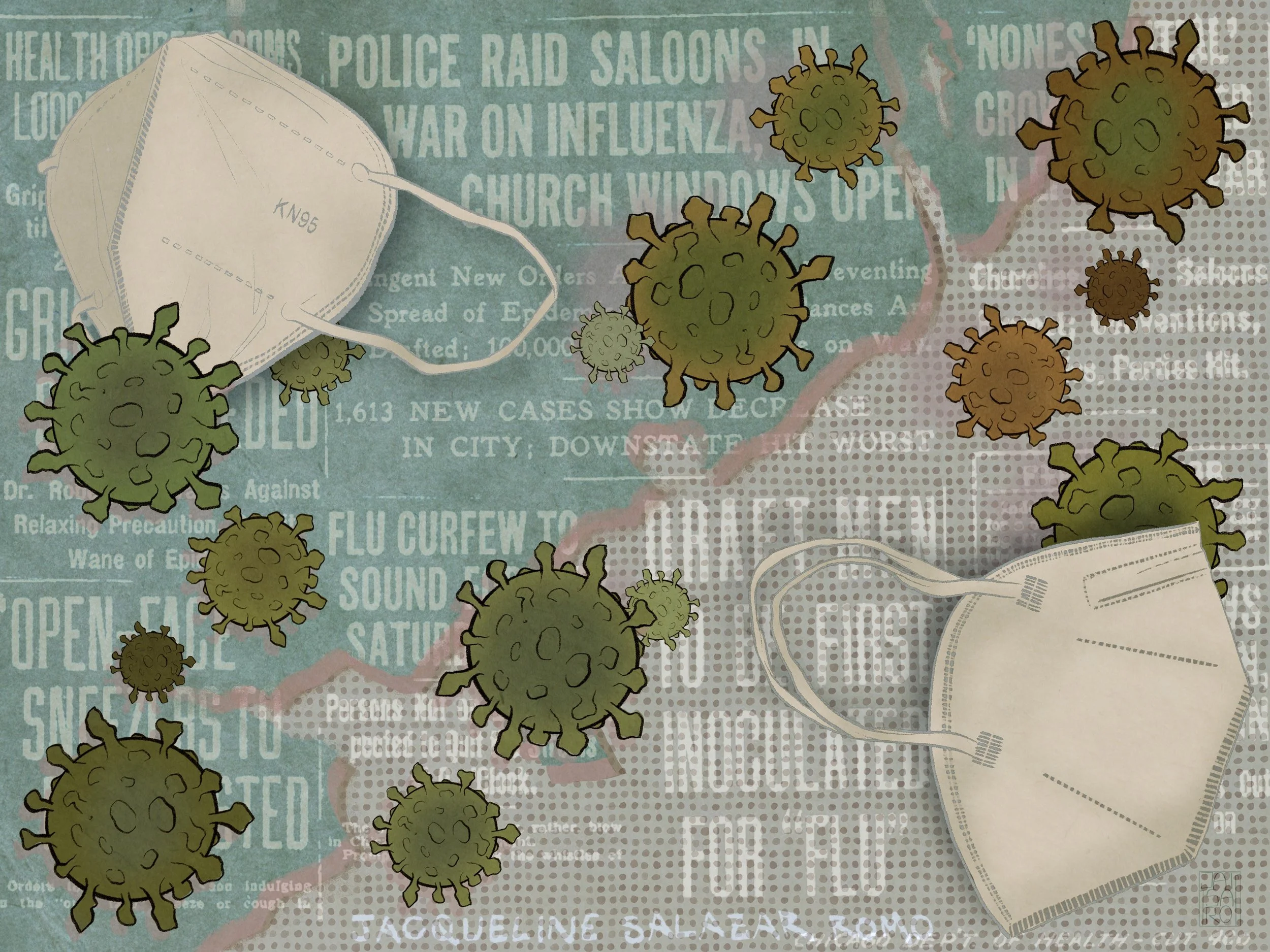
With the looming fear surrounding possible outbreaks, as well as the unspoken prevalence of widespread COVID-19-related symptoms and chronic conditions, it’s so important to take as many precautions and preventative measures as is feasible or realistic for you.
World Mask Week (taking place from May 25th to May 31st) is a grassroots effort founded by Celebrate485 that encourages individuals to commit to masking up for collective health for one week. The event was first locally established in the Hudson Valley area in 2023, rooted in the objective of community care. Objectives from groups and community efforts such as these are so crucial to encouraging people to take care of your health.
The uncomfortable truth is that you can expect to hear more about viral outbreaks and diseases as time progresses. Be sure to take as many preventative measures as you can (ventilation, hygiene practices, social distancing, and/or returning to wearing a mask outdoors and in enclosed social settings will help lower your risk of infection).
Written by: Jacqueline Salazar Romo
About The Author: Jacqueline (she/they) is an editorial staff member at NB who often explores the intersections of identity, belonging, and culture in relation to current events. Whenever she isn't writing, she enjoys art, fandom, and thinking too long about the past.
Pandemic Preparedness, Viral Outbreaks, Immunocompromisation
Additional Reading


Sources:
https://www.celebrate845.com/worldmaskweek.html
https://www.bbc.com/news/live/c99l70zy1j7t
https://www.cnn.com/2026/05/19/africa/ebola-outbreak-drc-uganda-who-chief-intl
https://yourlocalepidemiologist.substack.com/p/ebola-international-emergency-hantavirus
https://www.cpr.org/2026/05/18/douglas-county-hantavirus-death/
https://pmc.ncbi.nlm.nih.gov/articles/PMC7101103/
https://health.stonybrookmedicine.edu/new-covid-variant-ba32-cicada-what-to-know/
https://libguides.mskcc.org/CovidImpacts/Immune
https://www.sciencedirect.com/science/article/pii/S1074761323001255
https://www.nature.com/articles/s44324-024-00038-x#Bib1
https://www.npr.org/2026/05/20/nx-s1-5826910/ebola-outbreak-africa-risks
Check out our social media for more resources:
Leave a comment