
Queer Art History: Gregg Araki, Nowhere, and the Teenage Apocalypse
Written By: Kael Johnston
Date: July 20th, 2026
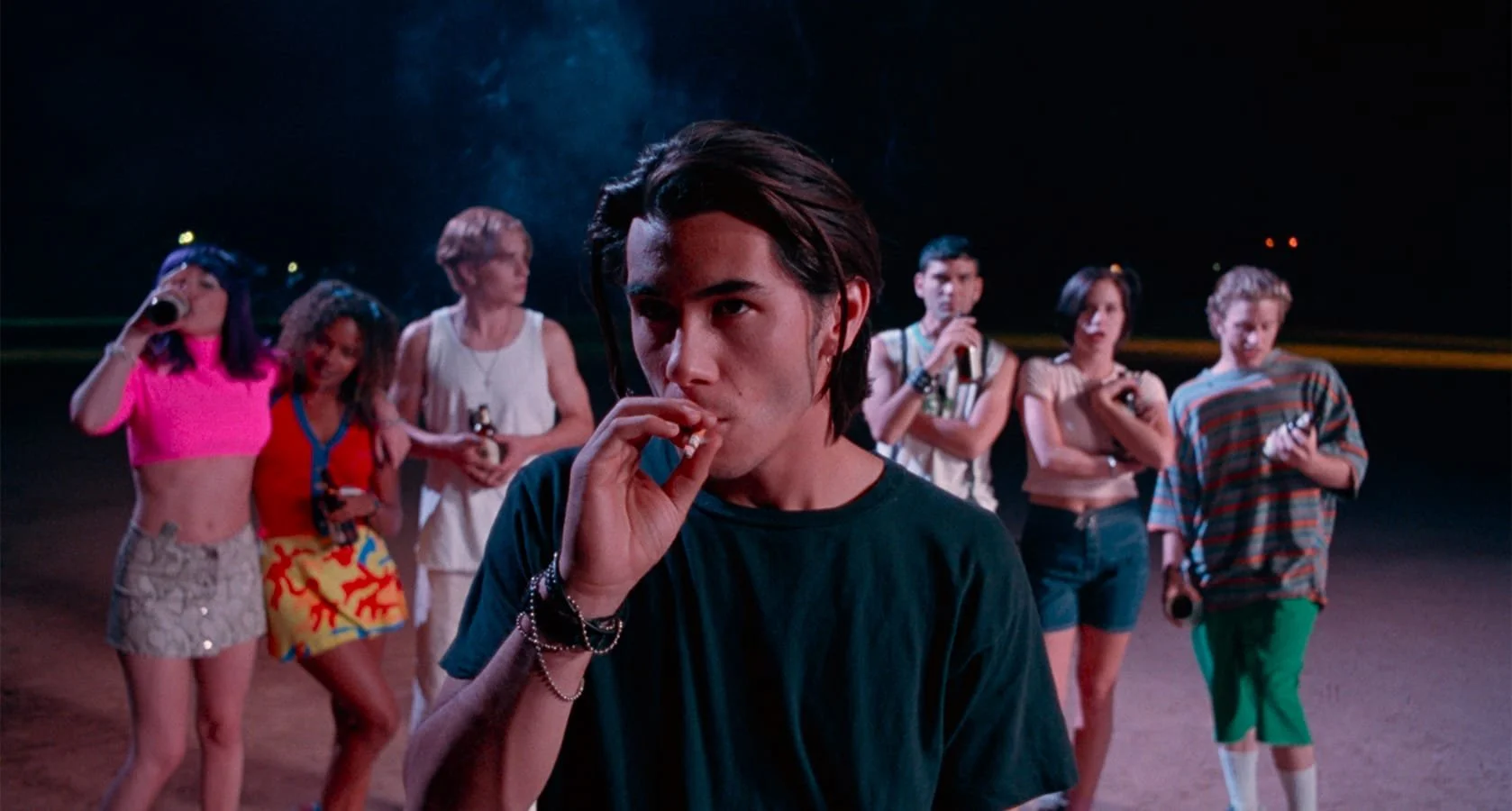
If the world is doomed, then why would being gay matter?
To start the Queer Art History series, let’s focus on Gregg Araki, a pioneer of queer cinema. Born and raised in Los Angeles, Araki’s films explore queer relationships in an abrasive, comedic way that challenges how queerness appears on screen. His debut feature, The Living End (1992), follows a duo of HIV positive gay men fleeing the police on a hectic road trip. The film received mixed reviews—people either loved or hated it—but it led to a trilogy of films known as the Teenage Apocalypse Trilogy (1993-1997) that solidified Araki as a pioneer in queer and indie cinema. Of the three films, the last installment, Nowhere (1997), can be seen as a classic in this subgenre that presents queerness in a unique and unapologetic way, expressing sexuality as not a sole identity, but a fluid expression of desire and connection.
Nowhere follows Dark, played by James Duvall, and his group of friends navigating relationships, drugs, and an incoming alien invasion all amidst the backdrop of a chaotic and surreal 90’s Los Angeles. Overall, the film feels turbulent, presenting Araki’s vision of queerness as bold, grungy, fluorescent, and at times overwhelming, with the best soundtrack ever to match it.
It shows how queer teens viewed the world at the time, seeing life as a lost hope and the future as doomed. It’s a depressing notion to put out there, but for the queer community, that’s how life feels at times. However, Araki flips this with the way he presents sexuality.
The way the film presents queerness is unique to its time. For one, it’s really not addressed at all. Sexually, each character is fluid with who they love and how they express it, and sexuality remains in a label-less territory. It’s a small but powerful shift, especially since queer characters were often portrayed in stereotypical ways—or not given any screen time at all—and instead of making queerness the film’s primary focal point in the movie, Araki simply allows it to exist. The alien invasion, the drugs, evil teen boy idols, and the looming sense of apocalypse are what hurt these characters, not who they choose to love. It’s this point specifically that makes this movie feel so radical for its time. Nowhere allows Araki to present and imagine a world where, amidst the chaos, queerness can be the single thing that provides a sense of intimacy, connection, and liberation. In doing so, it's a direct attack on anti-queer rhetoric at the time, asking why, in a world that feels as though it's constantly on the brink of apocalypse, we continue to concern ourselves with who people choose to love.
It’s not a stretch to say that Araki has built a metaphorical bridge for the New Queer movement in cinema. His style stays grounded and influential, making him a timeless artist. Recently, Araki is still making movies with his next feature, I Want Your Sex (2026), starring Olivia Wilde, Cooper Hoffman, and Charli XCX, making its way to screens this upcoming year.
Gregg Araki, Nowhere, 1997, film stillWritten by: Kael Johnston
About the author: Kael is an LA-based writer and current editorial staff member at Necessary Behavior.
Tags: Queer Cinema, Gregg Araki, Sexuality
Check out our social media for more resources:

Additional Reading
5 Independent Movies That Should Be on Your Watchlist
Why You Should Watch Bottoms
The Best Movies Out Now: Examining Summer Box Office Hits
Leave a comment