
The Negative Beauty Standards Behind the Y2K Revival
Written By: Katherine Pfeizer
September 23rd, 2026
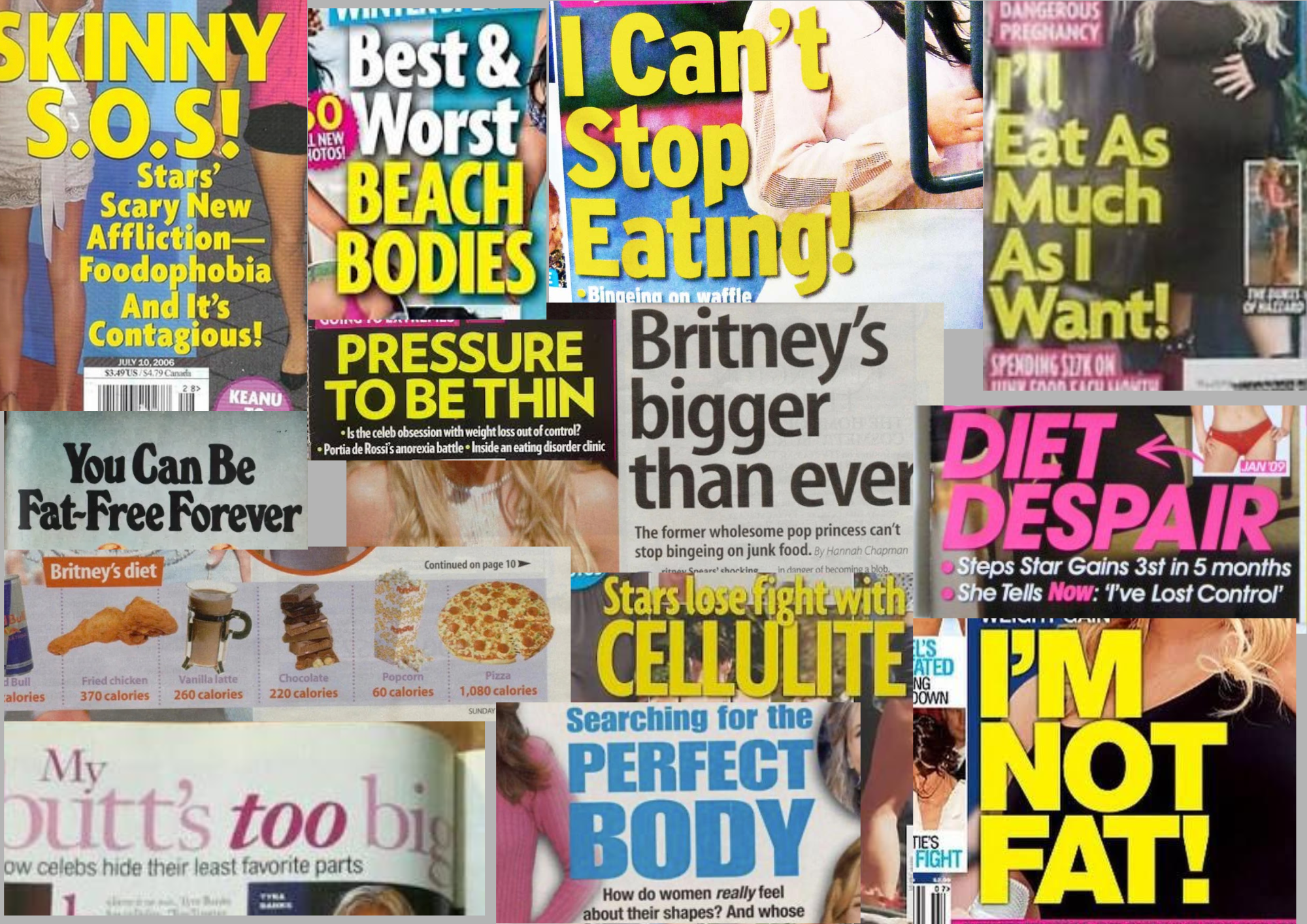
Collage of early-2000s magazine covers used under fair use for purposes of criticism and commentary
© original publishers.
The Y2K aesthetic, a style inspired by the fashion, beauty, technology and pop culture of the late 1990s and early 2000s, has returned on social media. This interest has grown rapidly, where searches for Y2K aesthetics shot up 891% since November 2024. However, this nostalgia often overlooks the restrictive beauty standards of the early 2000s, particularly the pressure celebrities faced to conform to narrow ideals of thinness and appearance.
Extreme Thinness as the Beauty Ideal
The early 2000s beauty ideal was built around extreme thinness, and there was little room for anything else. Fashion and celebrity media treated a slim frame as the baseline for attractiveness, with little mainstream representation of other body types. Sabrina Strings, a sociology professor at UC Irvine, has traced this specific version of the thin ideal back to the “heroin chic” look, an aesthetic associated with pale skin and visibly underfed bodies. Even now TikTok’s #Y2KSkinny tag has racked up millions of views, helping revive that look.
Aggressively Restrictive Diet Cultures
Extreme body goals, dieting, calorie counting and weight-loss products were all treated as normal practices during the early 2000s, serving as major topics of conversation in magazines and on television. As the Y2K revival continues, the same ultra-thin standard is resurfacing, especially amid the growing popularity of GLP-1 weight-loss medications.
Severe Body Shaming
The early 2000s also saw celebrities and ordinary people alike facing criticism for gaining weight, looking “too big,” or simply not fitting a narrow beauty standard. Entertainment outlets treated that criticism as legitimate commentary, as they did with Britney Spears after her 2007 VMA comeback performance. Outlets spent days dissecting her body instead of her performance, with even The New York Post running the headline “Lard and Clear.” Meanwhile, Britney Spears was, by most accounts, not visibly out of shape at all. That specific backlash reflected how normal it had become to criticize a woman’s body when she did not fit an extremely thin ideal.
Because of this early 2000s revival, celebrities today are still being shamed about their bodies. One example is Lana Del Rey, who has been repeatedly scrutinized for her changing weight over the past several years, to the point that searching her name on TikTok reportedly auto-suggested “weight gain” as a top related search. She has been mocked for gaining weight and, just as quickly, faced speculation about Ozempic when she appeared slimmer again. Although the format has changed from tabloid headlines to TikTok comment sections, the underlying expectation that a famous woman’s body should meet a narrow beauty standard continues to persist online.
All in all, while this modern Y2K revival highlights the clothes, music and aesthetics of the early 2000s, it still is bringing life back to the beauty standards and cultural attitudes that came with them. Especially with the rise of celebrity weight loss, fat shaming, and rise of ozempic use for the purpose of weight loss. It’s easy to romanticize the aesthetic, but it’s harder to remember, or admit, how normal it once was to watch a magazine tear a young star apart over their weight. If social media is going to keep bringing the early 2000s back, it might be worth bringing the full picture back with it, not just the parts that look good online.
Written by: Katherine Pfeizer
Katherine Pfeizer is an editorial staff member who follows current events and enjoys analyzing books and films, especially horror, thriller and classic literature. She is also an undergraduate at UC Davis pursuing a degree in Comparative Literature with a minor in Political Science and Education.
Y2K, Beauty Standards, Social Media
Check out our social media for more resources:
Additional Reading


Leave a comment