
They Have Their Eye On You: How Digital Surveillance is Invading Your Privacy
Written by: Rhilynn Horner
April 8th, 2026
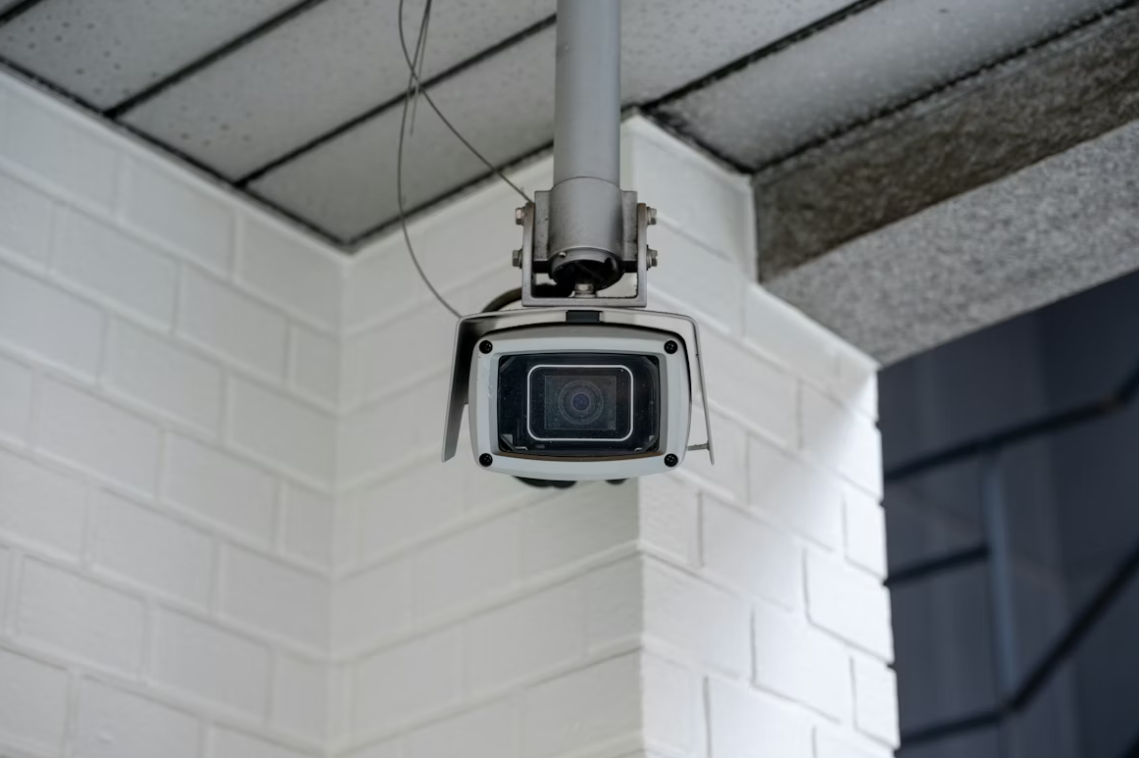
Turquo Cabbit via UnsplashEvery movement you make in the digital sphere is being monitored: what you look like, what you spend money on, the way you move your mouse, your physical location, your typical behaviors, your browsing history—it’s an endless, daunting list. Despite this, many of us mindlessly agree to data collection when we click accept on an app’s privacy policy, so it comes as no surprise when unethical practices concerning our data slip through the cracks. The most nefarious of these practices are those without user disclosure and with little to no legal resistance. A costly example of this is something called surveillance pricing.
Surveillance pricing is when a business uses your data to make assumptions about how much you’ll spend on a specific product. This lets them hike up the price for an item if they believe you’d be willing to spend more on it than the average person. Without you even realizing it, companies have been experimenting with your personal data by using AI algorithms, tracking even the most minute of details in order to squeeze out your every last penny. Uber has allegedly increased prices for users whose phone battery is low or has used a corporate credit card; Orbitz charges Mac users more for hotels after learning they spend more money on bookings; Target charged $100 extra for televisions if you were in their parking lot; and many more we don’t even know about. This weaponization of your data has even been described as “price gouging based on predictive behavior.”
So why is this legal? Those who defend these practices, including retailers themselves, argue that it's the simple ebb and flow of supply and demand found in dynamic pricing strategies (fluctuations in prices based on real-time changes, oftentimes observed with travel expenses or event ticketing). While dynamic pricing isn’t illegal as long as it is nondiscriminatory and disclosed, surveillance pricing has yet to have any comprehensive federal law that prohibits or restricts it. That is to say, companies do not have to disclose how they set prices, meaning surveillance pricing is unregulated and typically fully invisible to consumers. While the Trump administration’s Federal Trade Commission (FTC) has moved away from efforts at regulation, states like California, Georgia, Illinois, Colorado, and New York have recently introduced state-level legislation requiring full disclosure of surveillance pricing in the FTC’s stead. That being said, that’s only five states out of fifty—for the majority of us, there’s still a long road ahead of us.
Beyond the questionable legality of surveillance pricing, it is also an ethical problem. Allowing unregulated surveillance pricing leads to discrimination, such as when Staples and Home Depot were allegedly giving deals only to those in higher-income areas. Even when regulated and fully disclosed, surveillance pricing is always unfair. However, this type of manipulative strategy is encouraged under the capitalist system, which prioritizes corporate financial gain as its right in a free country. But think, if companies have this much information about you that they can and have been using against you, how free must you actually be?
This is a current issue of the unethical practices capitalism encourages, but also one of personal data security and nondisclosure. So, yes, surveillance pricing shouldn’t exist in the first place, but we need to back states pushing for state-level legislation that at least discloses how our data is gathered and how it’s been used in pricing—in all its invasive, exploitative forms. Doing so will shift the power towards consumers, where they’ll know when to hide their identity and data from companies, such as by denying cookies, restricting location sharing, using an incognito browser over apps, using a VPN, and being generally careful about what they’re browsing. It’s only getting worse without the FTC’s involvement, as AI algorithms become more integrated into corporations. So, until restrictions against surveillance pricing are set, be alert to how your data is being used—if you don’t, it will only come back to bite you.
Written by: Rhilynn Horner
About The Author: Rhilynn (She/Her) is an editorial staff member and a graduate from UNC Chapel Hill with a degree in English & Comparative Literature. She loves to read and write on a variety of pop culture and social topics.
Surveillance Pricing, Data Security, Privacy Policy
Additional Reading



Sources:
https://www.brusselstimes.com/449143/uber-fares-allegedly-linked-to-phone-battery-levels
https://consumerwatchdog.org/wp-content/uploads/2024/12/Surveillance-Price-Gouging.pdf
https://www.wsj.com/articles/SB10001424127887323777204578189391813881534
https://www.aclu.org/news/privacy-technology/surveillance-pricing
Check out our social media for more resources:
Leave a comment