
Urban Sprawl and the Hell It's Trapped Us In
Written by: Rhilynn Horner
March 23rd, 2026
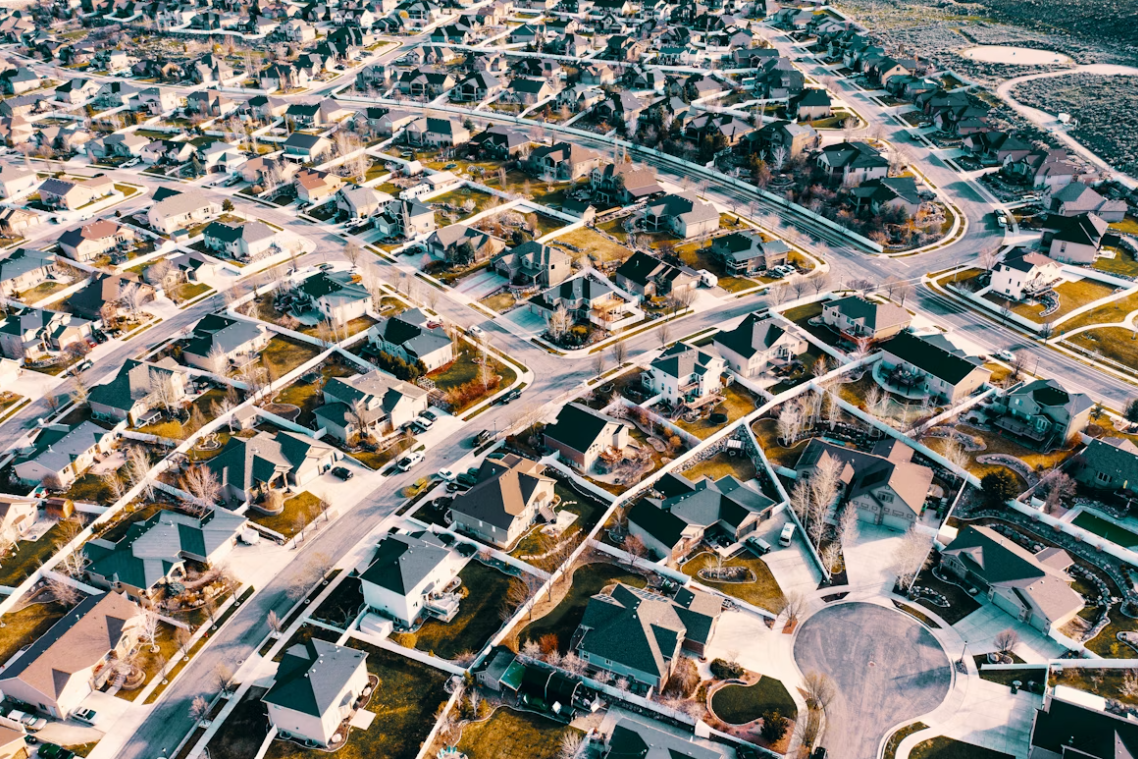
Michael Tuszynski via UnsplashThe United States has many issues. But there’s one that has gone under the radar, despite affecting every facet of our lives. This issue is the injurious existence of “urban sprawl,” known as the expansion of low-density, car-dependent communities that use single-use zoning, or the strict separation of land uses such as residential, commercial, and work areas. These communities are often inefficient in their land use and are poorly planned, taking on a “sprawling” pattern full of cul-de-sacs and dead-end streets. They’re so common that over 50% of Americans call these communities their home. Don’t be confused by their popularity, though—it’s general consensus that urban sprawl is more costly than anything, especially compared to other, more sustainable, urban designs.
What’s Wrong With Urban Sprawl?
Urban sprawl has had serious detrimental effects on our quality of life (QOL). From environmental concerns to encouraging a life of social isolation, here are a few ways that urban sprawl might be affecting you:
Car-Dependency and Lack of Walkability
Due to single-use zoning that separates common areas across unwalkable distances, vehicles are a requirement to navigate an urban sprawl community safely. Not having a car means necessities like grocery stores become inaccessible, and holding down a job can be tough. However, many people cannot afford a car, or cannot afford a safe one, meaning urban sprawl designs are often both inaccessible and unsafe to those who are particularly low-income. Even with a car, inconvenient driving times or limited parking can reduce access to public spaces for everyone. But the more cars you have on the roads, the more congestion and harmful emissions there will be. Unfortunately, a car-dependent society encouraged by urban sprawl will also increase road fatalities and force groups like the elderly to drive even when it is unsafe to do so. All in all, the independence a car may seem to provide is nothing compared to the freedom, safety, and benefits of walking.
Inefficient Land Use
As we expand, we get closer to exceeding planetary boundaries for land use, and we may cross a point of no return. Poor planning of urban sprawl is one of the key reasons for this, as it accelerates biodiversity loss by degrading habitats and the resources that local species need. This doesn’t just affect animals, but us, too—food security is also impacted, as the more land is taken up by homes, the less land is available to local agricultural use. Not having local agriculture will increase “food miles,” or the distance food travels from production to the consumer. The longer this mileage is, the more costly, more environmentally harmful, and the less fresh the food inevitably is. Since productive farmland is running scarce, too, it is even more important to use space wisely, and urban sprawl is not helping.
The Promotion of Social Isolation
Urban sprawl encourages many unhealthy habits while failing to support healthy ones. For one, its design promotes a culture of social isolation and hyper-individualism. By requiring a car to travel anywhere, you miss out on opportunities to wave hi to neighbors—it’s a “get in, get out” mentality. Instead, imagine a walkable community: it’s well-planned out, with residential, commercial, work, and third spaces all nearby. Walking there, you get to acknowledge and be acknowledged by others who cross your path. This builds a sense of shared community, unlike a society that relies on cars. With this shift in mindset, there will be an increase in civic engagement and a desire to maintain cleanliness and order.
Increased Costs
Urban sprawl is surprisingly expensive. According to research, it costs the American economy over $1 trillion annually, based on areas such as automobiles, land use, reduced accessibility, travel, and other related costs. One high cost alone is the sheer amount of space required to build parking spaces. Consider how shopping centers often require more land for parking spaces than the actual buildings. Now, consider how “a typical surface parking stall costs between $5,000 and $10,000 to construct.” You can see how quickly this would add up. Our federal and state economies are not the only areas that would benefit from shifting away from urban sprawl, but our own wallets would benefit, too. Since public spaces are less accessible in an urban sprawl community, you’ll be spending and using more resources at home, increasing your household costs. This is already fairly costly, but it doesn’t even include the various inefficiencies and costs that come with owning, maintaining, and driving a car.
If Not Urban Sprawl, Then What?
So, what is better than urban sprawl? The answer lies in a sustainable, compact smart urban development that encourages connection and improved QOL through factors like walkability and community.
Imagine this: a densely populated, compact city center that’s pedestrian-first and preserves green space. With fewer cars, the city is quieter and more peaceful, and all amenities and professional spaces are likely within a 5-10 minute walk. Surrounding this city are smaller suburban towns, but, unlike the ones we have today, their amenities are still within walking distance, with public transport available for any further travel. Continue outward, and the land turns from residential into rural, agricultural spaces. By being cautious with land use, all three areas, urban, suburban, and rural, are closer together, reducing food miles and protecting food security. You will also see improvements in public health, as there will be less air pollution from cars and more opportunities for fitness through walking. Such communities also promote civic engagement, belonging, peace, and wellness through QOL benefits, and allow independent businesses, third spaces, and green spaces to flourish.
Despite all this, some criticize these sustainable designs. Many who do often have a distinctly hyper-individualistic mindset. They claim that cars equal freedom, and reject a community that wouldn’t let them own their own tiny castle and plot of land within a desolate, concrete suburbia. These claims are counterintuitive in the first place: cars are less accessible than walking or public transport, especially if you are too young or old to drive. We’d also have more collective land available without urban sprawl, and switching to a more compact, sustainable design doesn’t mean you can’t own land or have grass in your yard. Regardless, we ultimately share this earth together. Other countries seem to understand this–look at Milan, Italy, or Copenhagen, Denmark–and clearly reap its benefits with some of the highest quality of life available. So, why advocate for the jungles of concrete and plastic we live in today, when a utopia awaits just around the corner
Written by: Rhilynn Horner
About The Author: Rhilynn (She/Her) is an editorial staff member and a graduate from UNC Chapel Hill with a degree in English & Comparative Literature. She loves to read and write on a variety of pop culture and social topics.
Urban Development, Urban Sprawl, Walkable Communities
Additional Reading


Sources:
https://www.tomorrow.city/why-is-urban-sprawl-still-on-the-rise/
https://www.nature.com/articles/461472a
https://www.britannica.com/topic/revitalization-movement
https://www.britannica.com/topic/urban-sprawl
https://www.planetizen.com/node/71305
https://archive.strongtowns.org/journal/2018/11/20/the-many-costs-of-too-much-parking
Check out our social media for more resources:
Leave a comment