
Welcoming a New Year–How to Look Back to Move Forward
Written By: Rhilynn Horner
Date: January 1, 2026
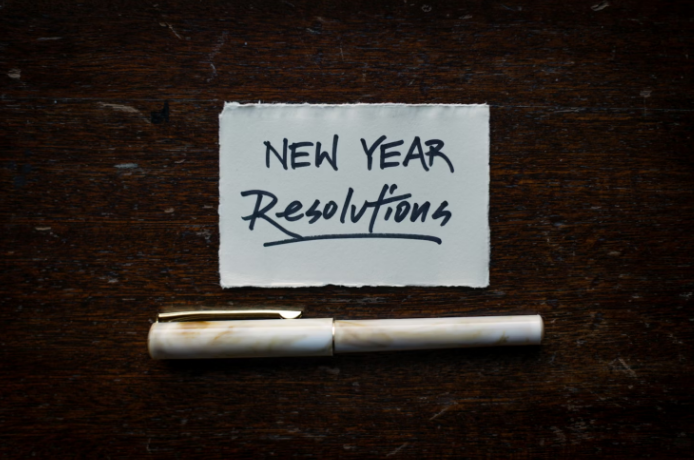
Tim Mossholder via Unsplash2025 is coming to a close, and with it marks the beginning of a new year and a fresh start. To ensure this next year begins smoothly, many of us plan New Year’s Resolutions—hoping to make the upcoming year better than the last. However, it can be hard to persevere with these goals, with studies showing that a majority of people follow their resolutions for only 3.74 months, and only 7% making it the full year. Fortunately, there are methods to keep these resolutions successful. One of the most important methods is to establish a solid foundation for these goals by planning with intention and realism. Let’s dive into how this can be done by taking some time for meaningful, personal reflection.
Auditing Your Life
First, audit your life—and by this I mean to methodically examine your past year, not for the sake of criticism, but for clarity on what to improve or change. Consider areas such as your career, finances, personal or spiritual development, relationships, physical and mental health, recreation (creativity and hobbies), and how you have spent your free time. While analyzing exact numbers can provide the greatest clarity (ex. calculating how much you spend in a month and in what exact categories), feel free to write down any information that may be helpful for later reflection, such as how important each category is to you. Just keep in mind that the most crucial part of this stage is to give you a sense of each area of your life, no matter how well you think you are performing in said areas. Doing so will help you to answer these next crucial questions:
Identifying your Wins and Losses
What went right in the past year? What could have been improved on?
Using your life audit, reflect on what has worked well this past year and what hasn’t. While it may be uncomfortable to think back on these areas of improvement, it is crucial to look at them in a healthy, accepting way to better your future. In tandem, as it is all too easy to get caught up in the negatives, be sure to recognize all of the progress you have already made from years past and the lessons you have learned. One crucial part of making successful resolutions is to be realistic, and intentionally recognizing your past progress will help you to see how achievable your future goals can actually be. Also, you can use your wins and losses to observe all the habits you may have formed over the past year, whether consciously or otherwise. Are these habits healthy, or are they ones you will need to break away from? While these play a major role in shaping your year, the people we surround ourselves with have just as much of an impact. So, to demonstrate how these deeper reflections can lead to more meaningful and successful resolutions, let’s use the area of relationships from the life audit as an example.
Putting it All Together: The People Who’ve Shaped Your Year
Social connection is fundamental to being human, and that means it’s all the more important to reflect on how they’ve affected your year. Think about who impacted your year the most: who were positive influences and were sources of support, and who might’ve been more draining or even harmful? For those who fall into the former category, take time to show your appreciation and gratitude, perhaps by directly expressing it or spending more time together. For those in the latter, think about what changes might be necessary to improve the relationship, such as a meaningful conversation, redefining health boundaries, or even creating more distance. People can either make or break your year, so be intentional about who and what you allow to shape the year ahead.
Going into the New Year
Using this strong foundation you’ve now built, you can decide what to carry forward, what to change, and what to leave behind: What commitments should you end, what values should you keep? Know that these goals do not have to be rigid or overly specific, but just need to be intentionally directed, realistic, and truly personalized to you. Avoid focusing just on the outcome, and instead begin by setting direction-based goals: strengthening a few relationships, prioritizing more rest, creating more consistently, etc. From there, identify meaningful first steps and simple checkpoints to achieve larger goals and help you stay accountable. For example, if you noticed you didn’t travel as much as you hoped to during 2025, then commit to setting aside money each month or planning an itinerary for the year ahead. If you approach your resolutions this way, then you’ll set yourself up for a healthier and more fulfilling New Year!
Written by: Rhilynn Horner
About the author description: Rhilynn (She/Her) is an editorial intern and a graduate from UNC Chapel Hill with a degree in English & Comparative Literature. She loves to read and write on a variety of pop culture and social topics.
Tags: New Years, Resolutions
Check out our social media for more resources:
Additional Reading



Leave a comment