
What We’ve Forgotten About 9/11
Written By: Jacqueline Salazar Romo
September 11th, 2025
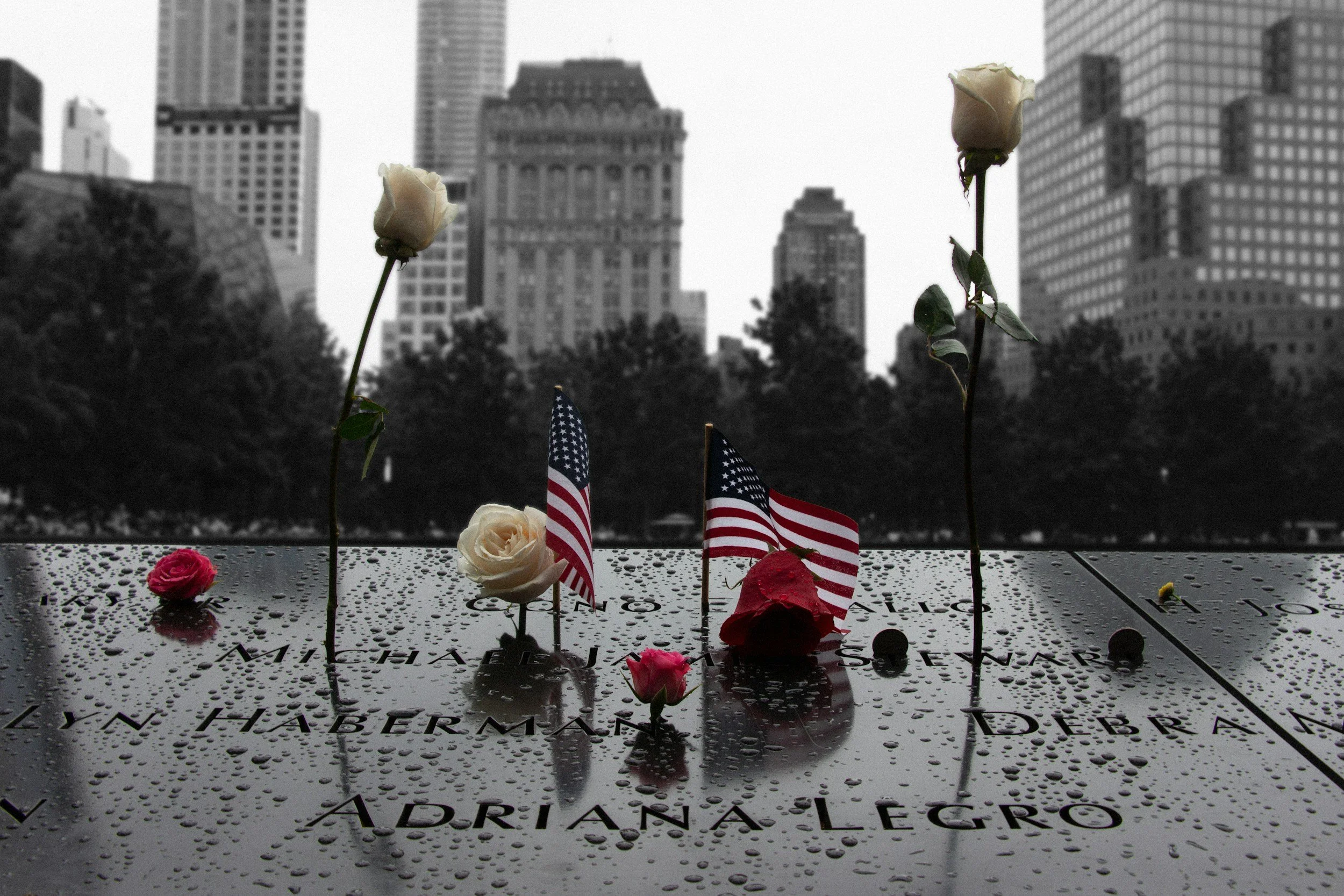
Today marks twenty-four years since September 11, 2001, the day when nineteen al-Qaeda members hijacked four commercial airlines and crashed two into the Twin Towers of New York City’s World Trade Center, claiming 2,977 American lives. While the tragedy has undoubtedly lingered in the minds of the public, 9/11 has had ramifications far beyond the fall of the Twin Towers, and some of its most detrimental effects include the generational and ever-present consequences it has borne for Middle East and North African (MENA) communities, both within America and on a global scale, for the rest of the world, and even for Americans themselves.
To combat perceived terrorism threats post-9/11, the United States government launched a mass surveillance expansion project through new digital tracking technologies, increased partnerships with security and telecommunications companies, hardened legislative measures, and even through the deputization of the citizenry (for instance, think of the “If You See Something, Say Something” campaign that the New York MTA implemented and then propagated nationwide). Safety customs and practices that are commonplace now were implemented during the era of the “War on Terror” campaign. You may already know that the government created the Transportation Security Administration (TSA) as a response to 9/11, but it goes even deeper than that. Agencies such as the Department of Homeland Security can also be traced back to said fateful event.
Looking through former President Bush’s actions, these aforementioned measures were not limited to covering domestic affairs, nor were they the only ones taken. Internationally, the archived White House site speaks of Bush’s efforts in foreign projects, such as the “creation of a democratic Afghan government,” the military aid sent to Iraq to make the country “a young democracy and an ally in fighting terrorists,” and the imposition of sanctions on Iran, among others. But these projects have since had further detriments and ramifications. Previously cleared Afghans were affected by Trump’s January 2025 executive order canceling visas and suspending refugee programs. Remnant effects of the Iraq War include concerns about the United States’ projected withdrawal timeline, a mission to retrieve US soldiers that has spanned multiple presidencies at this point. As for Iran, foreign minister Seyyed Abbas Araghchi has said that Iran is “ready to form a real and lasting agreement that includes strict monitoring and limits on its domestic uranium enrichment in exchange for the lifting of sanctions,” as per The Guardian, though tensions between Iran and the United States continue. Most of these measures have something in common: their fear of (and hatred towards) MENA peoples.
This idea goes back to one we previously discussed in terms of the racialization and alienation of Arab and Muslim individuals, in which their origins, ethnic background, and even other aspects of their culture and identity are weaponized for their “othering.” This dehumanization serves to bolster an inflated sense of xenophobically driven nationalism, which purports that MENA communities are dangerous and even antithetical to the United States empire and way of life. Regarding this assumption of guilt that is applied to Muslims especially, University of Miami Professor of Law Caroline Corbin writes: “Both false narratives—‘all terrorists are Muslim’ and ‘no whites are terrorists’—undermine rather than enhance our security. First, and most obviously, negative stereotypes jeopardize the security of Americans who are Muslim or are perceived as Muslim. Second, the mistaken belief that white people are not terrorists results in security blind spots that make the United States less safe.”
With Islamophobic sentiments and hate crimes rising (especially since the October 7th conflict that triggered Israeli forces against Palestine), it’s important to remember that, while 9/11 was a tragedy that befell America, it should not be used to harm innocent communities that do not seek to be agents of terrorism or bring harm to this country.
Photo by Evan Thomas, UnsplashWritten by: Jacqueline Salazar Romo
About The Author: Jacqueline (she/they) is an editorial staff member who loves writing, whether creatively or within a non-fiction context, especially to explore current issues and personal interests.
Anti-Arab Sentiments, Islamophobia, MENA, September 11 Attacks
Check out our social media for more resources:
Additional Reading


Sources
Chan, Hannah. "Restrictions on Legislation: How 9/11 Impacted DC General Aviation." FAA History Office, www.faa.gov/media/76196.
Corbin, Caroline M. "Terrorists Are Always Muslim but Never White: At the Intersection of Critical Race Theory and Propaganda." FLASH Archive, 2017, ir.lawnet.fordham.edu/cgi/viewcontent.cgi?article=5437&context=flr.
"Creation of the Department of Homeland Security." U.S. Department of Homeland Security, 8 May 2023, www.dhs.gov/creation-department-homeland-security.
"Human Rights and Civil Liberties." Costs of War | Brown University, watson.brown.edu/costsofwar/costs/social/rights.
Iddon, Paul. "U.S. Troop Withdrawal From Iraq ‘Calm Before The Storm,’ Analysts Warn." Forbes, 5 Sept. 2025, www.forbes.com/sites/pauliddon/2025/09/05/us-troop-withdrawal-from-iraq-calm-before-the-storm-analysts-warn/.
Landay, Jonathan. "Exclusive: Trump to pull nearly 1,660 Afghan refugees from flights, say US official, advocate." Reuters.com, 20 Jan. 2025, www.reuters.com/world/us/trump-administration-canceling-flights-nearly-1660-afghan-refugees-say-us-2025-01-20/.
Laub, Zachary, et al. "The Iraq War." Council on Foreign Relations, 1 Dec. 2022, www.cfr.org/timeline/iraq-war.
Menkes, Ava. "The “Refugee Pipeline” Has Been Abandoned." The Nation, 8 Sept. 2025, www.thenation.com/article/politics/refugee-pipeline-trump-revoked-afghanistan/.
Mineo, Liz. "Muslim Americans Reflect on the Impact of 9/11." Harvard Gazette, 12 Jan. 2024, news.harvard.edu/gazette/story/2021/09/muslim-americans-reflect-on-the-impact-of-9-11/.
O'Haver, Hanson. "How ‘if you see something, say something’ became our national motto." The Washington Post, 23 Sept. 2016, www.washingtonpost.com/posteverything/wp/2016/09/23/how-if-you-see-something-say-something-became-our-national-motto/.
Samari, Goleen. "Islamophobia and Public Health in the United States." PMC Home, pmc.ncbi.nlm.nih.gov/articles/PMC5055770/.
Schaper, David. "It Was Shoes On, No Boarding Pass Or ID. But Airport Security Forever Changed On 9/11." NPR, 10 Sept. 2021, www.npr.org/2021/09/10/1035131619/911-travel-timeline-tsa.
"THE BUSH RECORD - FACT SHEET: The Seventh Anniversary of 9/11." Welcome to the White House, 12 Jan. 2009, georgewbush-whitehouse.archives.gov/infocus/bushrecord/factsheets/9-11.html.
"Timeline | Transportation Security Administration." U.S. Department of Homeland Security Transportation Security Administration, www.tsa.gov/timeline.
Venkatraman, Sakshi, and Mirna Alsharif. "For Muslim Americans, a Spike in Hate Incidents Feels Reminiscent of Post 9/11 Islamophobia." NBC News, 10 Nov. 2023, www.nbcnews.com/news/asian-america/muslim-americans-spike-hate-incidents-feels-reminiscent-post-911-islam-rcna122570.
Walsh, Declan. "A View From Inside Iran." The New York Times - Breaking News, US News, World News and Videos, 7 Sept. 2025, www.nytimes.com/2025/09/07/briefing/inside-iran-japan-prime-minister-kyiv-attack.html.
Wintour, Patrick. "Iran Will Exchange Nuclear Monitoring for Lifted Sanctions, Says Its Foreign Minister." The Guardian, 7 Sept. 2025, www.theguardian.com/world/2025/sep/07/iran-will-exchange-nuclear-monitoring-for-lifted-sanctions-says-its-foreign-minister.
Leave a comment