The Israeli Pink-washing Agenda
Written by: Jacqueline Salazar Romo
June 30, 2025

Doom-scrolling on Instagram the other night, there was a sponsored post that the platform decided I really needed to see – one that I almost scrolled past entirely, had it not been for what came next. The video started off with a blank prompting box, presumably imitating an AI engine, where the user entered their query to generate visuals: “A Pride parade in the Middle East.” The screen then filled with uncanny valley smiling crowds staring right back at me with soulless eyes and perfect teeth, waving Pride flags with unparalleled mechanical enthusiasm. Several of these images flashed across various locations before the screen faded to black and the words “Until that happens in real life, just show up” introduced me to footage of non-AI-generated, flesh-and-blood people dancing, kissing, backflipping, having the time of their lives. But even then, something felt off – not only did those lines leave a sour taste in my mouth, but this Pride event ad felt too corporate, sanitized, marketed. It wasn’t until I was about to swipe past that the title Tel Aviv Pride 2025 appeared on the screen, overlaid atop carefree parade attendees celebrating their identities.
A Palestinian mother kneeling in the rubble wept and screamed in grief as she cradled the blood-soaked, mutilated corpse of her martyred son in the very next Reel.
—
You’ve likely heard the term “whitewashing” before – more recently recontextualized to refer to the erasure of Black representation across film, media, and even in history, usually with the additional issue that Black voices and perspectives are not only being silenced, but outright discredited or replaced with white counterparts. It is from a similar context that “greenwashing” and eventually its rose-colored derivative emerged. The latter is thought to have first been used by the organization Breast Cancer Action back in 2002 to criticize the corporate “investment” for breast cancer, which misleadingly made companies appear sympathetic and supportive of cancer patients (all to benefit their personal image).
But “pinkwashing” was not commonly used in relation to the LGBTQ+ community until the connection was popularized through a New York Times article by Sarah Schulman – funnily enough, Schulman directly tied her definition of “pinkwashing” to Israeli propaganda, describing the former as “a deliberate strategy [from the Israeli state] to conceal the continuing violations of Palestinians’ human rights behind an image of modernity signified by Israeli gay life” (Schulman 2011).
It’s especially ironic to see Israel be marketed and propped up as a safe haven for the LGBTQ+ community when its most ardent supporters are anything but kind to queer individuals, particularly to those who oppose Israel’s continuous unchecked violence against Palestinians. A skit posted less than a month after October 7, 2023 on Israel’s Twitter account depicts dyed-haired, vocal-fry caricatures of LGBTQ+ “Hamas supporters,” clearly meant to mock and ridicule Columbia University students who have protested since October 7th and have since faced arrests, deportations, and other challenges for showing sympathy for Palestinians. Mahmoud Khalil, for instance, is one of the most notable names that you can connect to the Columbia University protests. Khalil’s vocal solidarity with Palestine led to his detention by ICE — while he was eventually released after over three months, his wrongful detainment justifiably sparked outrage
These consequences have extended beyond these students, affecting reporters and any other voices who speak out against these violent acts, even reaching your favorite artist’s favorite artist. When hearing of Chappell Roan’s support for Palestine, talk show host Bill Maher was among her many critics, making snide jokes about her “critical thinking” skills, saying she knows nothing of history regarding the conflict, and telling her that her lyrics and her queerness “wouldn’t fly in Gaza, although [she] would, straight off a roof.”
But these jabs at pro-Palestine individuals, whether they’re ultra-famous pop stars or just your average Joe, are more than that. This is an intentional push to demonize these sympathizers as being Antisemitic, and to even to go as far as to portray them as bigoted — because it’s not about actually caring about the welfare and safety of gay people as much as it is about manufacturing them as assets (and eventually, collateral) for the propagation of the state of Israel.
The term “homonationalism” was coined by Jasbir K. Puar, Graduate Director of Women’s and Gender Studies at Rutgers University, to describe this very phenomenon. Within Terrorist Assemblages: Homonationalism in Queer Times, Puar describes how homonationalism is intrinsically tied to the Israeli-American project of empire, forged through a manufactured victimization in order to create a narrative of Jewish persecution through Muslim terrorism (and therefore, justify “counterterrorism” and genocide against the people of Palestine).
To truly understand how homonationalism contributes to the alienation and oppression of non-Americans, we have to consider the intersection of queerness beyond the scope of conveying sexual identity – and it all starts with palatability, and what kind of queerness is “acceptable” and even useful to propagating the mission of the American empire. The co-opting of sympathy for the LGBTQ+ cause in Israel holds the ulterior motive to present the US and its allies as progressive and justified in their violence against Palestine and other MENA nations. By presenting America and Israel as safe spaces for LGBTQ+ individuals, “Homonationalism, as a biopolitics of queerness, functions to discipline and (re)produce homosexuality as white, American, patriotic, and upwardly mobile while designating people of color, immigrants, and Arabs and Muslims as both heterosexual and yet dangerously ‘queer’-as ‘terrorists’ or ‘failed and perverse’ bodies…’” (Schotten).
So, to serve the objectives of nationalism, you have to be the right kind of queer, the white, traditionally minded, middle-to-high-class agreeable type who condemns Palestinians as “terrorists” and removes support from the “problematic” or non-white members of the LGBTQ+ community – but a conditional acceptance of your identity based on your compliance is not true acceptance. Moreover, these pervasive depictions of Muslims as homophobic not only serve to ignore the existence of queer Arab and Muslim communities, but additionally remove accountability from Christianity’s major role in establishing and perpetuating anti-LGBTQ+ hatred in America and on a global scale.
Islamophobia is alive and well in the United States, and you can even see it at the legislative level – there are currently only five Congresspeople in the House of Representatives that identify as Muslim, but these five have faced incredible amounts of racism and vitriol throughout their terms. And if you need something more current, Zohran Mamdani’s mayoral candidacy for New York City has been eye-opening in showing how normalized and ingrained Islamophobia has been (and still is) in American society.
Much like how I learned of the existence of the Tel Aviv Pride parade, I first learned of Mamdani through social media (this is relevant, I promise), watching a TikTok clip from TRT World that captured a segment of the New York City Mayoral Democratic primary debate where the candidates were asked where they would travel for their first foreign visit. When Mamdani was called upon, his answer of “I would stay in New York City; my plans are to address New Yorkers across the five boroughs and focus on that” was not satisfactory to the hosts or the other mayoral candidates, who immediately began questioning him on his stance on Israel’s “right to exist” as a “Jewish state.” And these questions around his “loyalty” to Israel kept coming.
It felt as if, instead of focusing interview questions on his qualifications and objectives as a possible mayor for New York City, there seemed to be a disproportionate attention on highlighting Mamdani’s views on Israel, indirectly being used to point out (and even weaponize) his religious beliefs and “foreign” ancestry. But despite the racist image alterations and the attempted smear campaign, Mamdani still went on to win the city’s Democratic mayoral primary, shocking many political thinkers regardless of their partisanship and political leanings.
Countless think pieces on Mamdani’s strategy have been written since, with many discrediting his clear objectives and correlating his victory to having had a better social media strategy. But NYU’s politics professor Jonathan Nagler says it best: the voters who supported him won’t point to a silly TikTok as a major selling point, but they’ll likely say that “what actually influenced them is because they learned something on social media about policies he had that mattered to them.”
Yes, Mamdani’s appeal may have been greatly bolstered by his incredible charisma and his campaign’s strategic use of social media. But that’s far from being the full picture. In a tense political climate in which Democrats and liberal-leaning figures have tried (and failed) to appeal to the right-leaning moderate, his doubling down when it came to holding Israel accountable (at least, in a more vocal way than many of his colleagues in the political sphere have done) is greatly undervalued as having contributed to his success. This only goes to further highlight the divide between Judaism (as an ethno-religious community and identity) and Zionism (as a manufactured monoethnic political movement), and how mistaken the assumption that a major city with a large Jewish population would never be interested in electing an “anti-Israel” candidate the way Mamdani was portrayed to be, was.
There’s a widespread belief spread by supporters of Israel that Zionism equates to Judaism (or that it’s at the very least an ideology that’s highly supported by the Jewish population). But this is far from the case, as you may gauge from Jewish protesters holding signs that clarify that Anti-Zionism is not Antisemitism. The establishment of the State of Israel in 1948 didn’t happen peacefully. The Nakba, the violent mass displacement of Palestinians to make way for the Jewish state, is proof that the Israel-Palestine conflict didn’t start on October 7th, 2023, as many people would like to claim – it’s been ongoing since. Acknowledging the violence of Zionism as a political ideology that’s “focused on Jewish nationalism and statehood,” as Nasif Tanjim defines for TBS News, is not and should not be comparable to the disparaging or discrimination against the Jewish community, which is itself a major issue that often is overshadowed by cries of “Anti-Zionism.” Jewish individuals have historically greatly suffered from the effects of Antisemitism, with tragedies like the Holocaust devastating communities and creating lasting trauma. But the painful legacy of these cruelties shouldn’t be disrespected and used as excuses to exert violence against another group of people, especially not innocent civilians.
As we close off Pride Month, you may be lulled into a false sense of security when seeing advertisements of LGBTQ-friendly venues overseas – but don’t compromise your empathy and humanity over promises of queer safety from countries actively endorsing the atrocities we’re seeing happen in the Holy Land. No matter how much glitter or rainbow patterns you plaster on it, there is no Pride under occupation, and there is no justification for genocide.
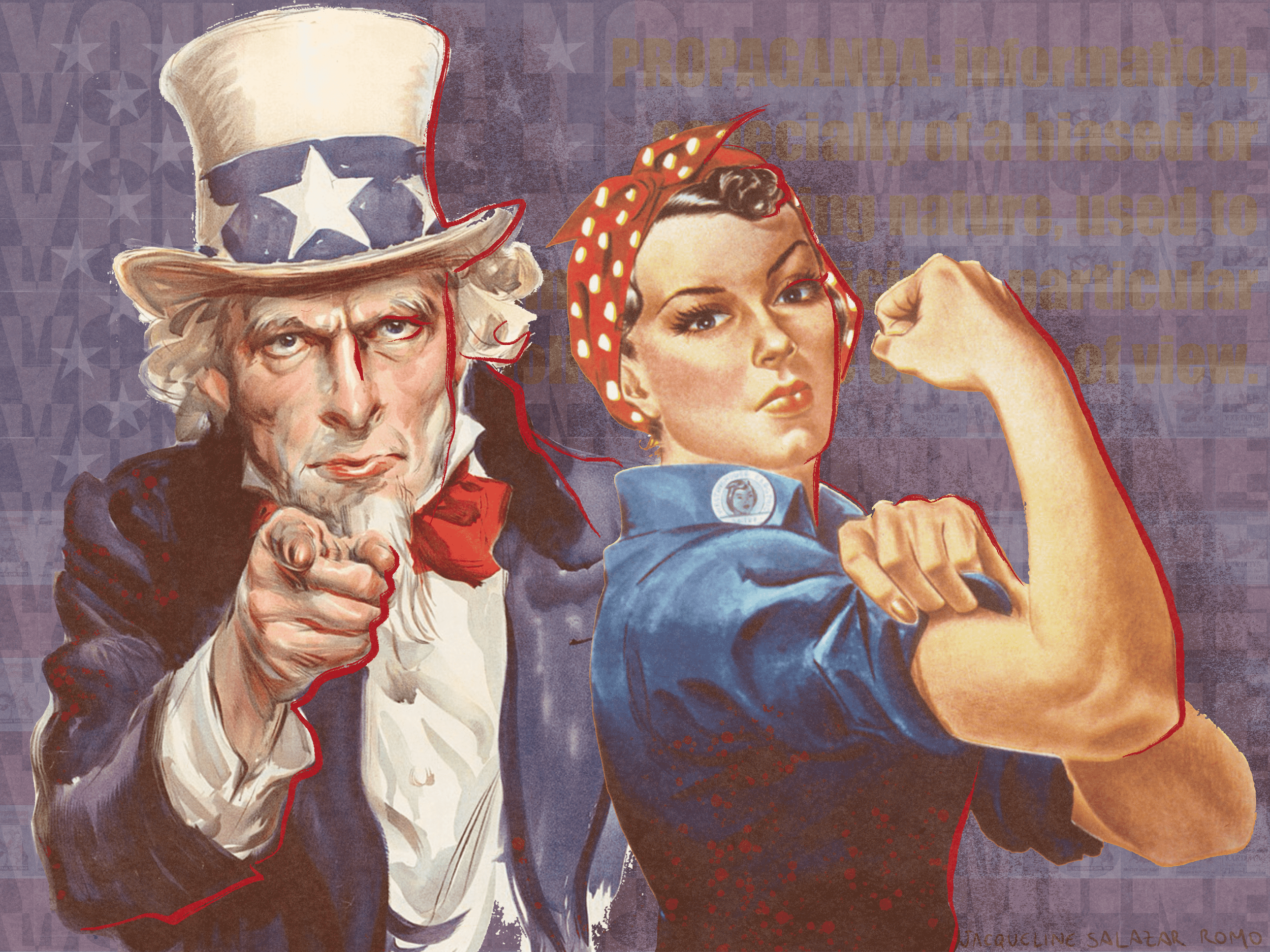
(Digital illustration by author)
Written by: Jacqueline Salazar Romo
About The Author: Jacqueline (she/they) is an editorial intern who loves writing, whether creatively or within a non-fiction context, especially to explore current issues and personal interests.
Homonationalism, Israel-Palestine, Zionism
Sources:
"About the Nakba." Question of Palestine, United Nations, 16 May 2023, www.un.org/unispal/about-the-nakba/.
Ali, Tazeen M. "Zohran Mamdani and the Making of a “Muslim Menace”." ARC Magazine, 24 June 2025, arcmag.org/zohran-mamdani-and-the-making-of-a-muslim-menace/.
Al-Sheikh, Y.L. "The Smear Campaign Against Zohran Mamdani Failed. That’s a Huge Deal." The Nation, 27 June 2025, www.thenation.com/article/politics/zohran-mamdani-israel-palestine-mayor/.
BDS Movement. "Say No To Pinkwashing." BDS Movement, bdsmovement.net/pinkwashing.
"Columbia suspends over 65 students following pro-Palestinian protest in library." AP News, 9 May 2025, apnews.com/article/columbia-protests-students-suspended-7215bd15abc3edd303b3224f9edbcfd2.
Farivar, Masood. "Muslim Candidates Surge in Local Elections in US." Voice of America, 18 Oct. 2024, www.voanews.com/a/muslim-candidates-surge-in-local-u-s-elections/7828101.html.
"Global War on Terror." George W. Bush Library, www.georgewbushlibrary.gov/research/topic-guides/global-war-terror.
Graham-Harrison, Emma. "'No pride in occupation:' queer Palestinians on 'pink-washing' in Gaza conflict." The Guardian, 16 June 2024, https://www.theguardian.com/world/article/2024/jun/16/queer-palestinians-lgbtq-israel-pride-flags-gaza-conflict-pink-washing
Helligar, Jeremy. "This Is What Whitewashing Really Means—and Why It’s a Problem." Reader's Digest, 7 Oct. 2022, www.rd.com/article/what-whitewashing-means-and-why-its-a-problem/.
Morales, Mark, et al. "Palestinian Activist Mahmoud Khalil Reunited with His Wife, Newborn Son After Spending Months at a Louisiana Detention Center." CNN, 23 June 2025, www.cnn.com/2025/06/20/us/mahmoud-khalil-ordered-released-by-judge.
"PINKWASHING – Queer Cultures 101." ScholarBlogs | Emory's Own WordPress Instance for Teaching and Research, 21 Oct. 2023, scholarblogs.emory.edu/queercultures101/2023/10/21/pinkwashing/.
Puar, Jasbir K. "Terrorist Assemblages: Homonationalism in Queer Times." Duke University Press, read.dukeupress.edu/books/book/1247/Terrorist-AssemblagesHomonationalism-in-Queer.
Ritchie, Jason. "Pinkwashing, Homonationalism, and Israel–Palestine: The Conceits of Queer Theory and the Politics of the Ordinary." Wiley Online Library, 3 June 2014, onlinelibrary.wiley.com/doi/10.1111/anti.12100.
Salfiti, Jad. "I’m a Queer Palestinian. Stop Using My Identity As Cover for the Destruction of Gaza." The Guardian, 25 June 2025, www.theguardian.com/commentisfree/2025/jun/25/queer-palestinian-identity-gaza-rights.
Schotten, C. Heiken. "Homonationalist Futurism: “Terrorism” and (Other) Queer Resistance to Empire." Duke University Press, New Political Science (2015) 37 (1): 71–90., Mar. 2015, read.dukeupress.edu/nps/article/37/1/71/397282/Homonationalist-Futurism-Terrorism-and-Other-Queer.
Schulman, Sarah. "Opinion | 'Pinkwashing' and Israel's Use of Gays as a Messaging Tool." The New York Times - Breaking News, US News, World News and Videos, 23 Nov. 2011, www.nytimes.com/2011/11/23/opinion/pinkwashing-and-israels-use-of-gays-as-a-messaging-tool.html.
Tanjim, Nasif. "Exploring the Difference Between Judaism and Zionism." The Business Standard, 9 Nov. 2023, www.tbsnews.net/features/panorama/exploring-difference-between-judaism-and-zionism-734718.
Zhang, Sharon. "Zionists Tried to Make NYC Race About Israel. Zohran Mamdani Didn’t Give In." Truthout, 25 June 2025, truthout.org/articles/zionists-tried-to-make-nyc-race-about-israel-zohran-mamdani-didnt-give-in/.
Additional Reading

Check out our social media for more resources:
Leave a comment