
Why I’m Not Boarding the Chappell Roan Hate Train
Written by: Jacqueline Salazar Romo
April 10th, 2026
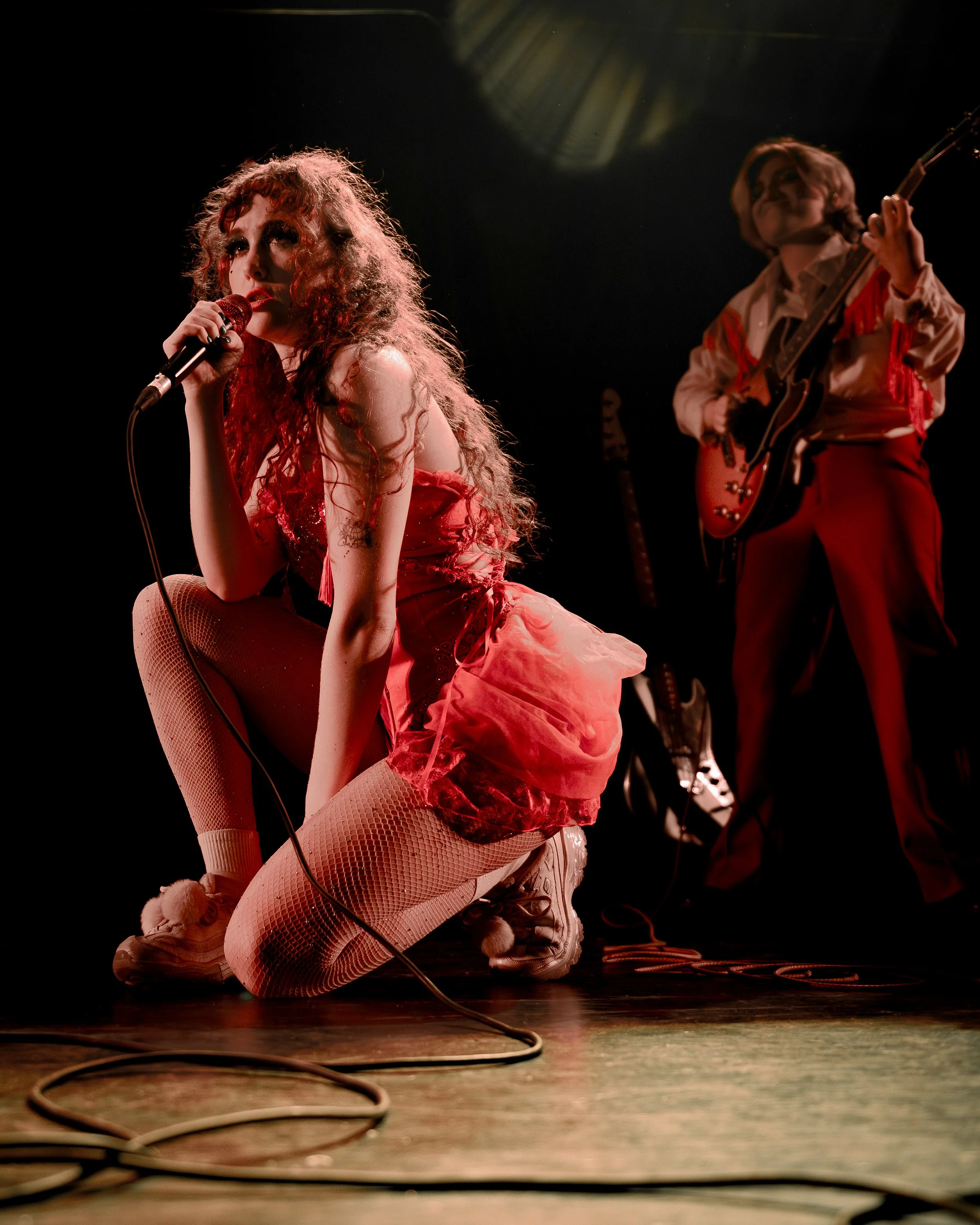
Chappell Roan at the Hollywood Palladium, 2022. © Justin Higuchi, Wikimedia CommonsChappell Roan cannot seem to catch a break.
The music star has had to once again answer to backlash following claims that a bodyguard of hers aggressively confronted and harassed an 11-year-old child who spotted her during her family’s stay at a Săo Paolo hotel. As it turns out, security guard Pascal Duvier has since spoken out and taken “full responsibility” for the incident, confirming that he was not even part of Roan’s personal team or acting on her behalf. Furthermore, an investigation shared with The Independent by behavioral-intelligence platform Gudea even stipulates that up to 23% of 100,000 posts about the “bodyguard situation” studied were fabricated by likely-automated or irregular accounts (in this scenario, these automated accounts tend to be categorized as “bots” or “spam” accounts, with some possibly being run by AI—while it is not clear whether or not all these accounts are completely fraudulent, they are at least suspicious in terms of authenticity).
But by then, the damage was already done. Thousands of people cracked jokes at Roan’s expense online, expressing their hatred for the artist and demeaning her despite not being present in the incident. And the child in question was not just any child, but actor Jude Law and TV personality Catherine Harding’s daughter, as well as Brazilian soccer player Jorginho Frello’s stepdaughter. The latter publicized the encounter via Instagram and made it go unfathomably viral, garnering millions of views and plenty of discourse—to the point where even the mayor of Rio de Janeiro vowed that Roan would be barred from performing at the Todo Mundo no Rio festival “as long as [he’s] in charge of [the] city.”
All of this to say, is this not an absurdly disproportionate public smear campaign?
The thing is, this is far from Roan’s first dip into controversy. During her early and unprecedented rise to stardom, news about the popstar “lashing out” at the paparazzi at the 2024 MTV Video Music Awards (VMAs) was notoriously sensationalized—at the red carpet for Olivia Rodrigo‘s “Guts World Tour” premiere, she also would reencounter a photographer that yelled at her at the 2025 Grammys and ask him to apologize for his behavior. More recently, Roan was seen in Paris confronting paparazzi who tried following her to dinner; she decided to give them a taste of their own medicine by filming said paparazzi back and calling them out on their intrusive actions. About these run-ins, the Midwest Princess artist has constantly stated her discomfort and distress over this invasion of privacy and the testing of her limits as someone who was so suddenly thrust into stardom (in her own words, “I’m not gonna be a sweetie pie to a man who’s telling me to shut the fuck up… [The public] think[s] I’m complaining about my success. I’m complaining about being abused”).
Roan also has previously been openly critical of American politics, facing negativity for having said that, while she was planning on voting for Kamala Harris in the 2024 presidential election, she was not going to endorse the Democrat-leading candidate, later clarifying that “there [were] huge problems on both [sides].” This earned her intense vitriol online—her words were immediately misconstrued to be in complete opposition to the Harris campaign, with some virtual voices even jumping to the conclusion that she was subsequently supporting Trump (despite how much she vehemently denied this). Snide comments about her “capitulating to Republicans” quickly amassed thousands of likes, despite her multiple clarifications.
Chappell Roan has been denigrated and mocked for her drag and performance, ridiculed for trying to set boundaries as a new artist, scrutinized and picked apart for her every word, all while being accused of being “bitchy” or “ungrateful” for not just sitting there and taking it. Herein lies the underlying issue: the public claims to be ready to support a rising pop girl, but only as long as she is defanged and “knows her place.” Associate professor of American political campaigns and gender Heather Yates labels this discrepancy “expectancy violation” for The 19th, describing how “women are held to the standard [that] they must be agreeable, they must be nurturing, supportive—all these gendered stereotypes… And when they violate this expectation of how public women are supposed to behave, then there is a greater degree of negative feedback.”
Not only is there misogyny present in how the general public interacts with and criticizes Roan, but there is also the blatant lesbiphobia that shapes the discourse surrounding the Pink Pony Popstar to consider. Lesbians have historically been one of the most misunderstood, reviled, and harassed members of the LGBTQ+ community, and Roan has unfortunately not been an exception to the intense hate that queer artists, especially the few artists who have publicly and proudly identified as lesbian, face throughout their careers. Moreover, the sexism in the music industry is no secret. Female performers are already held to disproportionately higher standards than their male counterparts. Add a layer of homophobia to the hateful conversations surrounding Roan, and you will easily encounter hate comments even within the queer community, examining her past and questioning her validity as a lesbian, or on the other extreme, attributing a “bratty” or “unpleasant” attitude to her lesbian identity. This all contributes to the invasive, cruel, and frankly dehumanizing hate train Chappell Roan has been receiving since her rise to fame. Most people cannot handle seeing a headstrong and self-assured artist who will set boundaries and call out injustice or abusive behavior when she sees it, and traits that are typically celebrated in male celebrities (assertive, informed, confident) are twisted into negatives when a female counterpart exhibits them (bitchy, opinionated, egotistical).
I, for one, welcome the rise of the “bitchy” and “insufferable” female artist archetype that Chappell Roan represents in the critics’ minds—because underneath those labels is a trailblazing young woman with boundaries and a strong belief system who will stand her ground.
Written by: Jacqueline Salazar Romo
About The Author: Jacqueline (she/they) is an editorial staff member at NB who often explores the intersections of identity, belonging, and culture in relation to current events. Whenever she isn't writing, she enjoys art, fandom, and thinking too long about the past.
Lesbiphobia, Sexism in the Music Industry, LGBTQ+ Musicians/Artists
Additional Reading
Sources:
https://19thnews.org/2024/10/chappell-roan-celebrity-political-expectations-endorsements/
https://www.out.com/celebs/chappell-roan-paparazzi
https://www.wrda.net/blog/gender-inequality-in-pop-music
https://slate.com/life/2026/03/kids-brazil-chappell-roan-jude-law-jorginho-frello.html
https://www.sfchronicle.com/entertainment/article/chappell-roan-election-19792064.php
Check out our social media for more resources:
Leave a comment