
A Brief Look at Brazil’s Historic Presidential Election
Written By: Jacqueline Salazar Romo
Date: October 30th, 2026
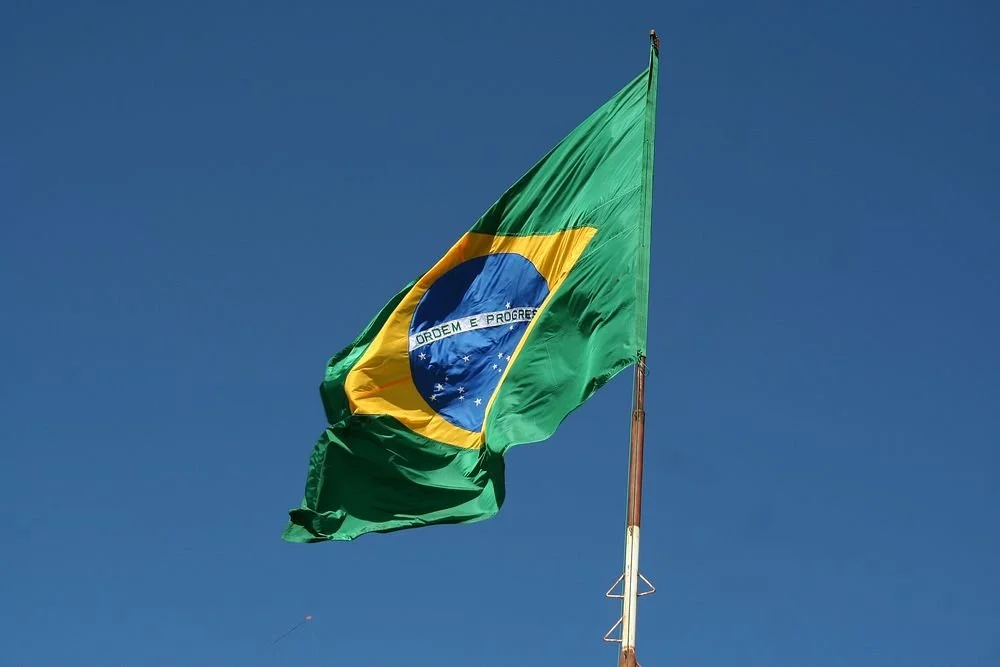
(Image via RAWPIXEL)
On Sunday, October 26, Luiz Inácio Lula da Silva was reelected to office despite all the odds stacked against his candidacy. The Workers’ Party candidate achieved this victory in a close race, nabbing 51.79% of the national vote over right-wing candidate Flávio Bolsonaro’s 48.21%. Lula had previously served as the 35th and 39th President of Brazil (2003-2011 and 2023-, respectively); this will be his fourth term in office.
At this point, Lula is a Brazilian national icon, his life littered with “firsts.” A man from humble beginnings, his involvement with politics began unconventionally through his work within trade union activism—forming the Workers’ Party (PT) as “the first major socialist party in the country’s history,” not only revolutionizing workers’ rights, but transforming Brazil’s political landscape. When he first came into office in 2003, he made history as the “first leftist leader of Brazil in nearly half a century,” and he has maintained a career of progress and positive change within the country. Through the funding of social welfare programs, an increase on the minimum wage, and a dedication to investing in the working class and the most impoverished, Lula achieved a considerable push towards economic stability over the course of his terms. While his longstanding history as a public servant has not been without criticisms or faults, Lula’s campaign promised a fight against the rise of fascist totalitarianism and the strengthening of Brazilian sovereignty.
At a time in which a great majority of Latin-American countries have fallen to a right-wing surge, the Brazilian incumbent’s success has reinvigorated hope in a better future, both within the country and beyond. As he has insisted to international critics, “Brazil does not fit into anyone’s backyard.”This directly challenges the Trump administration’s national security strategy that aims to keep US dominance in the Western Hemisphere—what Pentagon policy chief Elbridge Colby has labeled the “Donroe Doctrine.” A play on the historical Monroe Doctrine using Trump’s first name, this later initiative is responsible for actions such as the capture and imprisonment of Venezuelan president Nicolás Maduro in January of this year.
Lula’s opponent, senator Flávio Bolsonaro, is the son of Jair Bolsonaro– Brazil’s 38th president from 2019 to 2023. Before his term, the elder Bolsonaro held a 27-year tenure as a congressman in the Chamber of Deputies, representing Rio de Janeiro. He took great pride in freeing Brazil from “socialism and political correctness” through various initiatives and legislative actions. During his term, he heralded demarcation policies that opened indigenous lands to commercial activity, jeopardizing native cultures and dignity, and exacerbating the endangerment of the Amazon rainforest. When it came to the COVID-19 pandemic, the then-president minimized the dangers of the virus at a national scale, contributing to consistently higher death tolls and one of the most catastrophic pandemic responses at a global level. In 2024, he was accused of possessing fraudulent vaccination records to “obtain undue advantages.” For LGBTQ+ and other marginalized Brazilians, Jair Bolsonaro’s victory in 2019 was especially concerning given his extensive history of openly bigoted and intolerant remarks, and for good reason—on his first day in office, he “instructed Brazil’s human rights ministry to no longer consider issues of LGBT+ equality.” As if that were not enough, he was ordered to pay R$1M for racist remarks during his time as President through a court ruling in 2024. To put it more locally, Bolsonaro’s term and ideologies have been largely compared to Donald Trump’s. The two national leaders previously boasted of their camaraderie and positive relationship, and the former was among foreign leaders who believed the 2020 US presidential election results were rigged. He is currently serving a 27-year prison sentence for an attempted coup d'état (overthrowing and assassination) of then-president-elect Lula.
Much like his father, Flávio’s career has major controversies. Among them are shared claims of corruption and money laundering—in the case of the younger Bolsonaro, he was involved in a financing controversy in which funds intended for the funding of a national Wi-Fi service to help low-income communities in São Paulo were instead supposedly redirected into Dark Horse, a biographical political film about Flávio’s father. While Flávio maintains that there was “zero” public money used for the film’s production, evidence tying the Bolsonaros to the project and its expenses was unearthed.
Ex-candidate Flávio Bolsonaro has not accepted his opponent’s victory. Initially, the right-wing candidate aimed to annul the election results, claiming a rigged system may have given Lula an unfair voting advantage. In a statement to the press, party president Valdemar Costa Neto stipulated that there are “questions raised about the vote” that still need to be clarified, and Bolsonaro himself has not officially conceded to the victor. As of October 27, Flávio Bolsonaro has reportedly fled Brazil after his loss; this comes within a day of Brazilian authorities asking him to turn in his passports to stop him from evading being evaluated as a chief suspect in a money-laundering scheme investigation. Reporters have stated that the Trump Administration has granted Bolsonaro a visa.
While we are yet to see what will come of Bolsonaro’s escape to the United States and of Lula’s reelection, it is clear this election has proven to be a historical one for Brazil. Lula’s win is a victory for the nation’s independence and proof that, despite interference from powerful foreign influences like the United States, the people of Brazil have the final say.
Written by: Jacqueline Salazar Romo
About the Author: Jacqueline is an editorial staff member at NB who often explores the intersections of identity, belonging, and culture in relation to current events. She has a BA in Literary Journalism from UC Irvine. Whenever she isn't writing, she enjoys art, fandom, and thinking too long about the past.
Tags: ALPR Technologies, Panopticon, Surveillance Capitalism
Check out our social media for more resources:
Additional Reading

Sources:
https://www.reuters.com/commentary/reuters-open-interest/lulas-win-brazil-deals-harsh-blow-trumps-donroe-doctrine-mcgeever-2026-10-27/
https://www.reuters.com/world/pentagon-seeks-rally-latin-america-behind-new-monroe-doctrine-2026-07-08/
https://www.npr.org/2026/10/27/nx-s1-6019217/bolsonaro-flavio-lula-brazil-election-trump
https://www.nytimes.com/2026/10/27/world/americas/brazil-flavio-bolsonaro-flees-election.html
https://www.bbc.com/news/articles/c35yn2ye1x85o
https://www.state.gov/nicolas-maduro-moros
https://www.archives.gov/milestone-documents/monroe-doctrine
https://web.archive.org/web/20190119121906/https://globalnews.ca/news/4808295/jair-bolsonaro-funai-indigenous-farm-brazil/
https://www.nytimes.com/2019/03/19/us/politics/bolsonaro-trump.html
https://foreignpolicy.com/2021/01/14/bolsonaro-brazil-trump-anti-democracy-elections/
https://archive.is/zWmuA
https://www.thenation.com/article/world/brazil-workers-party-runoff-election/
https://www.bbc.com/news/world-latin-america-68610385
https://www.kcl.ac.uk/covid-19-in-brazil-how-jair-bolsonaro-created-a-calamity
https://www.nbcnews.com/feature/nbc-out/lgbtq-brazilians-edge-after-self-described-homophobic-lawmaker-elected-president-n925726
https://www.theguardian.com/world/2025/sep/16/bolsonaro-damages-brazil
https://cepr.net/publications/the-social-and-economic-record-of-lula-da-silvas-third-term/
https://www.metropoles.com/brasil/pf-identifica-plano-de-militares-do-nucleo-de-bolsonaro-para-golpe-e-prisao-de-moraes
https://www.intercept.com.br/2025/12/13/ong-da-produtora-executiva-do-filme-de-bolsonaro-pode-virar-alvo-de-investigacao-do-mp/
Leave a comment