
Performative Allyship
Written by: Jacqueline Salazar Romo
February 18th, 2026
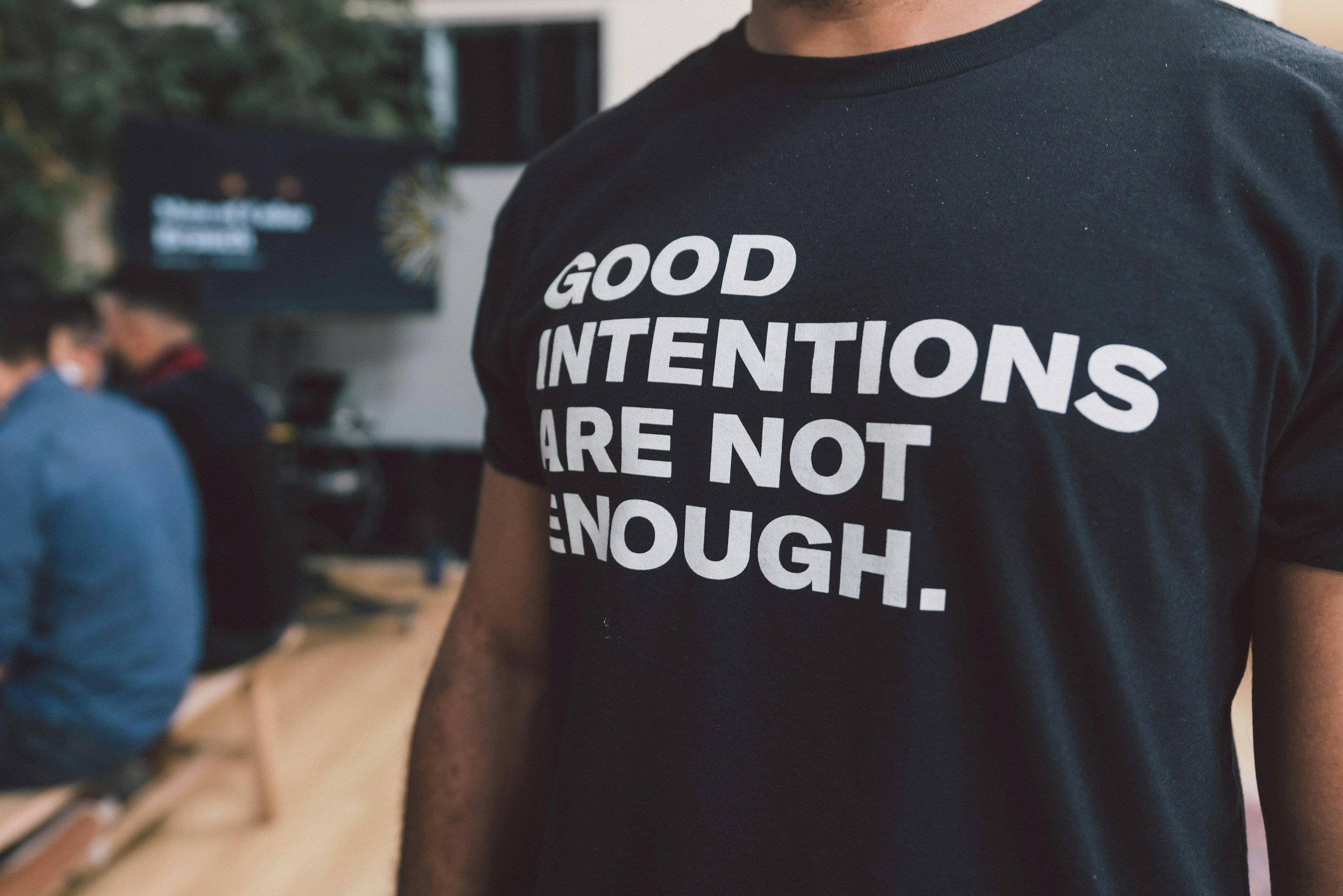
Photo by Edgar Chaparro (@echaparro) on UnsplashPerformative allyship (closely similar to performative activism) is self-explanatory: it’s when a person, group, or company outwardly expresses support for a cause or a marginalized community, but does so in a discreet, distanced way that does not interfere with or affect said “ally.” Basically, it’s the act of performing a set of moral values and ethics without taking any meaningful action to truly help, protect, or empower the cause/community in question (go girl, give us nothing). Photographer Madeleine Wilson offers a fantastic summary: “Performative activism [equals] optics over impact. It looks good and sounds good, but doesn’t generate real change.”
I guarantee you that even if you’re unfamiliar with these terms, you have been exposed to plenty of instances of performative allyship/activism throughout your life, online and when you go outside and touch grass. While the following list is by no means fully inclusive (pun intended), it does provide some notable examples.
Blackout Tuesday: During the peak of the Black Lives Matter movement and amidst protests dedicated in memory of Black victims of police brutality like George Floyd and Breonna Taylor, a trend to post nothing but a black square for “awareness” labeled #BlackoutTuesday took off primarily on Instagram. Not only was it purely self-serving and non-intrusive (all you had to do to feel good about yourself was post a black square, apparently), but by tagging said squares with #BLM, these vapid posts clogged up relevant hashtags and made it more difficult to share actual news and updates on the protests. In my humble opinion, this one possibly remains one of the most egregious, tone-deaf forms of “activism” to date.
“Thoughts and Prayers”: This one is unfortunately cyclical at this point. Whenever there is a mass shooting in America, you can expect a great number of politicians and public-facing powers to go onstage and offer “thoughts and prayers” for the victims of these tragedies. These consolations curiously never seem to translate to actionable change or gun control/regulation propositions—the families and communities of those killed are left to deal with the fallout of these atrocious acts unsupported.
Celebrity Co-Opting: Back in 2017, Kendall Jenner featured in a now-infamous Pepsi ad—in it, she bravely interferes during a protest by sharing Pepsi cans with police officers and activists alike. Naturally, this commercial was poorly received, with many viewers noting that, no, a young white supermodel extending a figurative olive branch in the form of soda does not do anything to end police brutality. During the COVID-19 lockdown period (which, let’s be real, was nonexistent for most people who ignored the importance of social distancing/masking from the beginning), actress Gal Gadot gathered a squadron of celebrities to sing “Imagine” by John Lennon from the comfort of their mansions. Presumably, they decided to post this serenade to make us poor and wretched souls feel better (update: it didn’t work). To keep it brief, these are only two of a multitude of examples of celebrities using real-world humanitarian issues as mere backdrop for their ego-boosting “allyship.”
Companies “-washing”: One of the more visible examples is when people or companies (or sometimes, even occupation-driven entities like Israel) participate in pinkwashing—superimposing their logos onto a rainbow gradient, rolling out #Pride merchandise, purporting to be a “safe haven for the LGBTQ+ community,” or otherwise using queer imagery and history as a veneer of allyship while doing nothing to actually support queer folk. But it isn’t the only type of -washing: consider whitewashing, which uplifts and overrepresents whiteness at the expense of BIPOC communities (the latest example being the controversy over Odessa O’Zion’s casting as a Mexican woman in an upcoming A24 film*); and greenwashing, which presents an environmentally conscious facade to customers and the public (ie, marketing by oil magnates like BP and Shell fabricating the concept of a “carbon footprint” to place blame for emissions on consumers).
When determining if you have been a performative ally, consider whose perspectives and voices you’re listening to and centering, and if your allyship is dependent on having others congratulate or validate you for your efforts. There’s a stark difference between advocating for others and speaking for them entirely. If you support marginalized, underrepresented, or affected groups expecting some form of praise or compensation (from said communities or otherwise), it’s a good time to reflect on why this matters more to you than mobilizing actionable change. To be a better ally, think of how you show up—are you receptive to criticism or feedback for your actions? Are you willing to commit to helping at any capacity you can? If you are able to put your ego aside to help others feel seen and heard, you’re onto a good start.
*Update: A’Zion reportedly dropped out of the project, with Ariela Barer now set to star in A24’s Deep Cuts.
Written by: Jacqueline Salazar Romo
About The Author: Jacqueline (she/they) is an editorial staff member who enjoys writing about intersectionality, current events, and identity.
Performative Allyship, Intersectionality, Marginalization
Additional Reading

Sources:
https://www.optimistdaily.com/2025/06/how-to-be-an-ally-part-i-performative-allyship/
https://www.linkedin.com/pulse/true-allyship-vs-performative-support-knowing-60nac/
https://www.madeleinewilson.org/post/what-is-performative-activism-vs-real-activism
https://www.nbcnews.com/think/opinion/blackout-tuesday-instagram-was-teachable-moment-allies-me-ncna1225961
https://necessarybehavior.com/the-israeli-pinkwashing-agenda
https://www.humanrightscareers.com/issues/pinkwashing-definition-history-examples/
https://www.nbcnews.com/news/nbcblk/pepsi-ad-kendall-jenner-echoes-black-lives-matter-sparks-anger-n742811
https://www.usatoday.com/story/entertainment/movies/2026/01/29/odessa-azion-deep-cuts-whitewashing-controversy/88411596007/
https://www.independent.co.uk/climate-change/news/shell-bp-oil-greenwashing-greanpeace-climate-b2397689.html
Check out our social media for more resources:
Leave a comment